Accelerating Scientific Impact
University of Oregon, Phil and Penny Knight Campus for Accelerating Scientific Impact Building 2
Higher Education, Laboratories and Research
The Phil and Penny Knight Campus for Accelerating Scientific Impact, Building 2 doubles the campus's capacity in applied scientific research and training. The University seeks to grow scientific talent in the region and encourage the convergence of science, technology, and society. Research groups at the nexus of bioengineering and biomedical science will collaborate in experimental and computational laboratories to fast-track discoveries into new medical technologies. An emphasis on innovation-driven learning, classrooms and maker spaces will facilitate testing and prototyping of engineering student inventions.
The building will also house the Papé Family Innovation Center which provides biomedical start-up companies with leasable laboratories to incubate and develop ideas.
Location
Eugene, Oregon
Square Feet
184,000
Completion date
2026
Project Component
Architectural design services
Interior design services
Laboratory planning
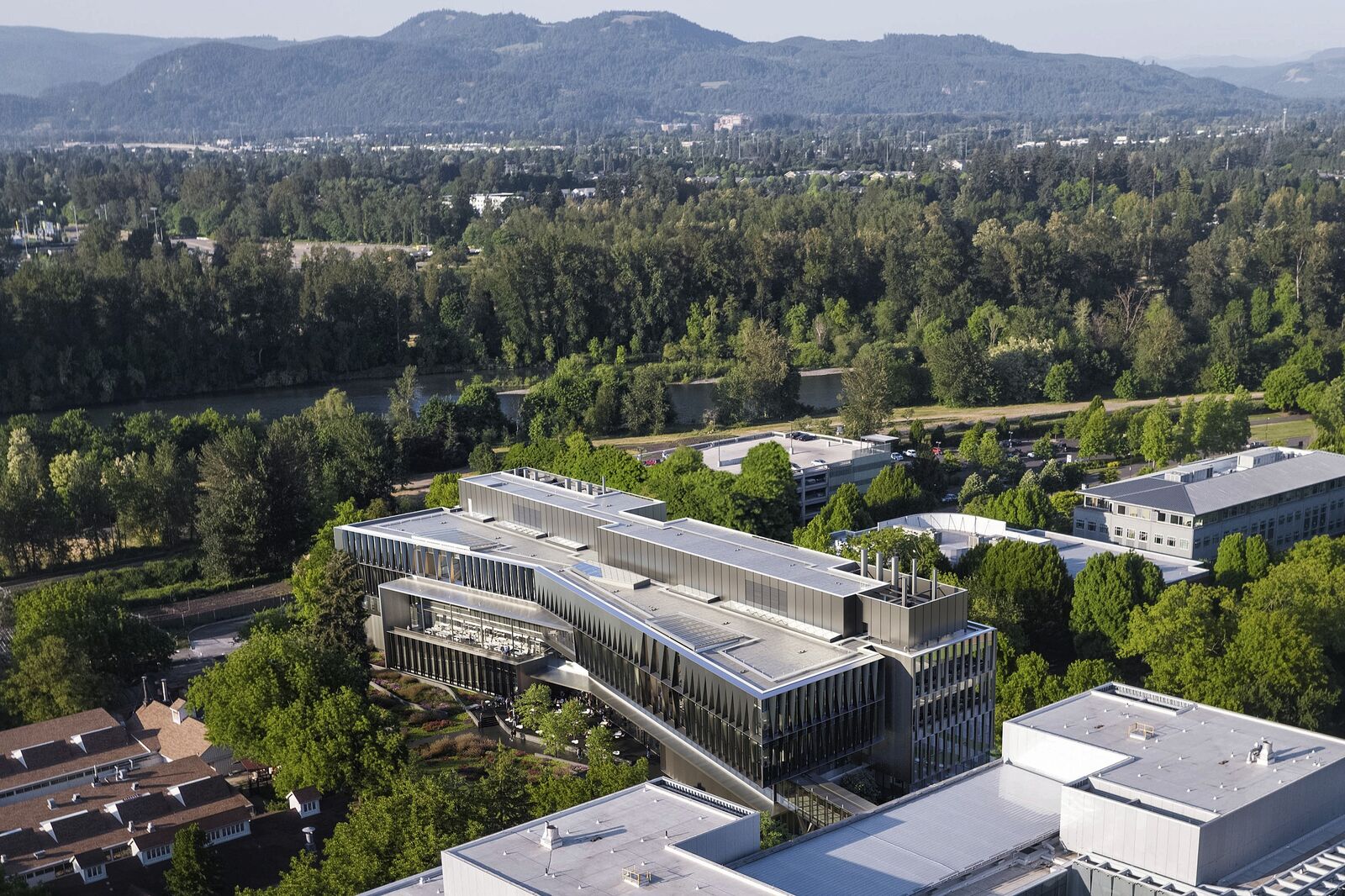
Located in UO’s transforming North Campus, Building 2 is a critical step towards heightening the sense of place and collegiate identity of the Knight Campus through strong activation of the public realm.
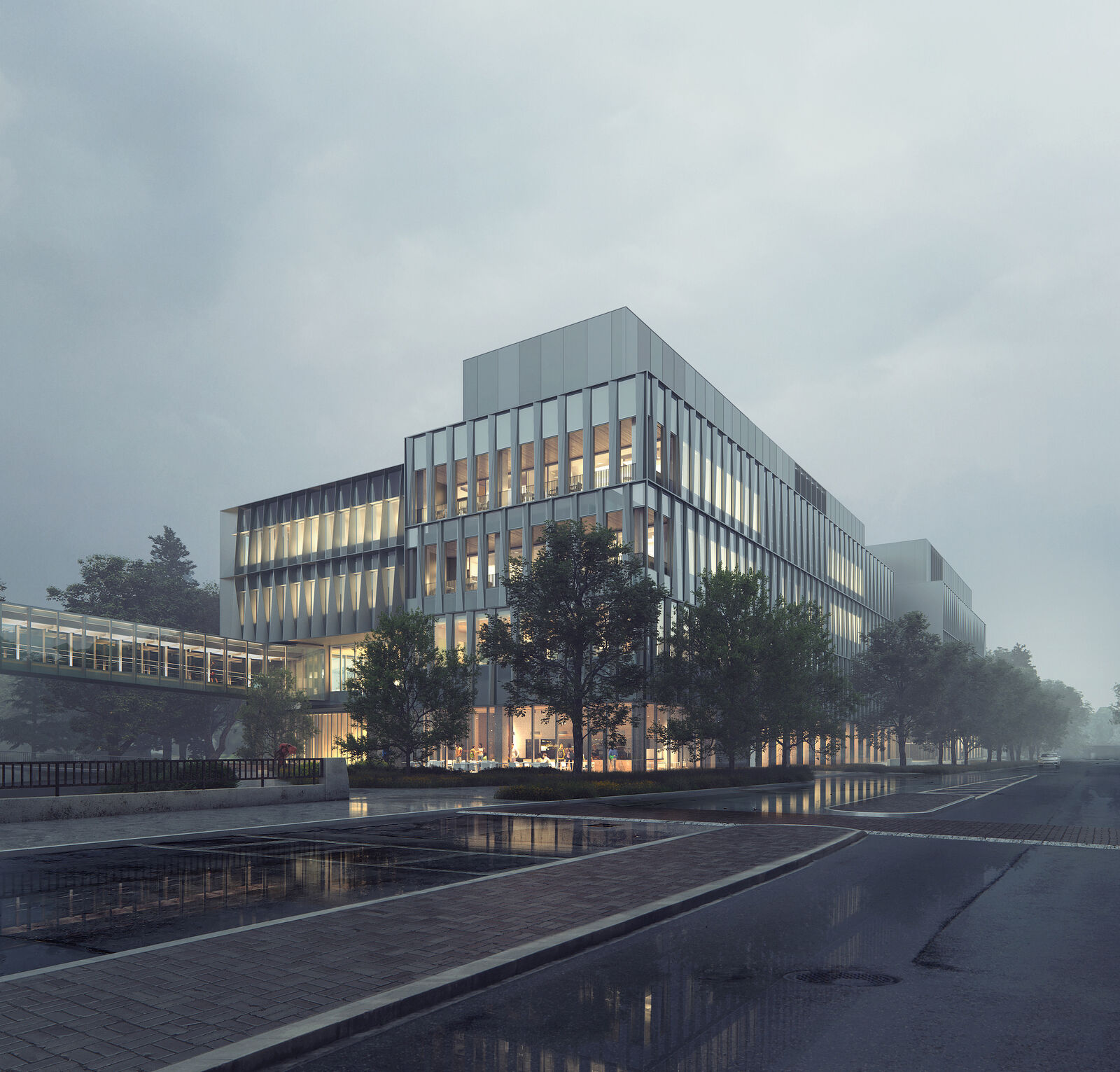
The site for the Knight Campus Building 2 is located in UO's evolving North Campus adjacent to Building 1 to which it is connected via sky bridge. On the east is an urban edge to the city and on the west it is framed by open green space.
“Building 2 will enable us to grow our critical mass of talent and encourage the convergence of
science, technology, and people. Building 2 puts the ‘Campus’ in Knight Campus.”
Robert Guldberg, Vice President and Robert and Leona DeArmond Executve Director
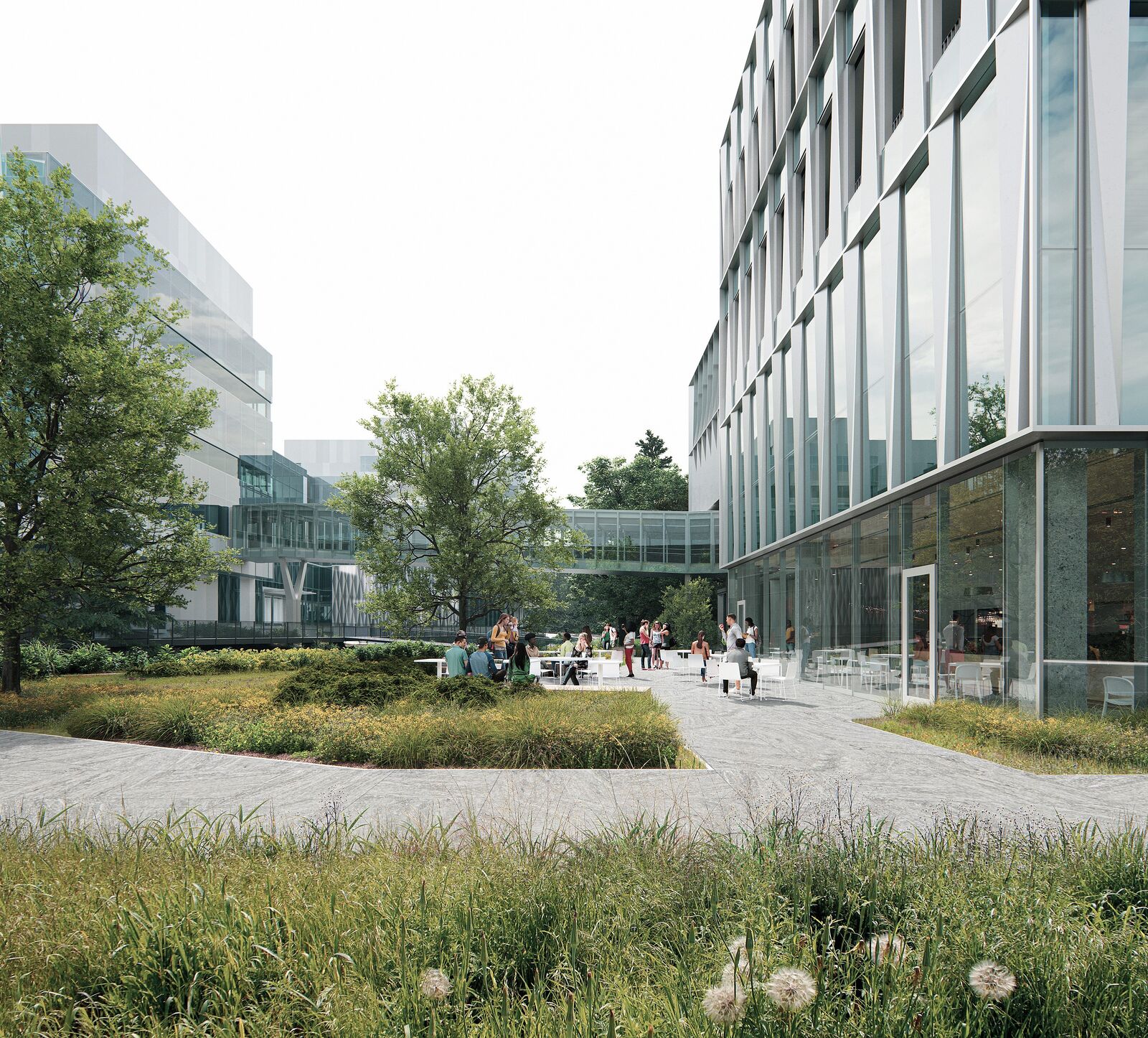
The Building Two bistro and outdoor space promotes connectivity and welcomes students, researchers, and staff to take advantage of the fresh air and native plant landscaping. With the Millrace channel running in-between the buildings, the space acts as a visual corridor and greenbelt connecting the two Knight Campus research centers.
The mission to accelerate scientific impact hinges on the ability to foster a user experience that yields a fertile research environment. For the Knight Campus Building 2, beyond state-of-the-art functional and technical accommodations, the challenge of creating an “innovation ecosystem” translated into two notions: encouraging user interaction and collaboration, and promoting well-being and delight through uplifting spaces connected to daylight and nature.
The nudge needed for researchers to engage in conversation can be as simple as a visual connection, or a serendipitous collision on a common path that cross-pollinates the research ecosystem. To this end, active occupant engagement during the design process for the Knight Campus Building 2 led to the idea of interlacing and corrugating spaces—balancing scale, visual connectivity, and privacy.
Intellectual exchanges are supported by providing primary and secondary layers of interaction space—structured and unstructured, indoor and outdoor—arranged to be within general view without being overexposed. The building folds around the users at varying scales, encouraging an uninterrupted flow of inquiry and exploration.
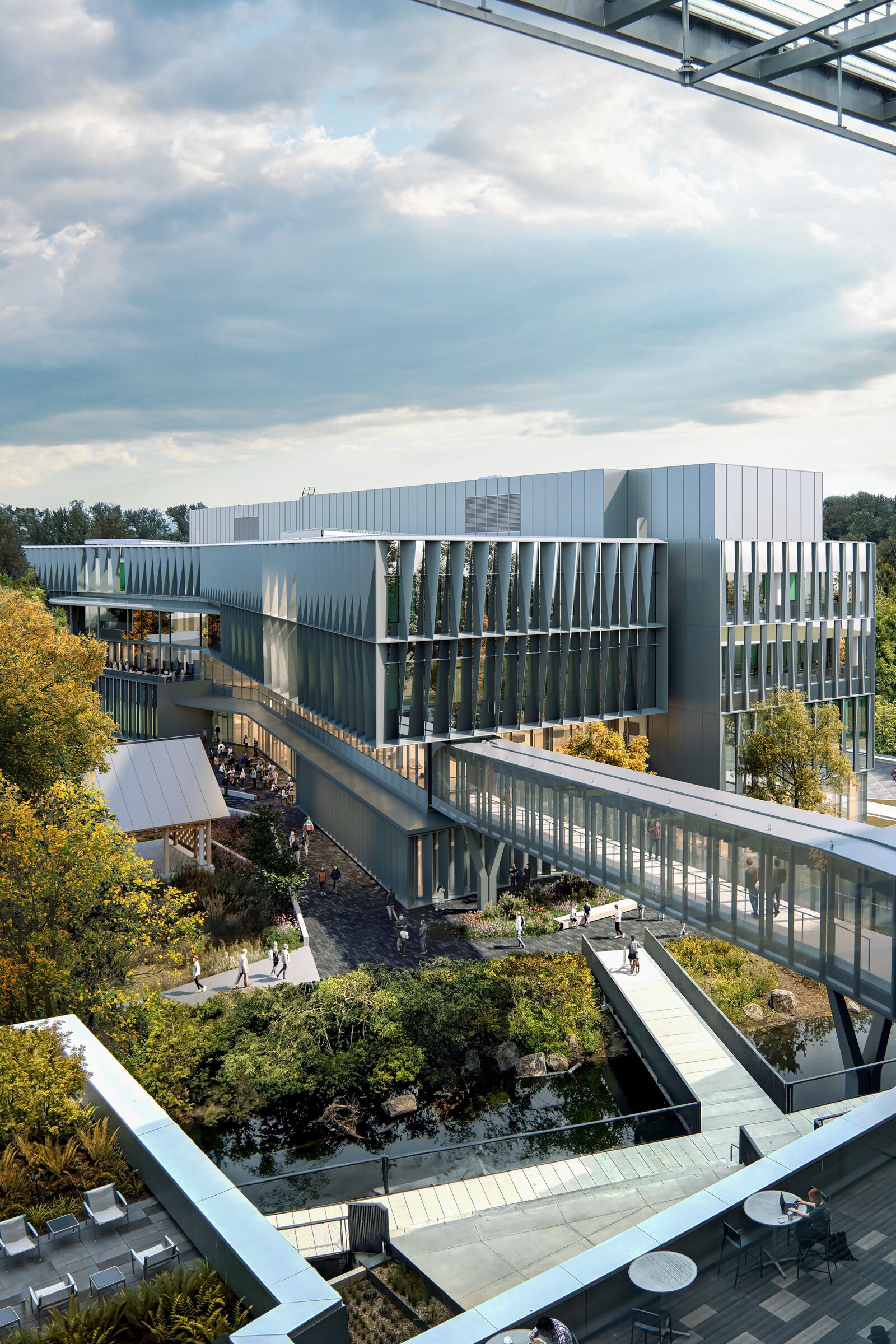
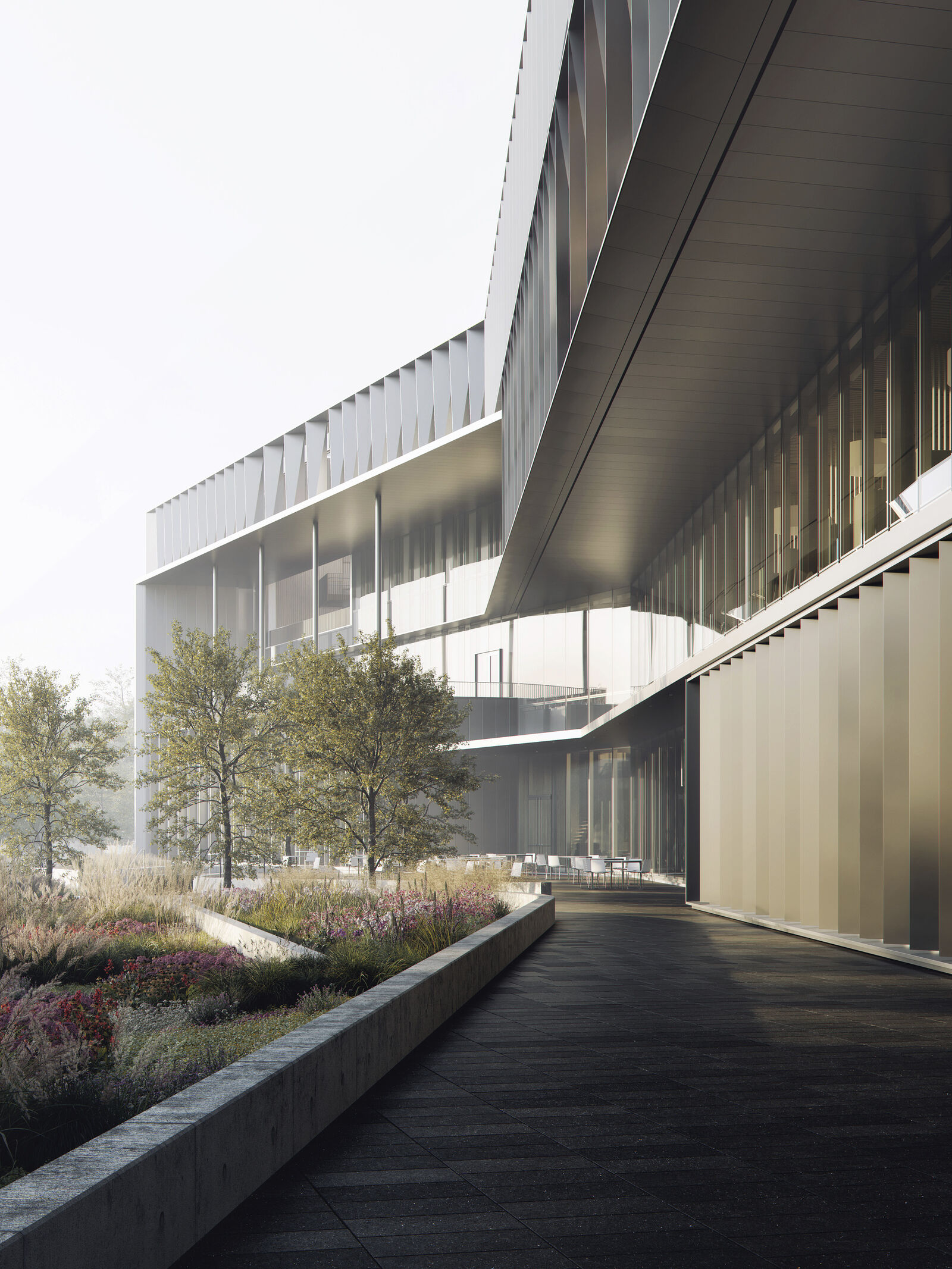
The building parti is comprised of two laminated north-south bars: the east bar articulates the urban street edge along Riverfront Parkway with offset rectilinear volumes, while housing an efficient and flexible stack of interconnected wet laboratories. A parallel bar on the west, facing the green space, contains the research offices and collaboration spaces. The west bar inflects inward at the center of the building; it is made more porous with exterior balconies and terraces, both moves serving to weave the building into the adjacent natural landscape.
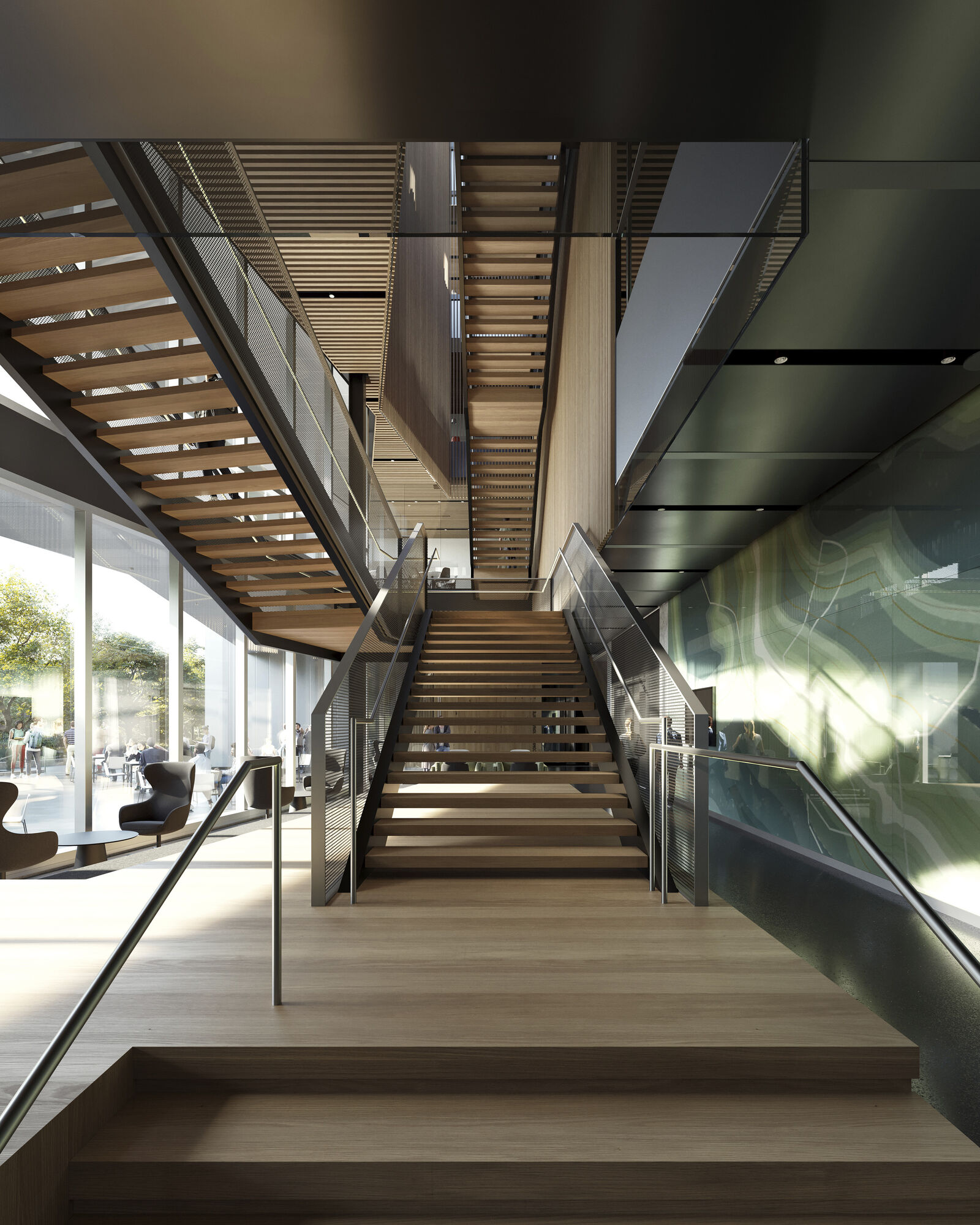
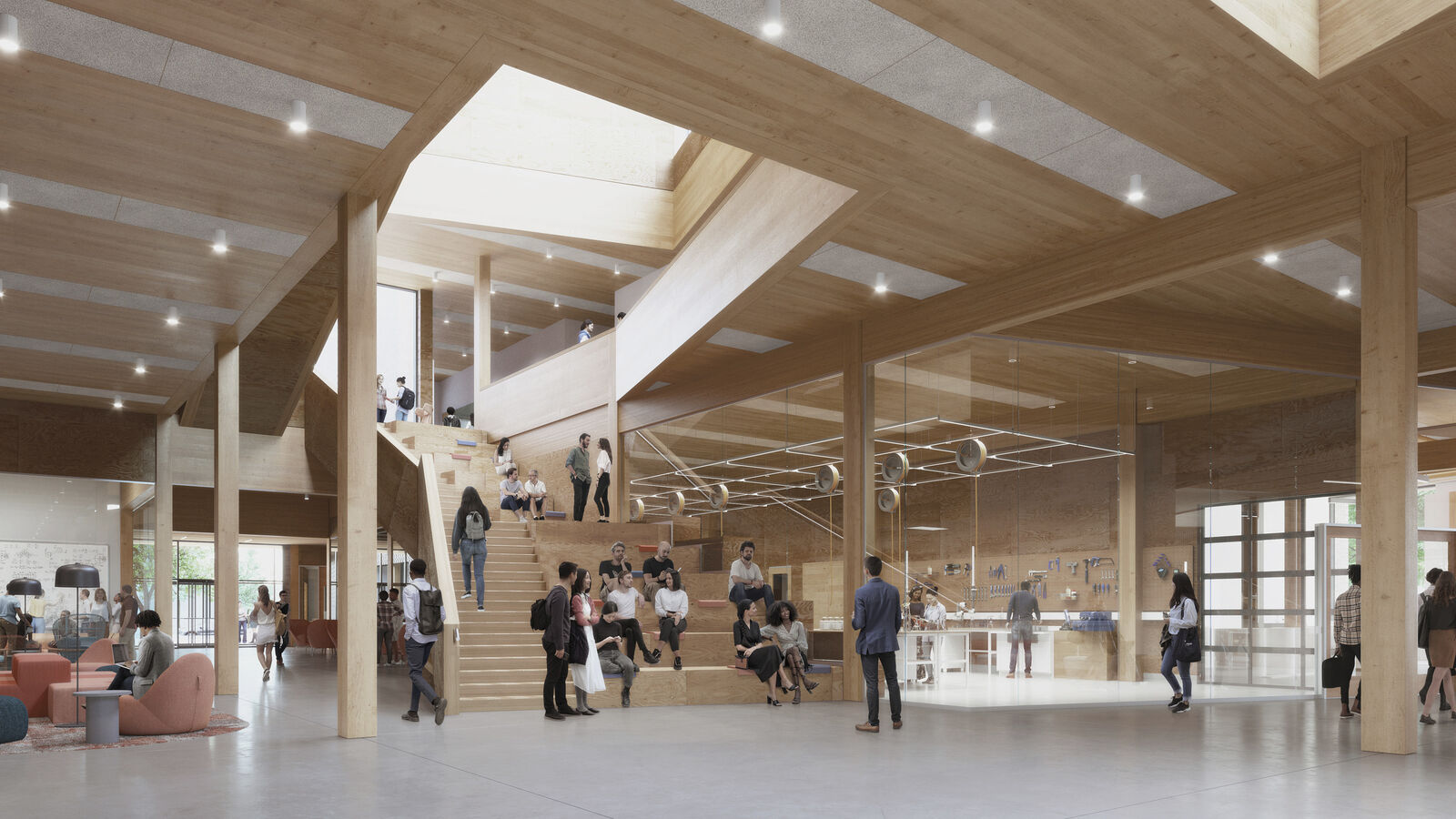
The wood-clad central stairway rises upwards through the middle of the building bathed in natural light from the skylight above—celebrating the movement of people through the building and increasing opportunities for intellectual collisions.
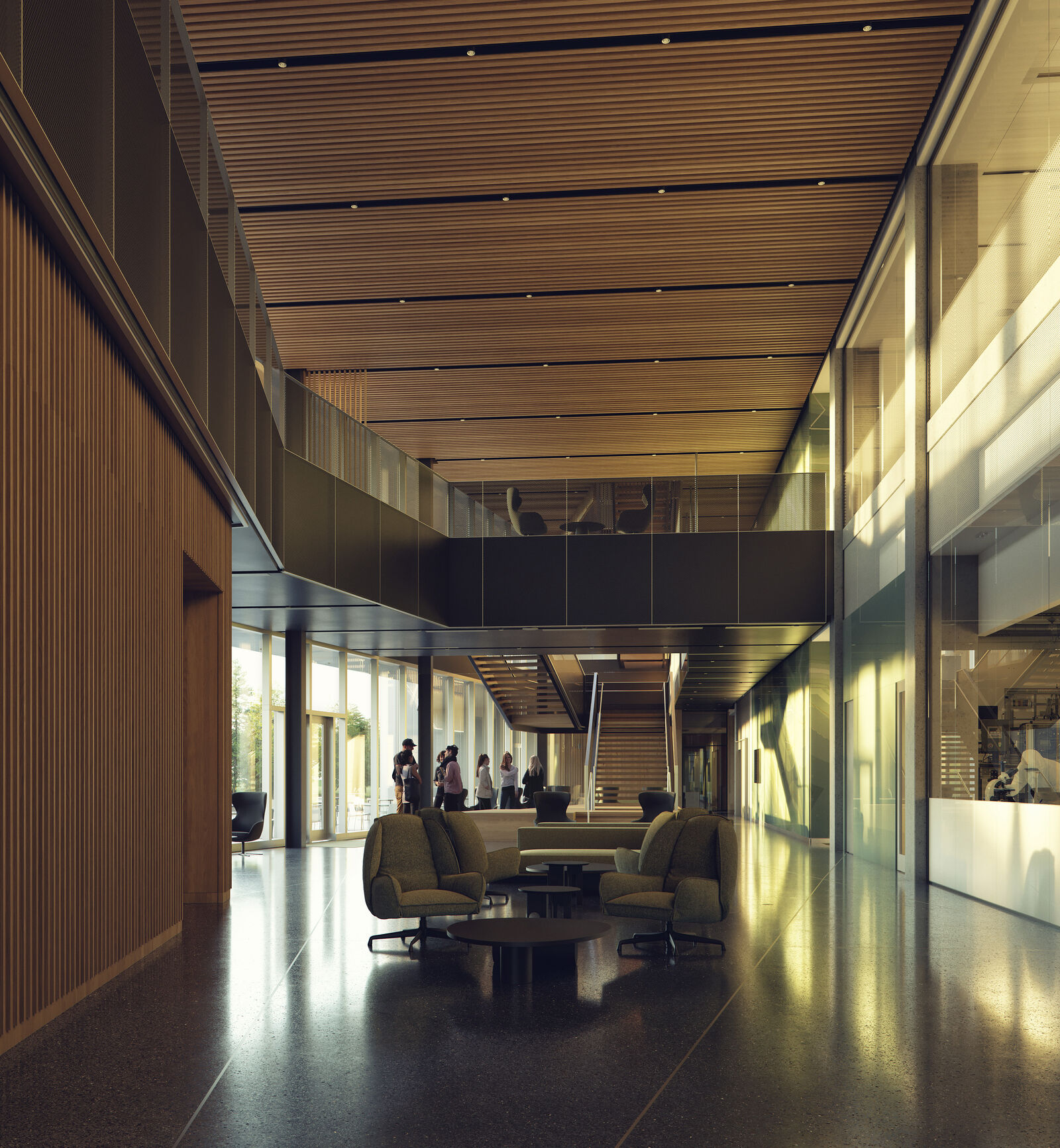
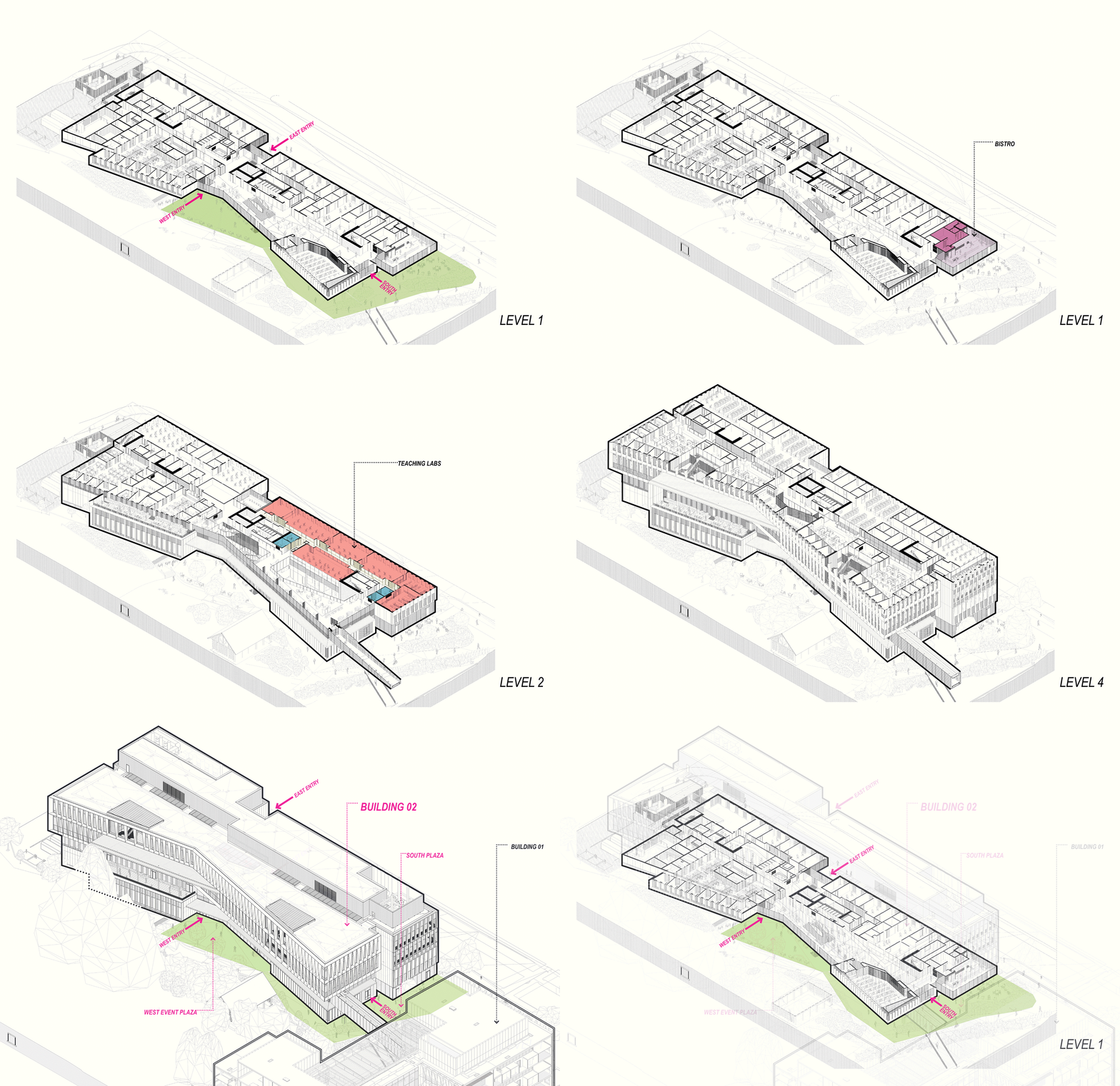
Upon entering the building from its primary south entrance, a two-story volume – the Forum – serves as the “living room” and social heart of the building. Strategically placed public amenities on the ground level are linked by the Forum, itself serving a convening function. In addition to a welcoming lobby and the public café, a large seminar room at the forefront of the Forum offers flexibility for a variety of events. The centrally located Biofabrication and Bioanalysis Core Facility is within view of the Forum, intended to serve as a research and scientific showcase.
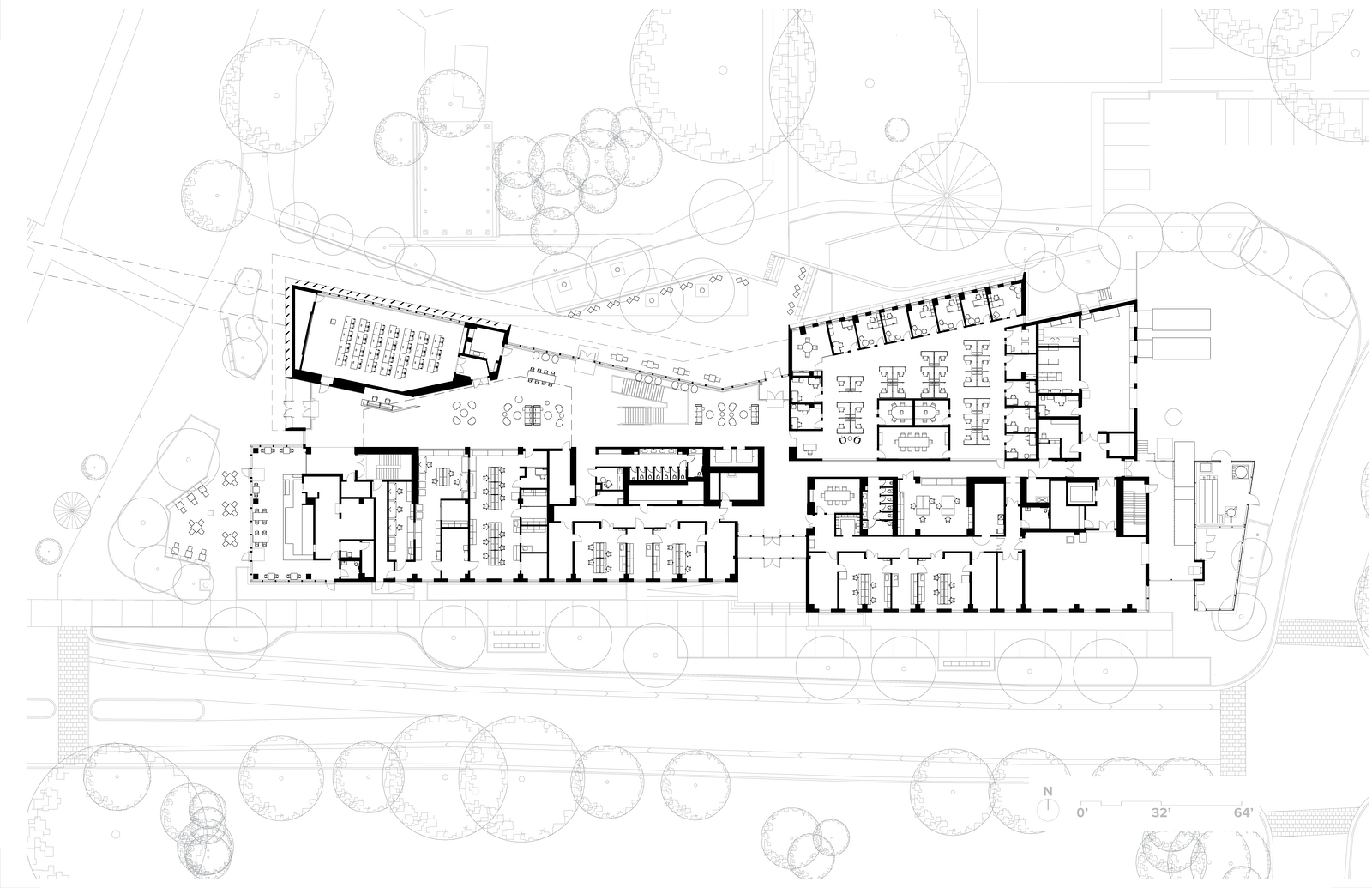
The second floor remains open above the Forum along the southwest elevation, offering a diversity of private hang out and larger meeting spaces through “corrugations” – nooks and crannies – in the circulation pathways and off the central stairs. The intent is to provide a balance of spaces for both privacy and collaboration, one of the key requests that came out of the DEI outreach efforts. Teaching labs and student maker spaces are located on this floor, as is the bridge connection to Building 1. The first of the experimentalist research labs and office neighborhoods are to the north of the Forum. All users can access a large outdoor terrace overlooking the greenspace and west plaza below, while capturing views of Building 1.
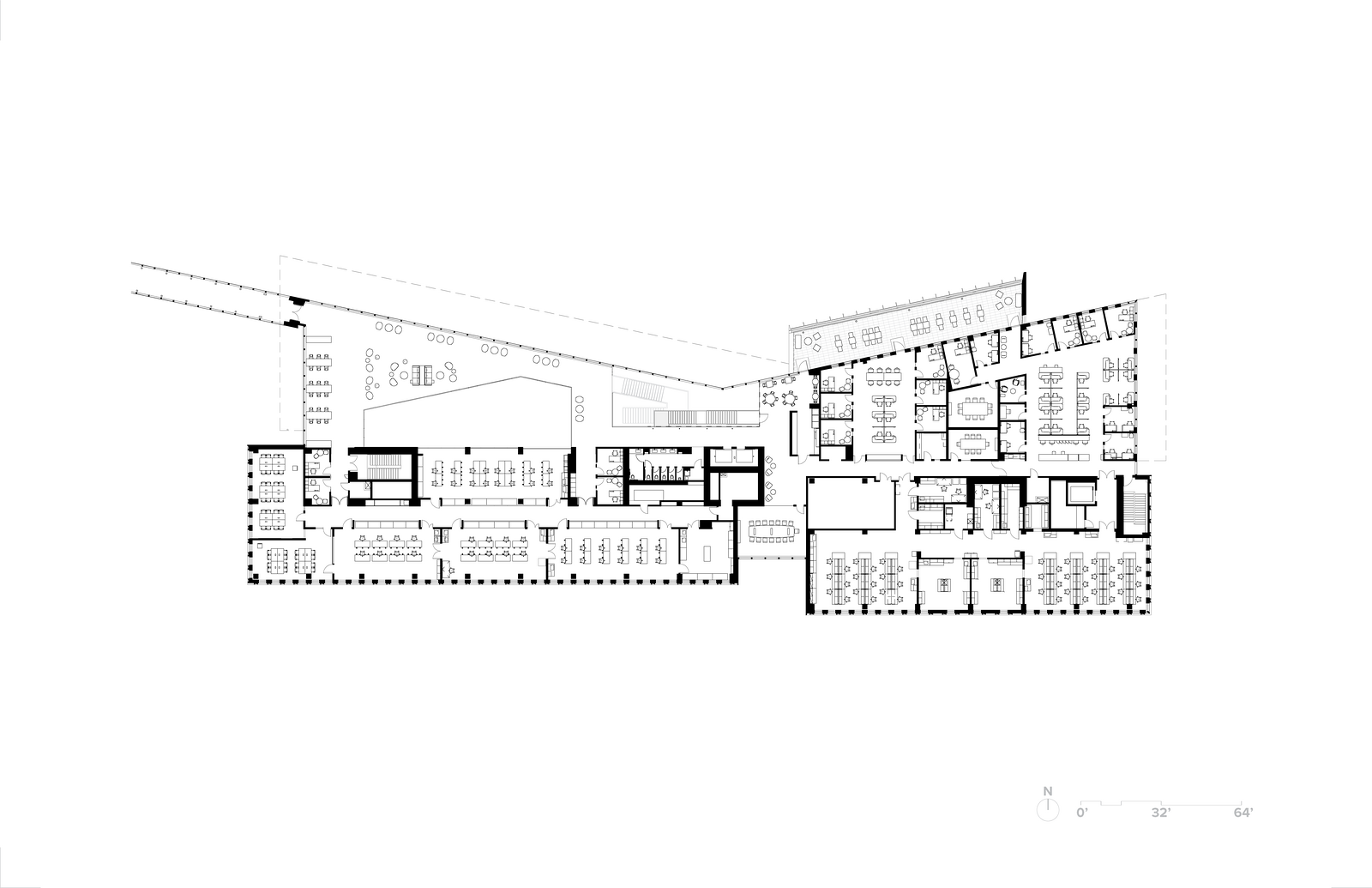
Levels 3 and 4 comprise the interconnected research neighborhoods in the east bar, laminated to the office suites, write up and collaboration spaces on the west. Suspended two-level courtyard terraces articulate the building mass on the west, and offer an outdoor extension of the office environment with direct views to the green open space. With a connecting staircase, these volumes evoke a treehouse quality while being covered from above to offer year-round use in the potentially wet, Northwest climate.
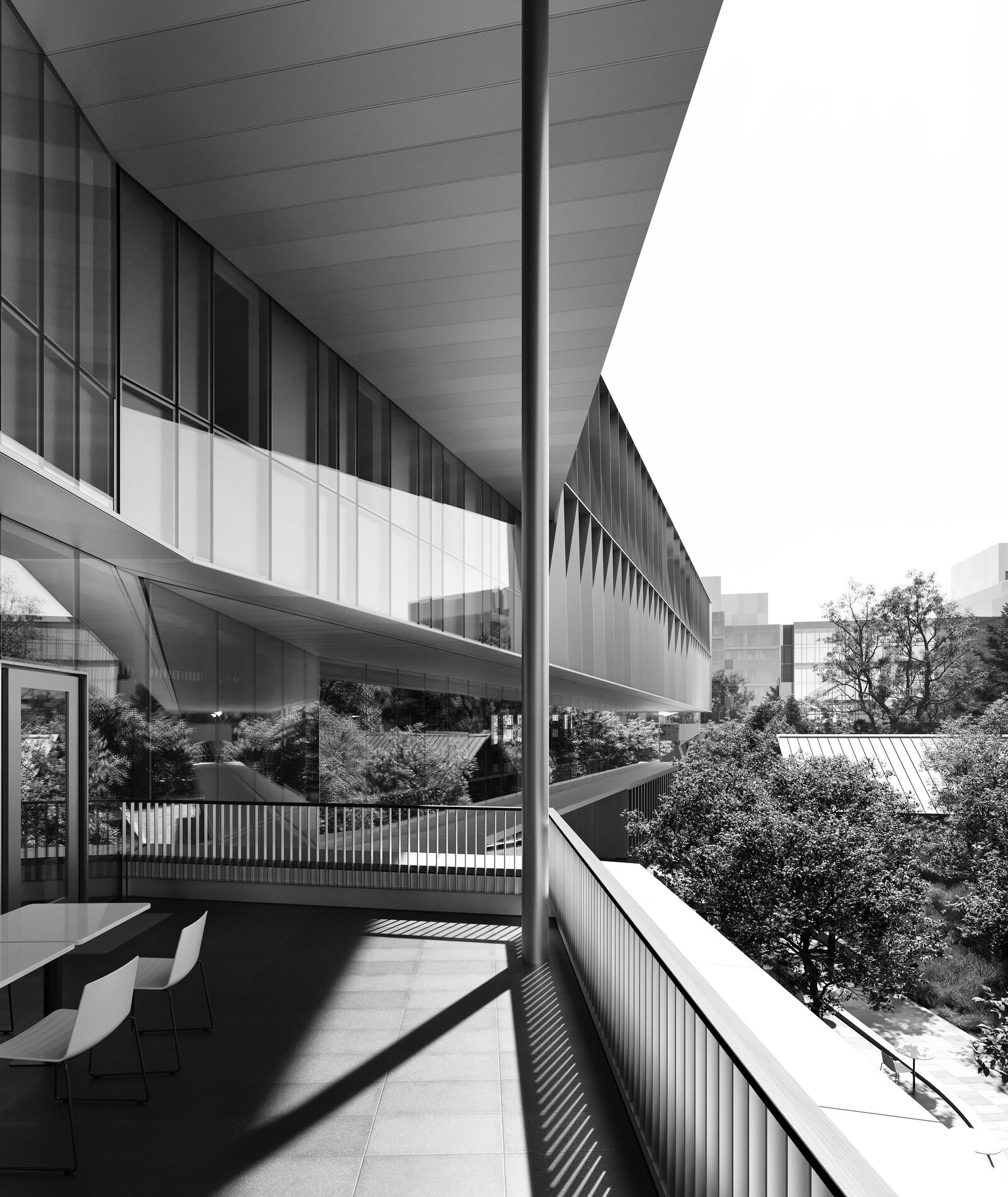
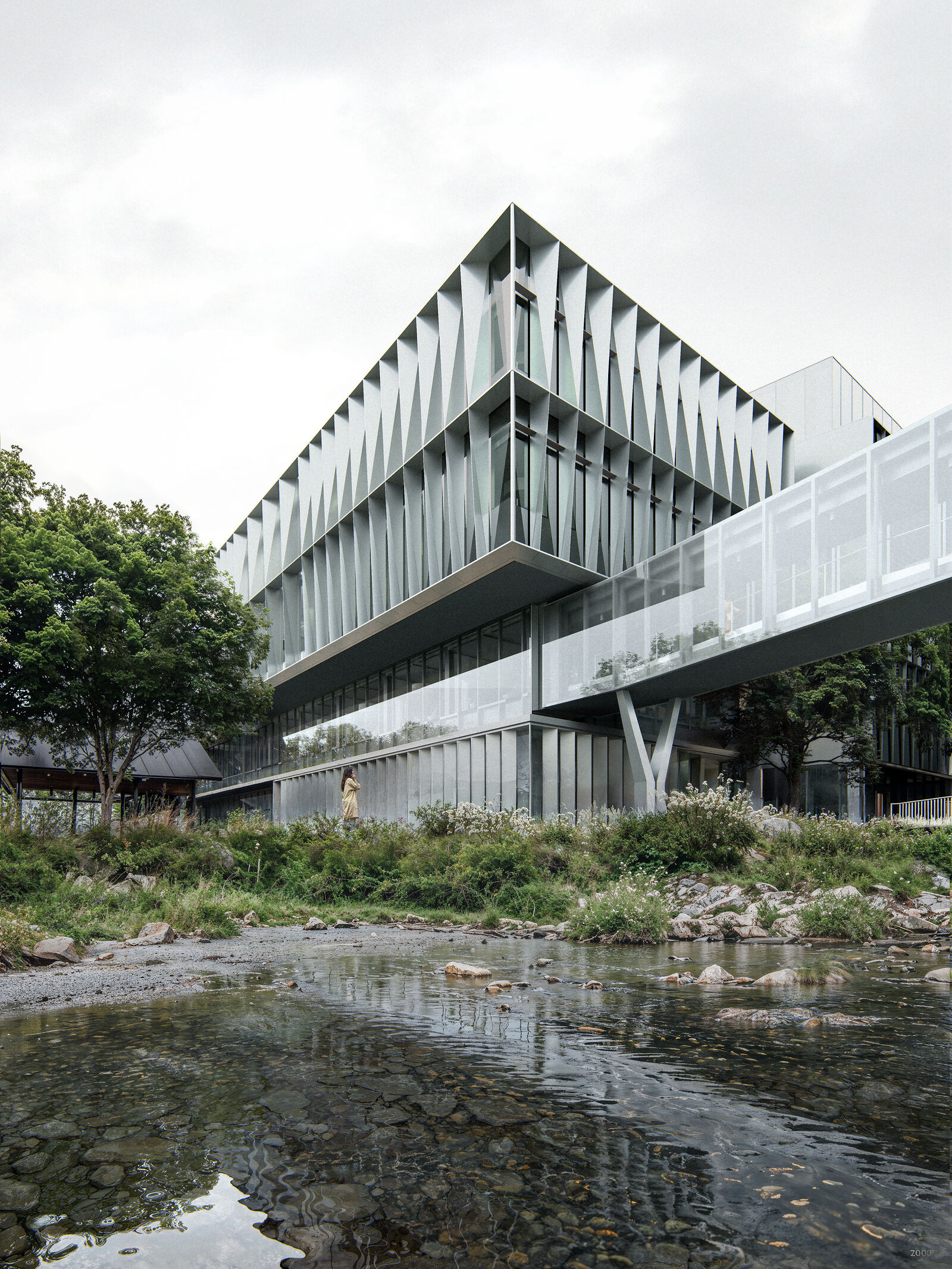
A protected glass façade, combined with erosion of the building mass through suspended courtyards and terraces on every floor, promotes indoor-outdoor connectivity with the surrounding plazas and green open space.
The building is targeting LEED Gold certification. High performance façades optimize window-to-wall ratios, complemented by layers of exterior shading, including interlaced canopies and faceted fins. The resulting façade patterns echo the filament texture observed in titanium scaffold bone implants developed by the Knight Campus’s own human performance labs.
Over 40% energy savings is achieved through daylight harvesting and efficient HVAC design, which includes heat recovery, chilled beams, and enhanced ventilation with high-quality filtration to improve indoor air quality.
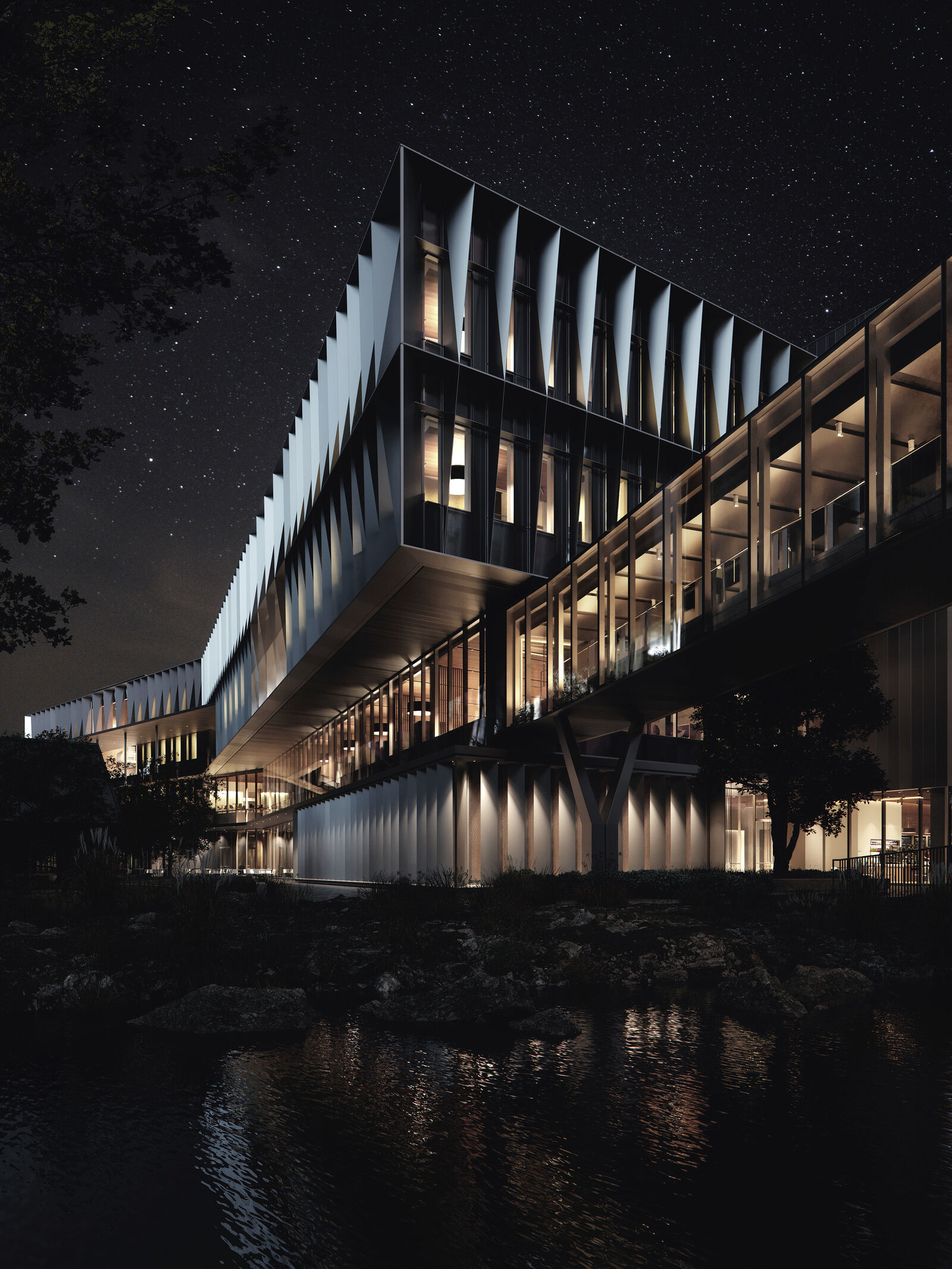
The high-performance building facade optimizes window-to-wall ratios, complemented by layers of exterior shading comprised of faceted metal fins to echo the exterior language of Building 1, in aluminum rather than glass.
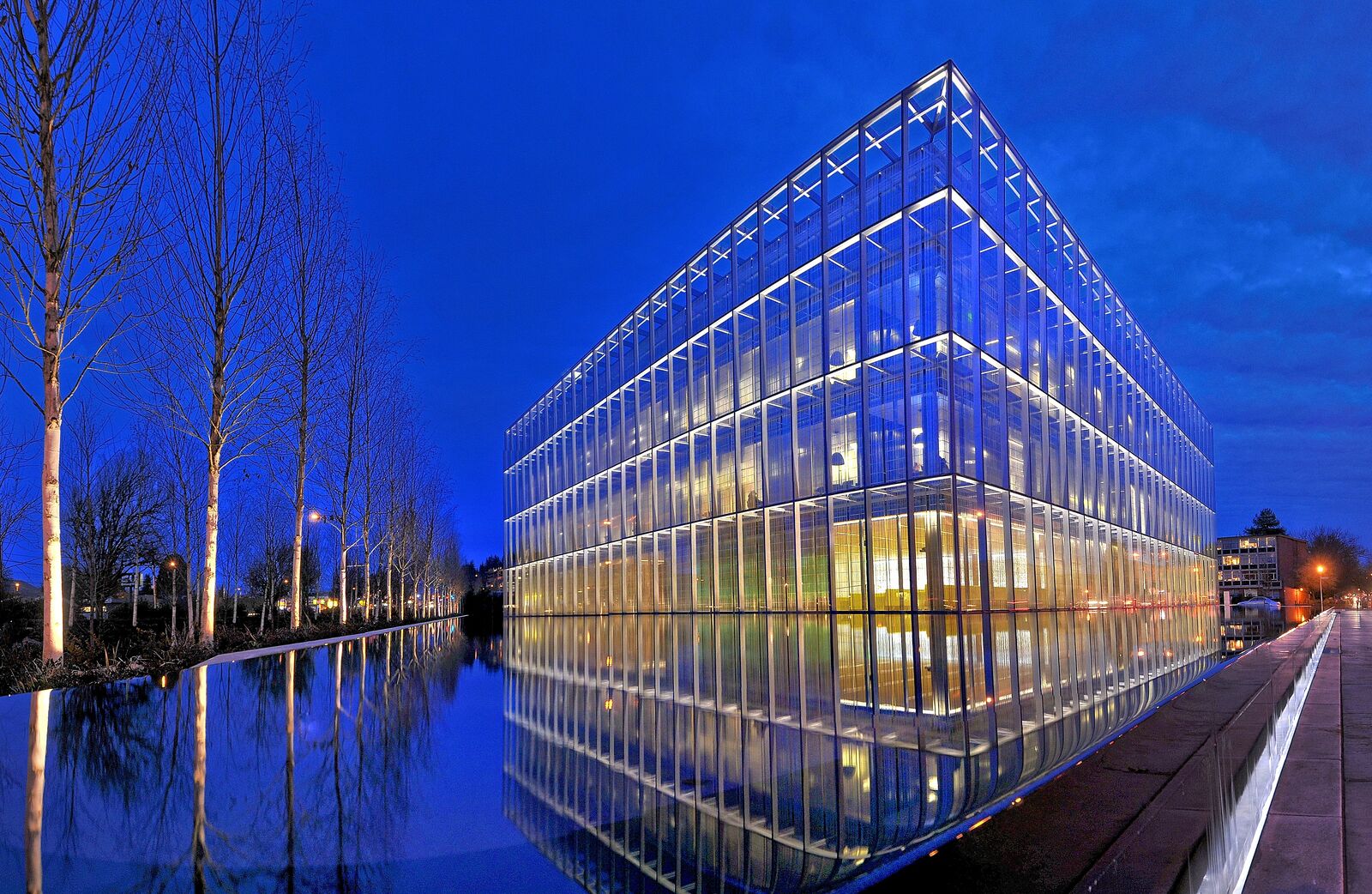
University of Oregon, John E. Jaqua Academic Center for Student Athletes
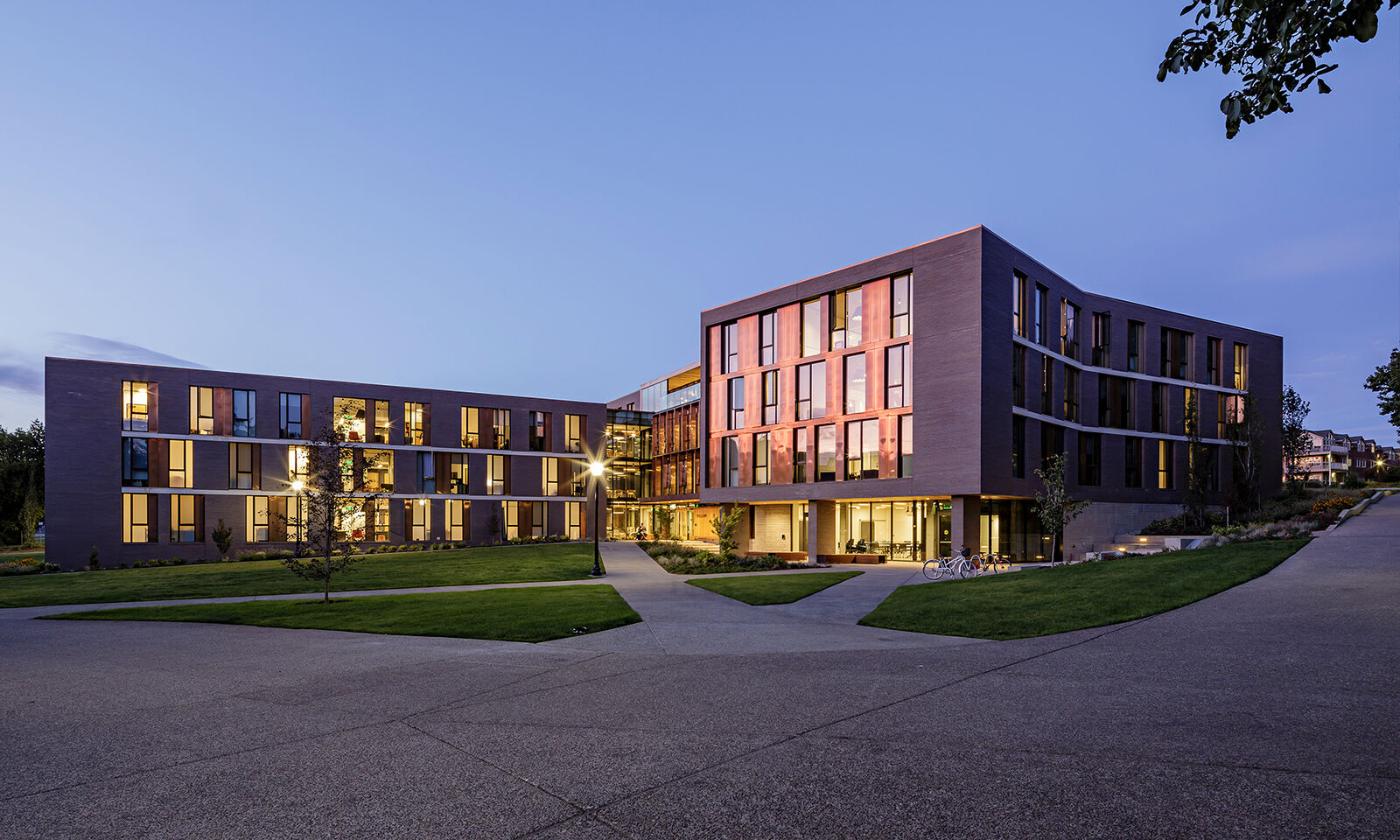
Reed College, Trillium Residence Hall
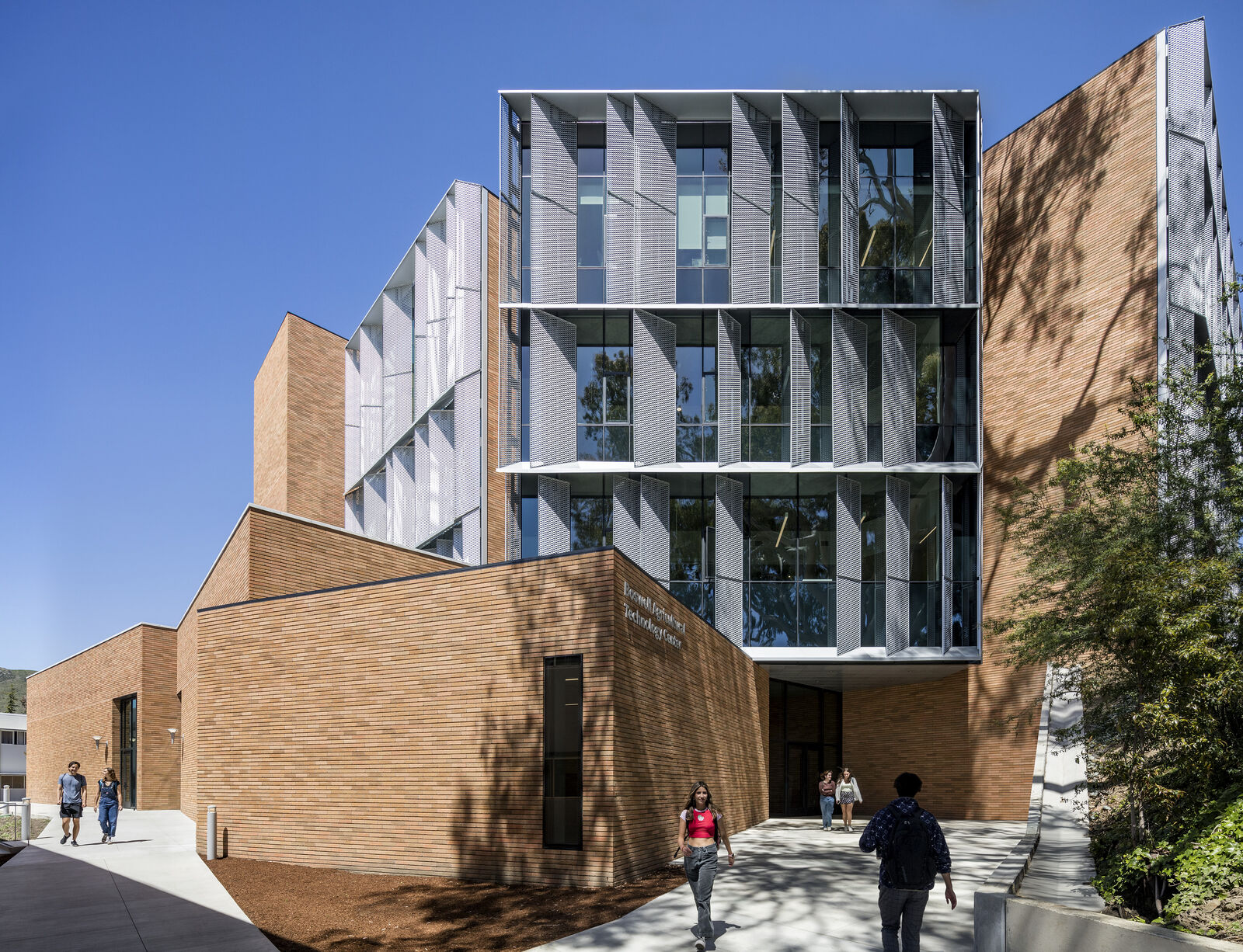
California Polytechnic State University, San Luis Obispo, William and Linda Frost Center for Research and Innovation
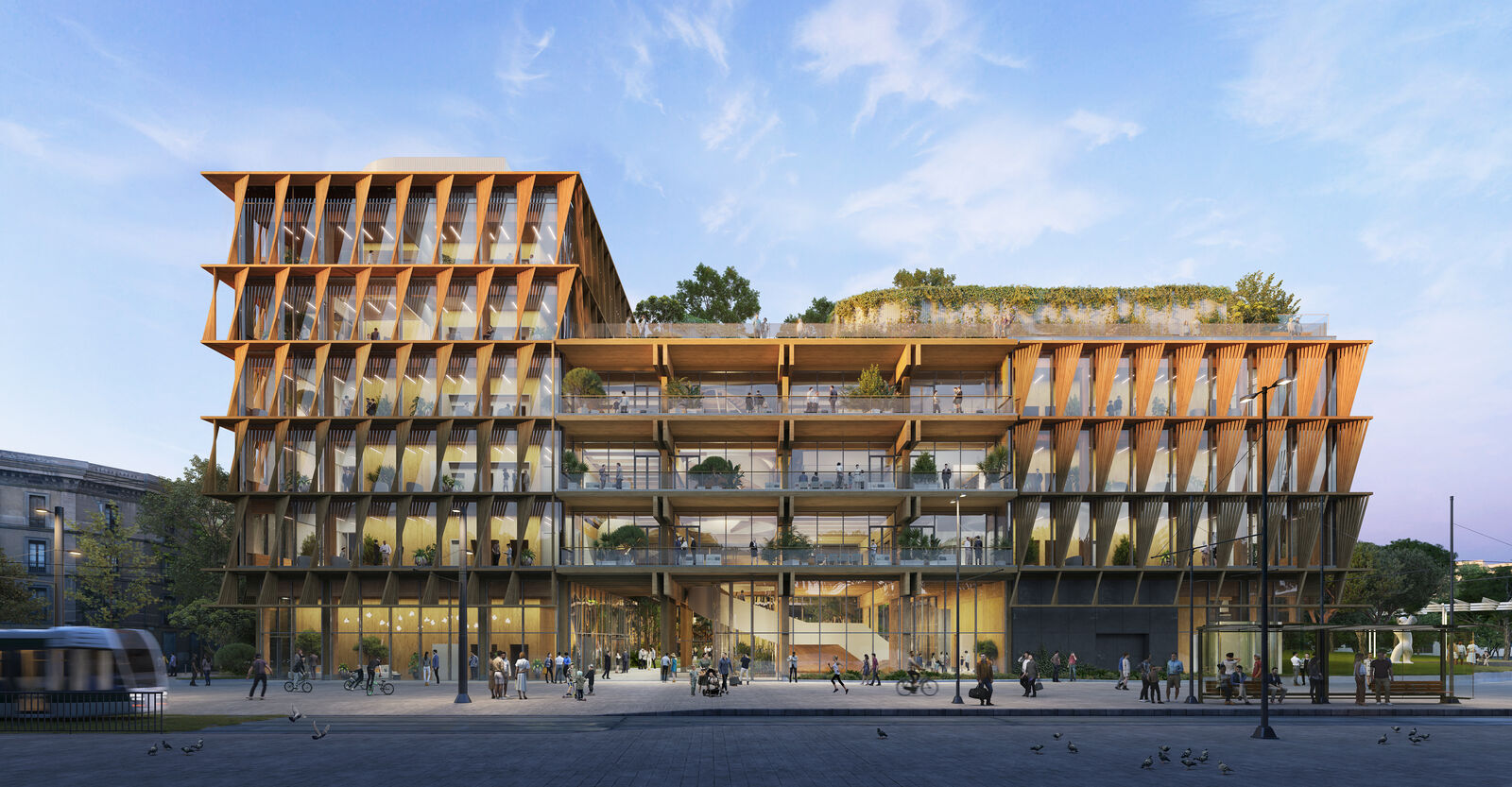
Mercat del Peix Research Center