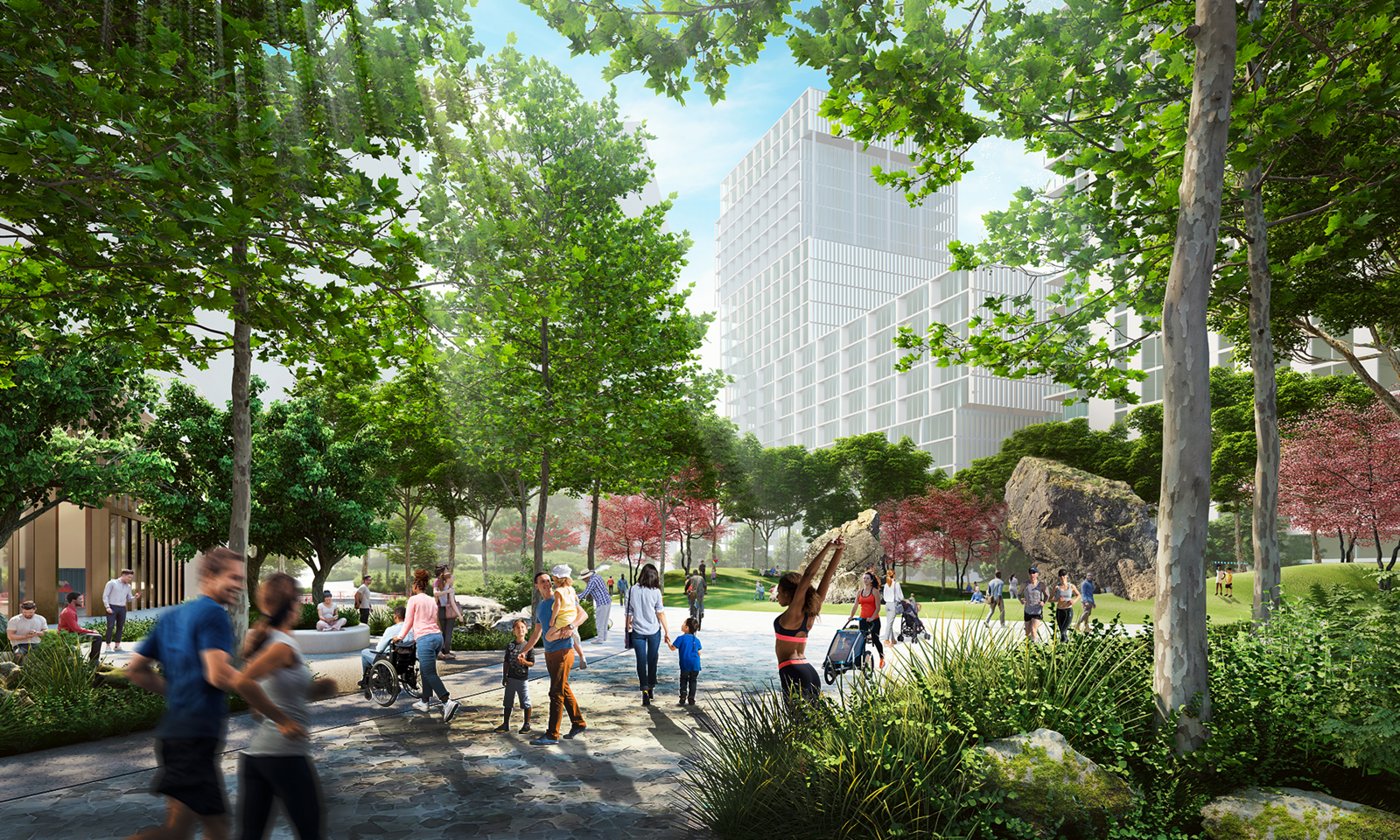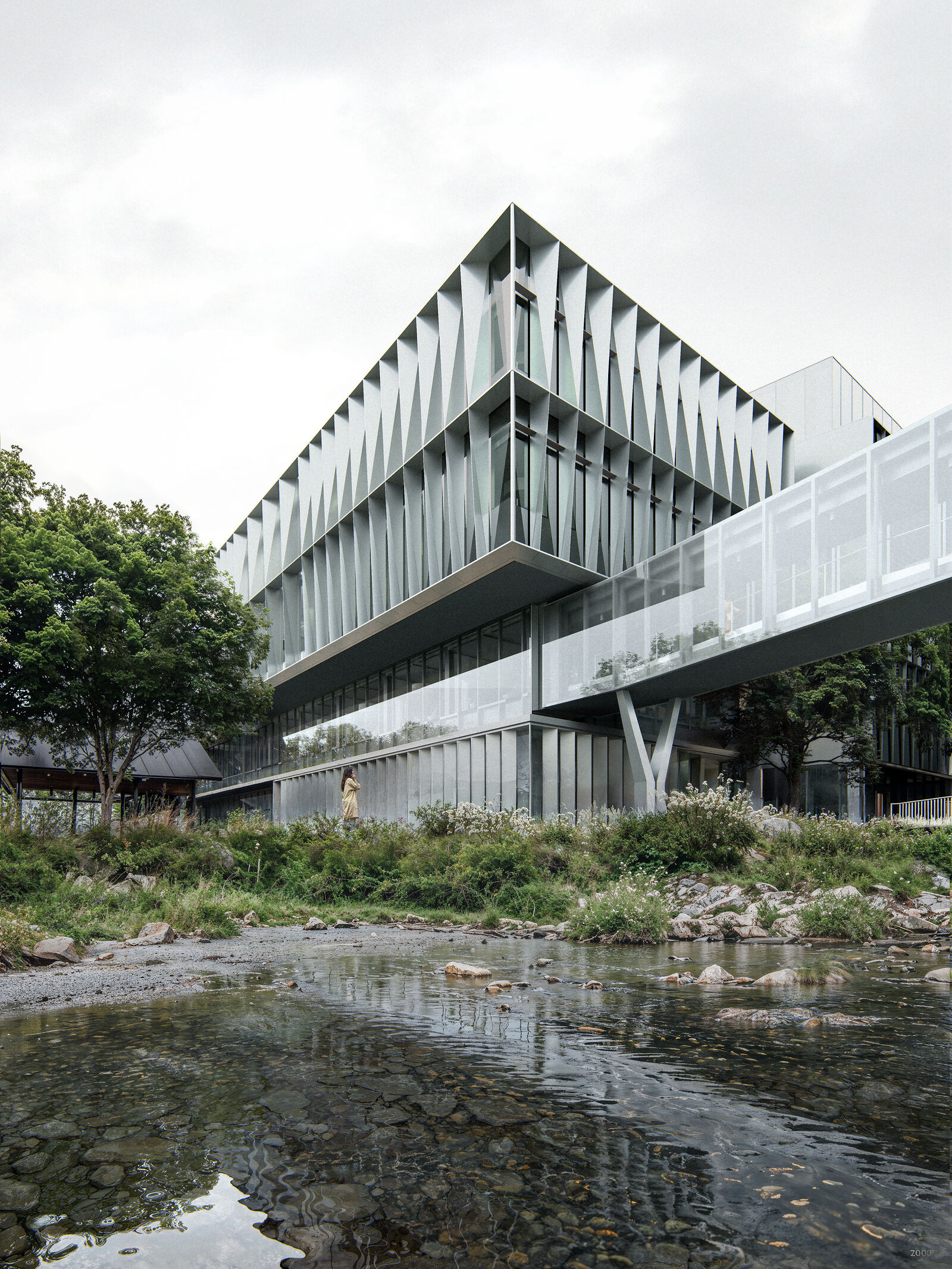

A Master Plan for the Future
University of Oregon Portland Campus Master Plan
Higher Education, Urbanism and Landscapes
In 2022, The University of Oregon purchased the 19-acre campus of the former Concordia University in Northeast Portland through generous support from Connie and Steve Ballmer—in part to establish The Ballmer Institute for Children’s Behavioral Health, and to establish a permanent home for the university in Portland. ZGF’s master plan for the new campus advanced a fast, nimble, and collaborative approach to academic campus planning that provides the university with a flexible long-term development framework that supports this growth and can shift as the UO’s needs continue to evolve and expand.
Envisioned as a set of landscapes and unprogrammed development sites, the campus master plan sets the framework of circulation, open space, and building sites to achieve the long-term vision for the UO Portland that is a part of—yet also unique within Portland. Designed around welcoming and vibrant gateways, walks, and quads, these elements reveal themselves as users move through the campus. Each quad and gateway has its own personality and distinctive sense of place, while the walks act as connectors and unifiers.
Location
Portland, Oregon
Project Component
Master Planning
Urban Design
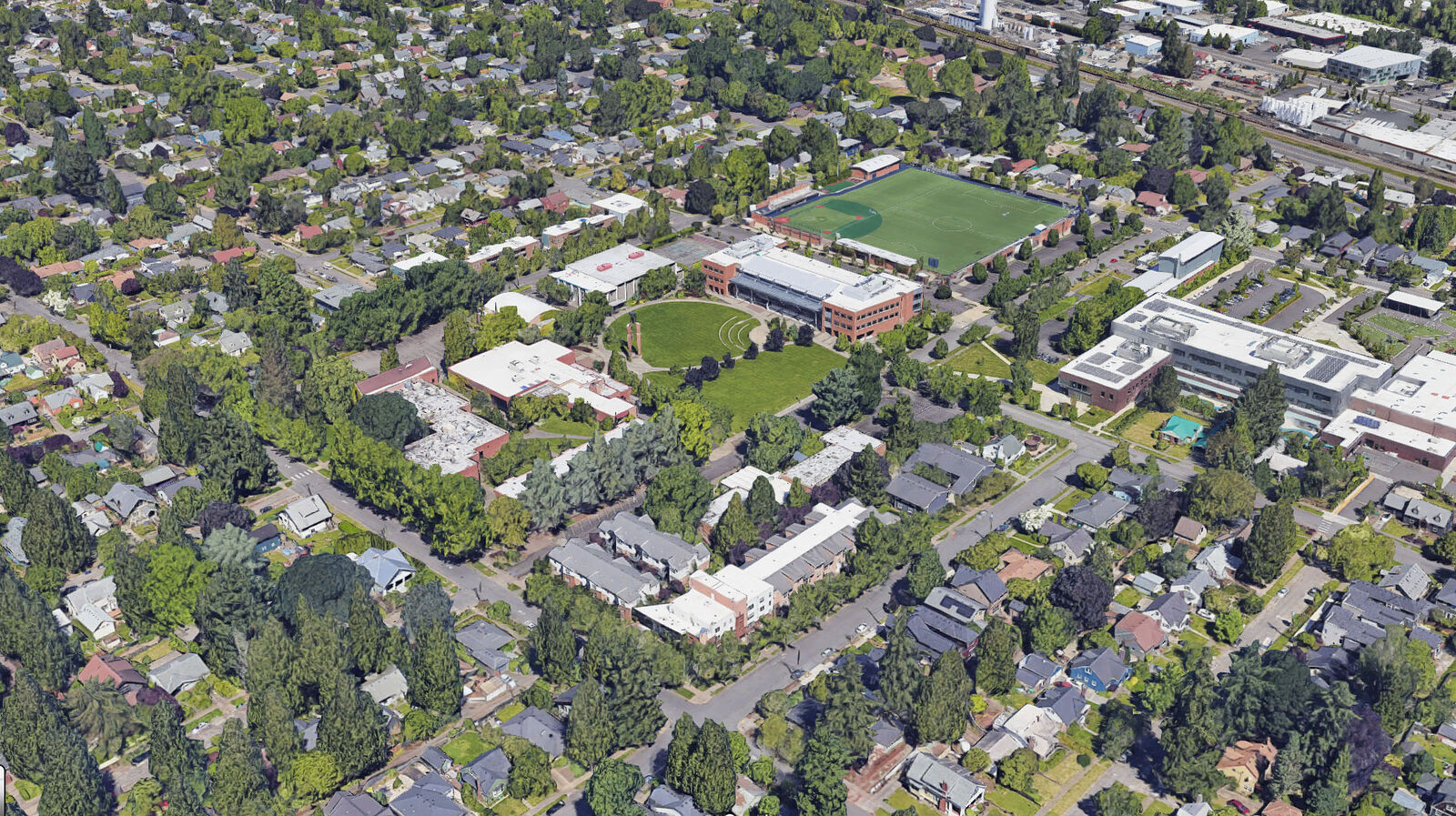
Aerial view of campus from the southeast.
"ZGF Architects were committed to an engaged and value-based process. It allowed us to dig deeply into the realities of the campus now, imagine the opportunities for evolution, and create a guide for the future."
Jane Gordon, Vice President for Portland, University of Oregon
The framework for the 19-acre campus functions as a holistic ecosystem. The Central Quad serves as the heart of the campus, with a set of small, unique, and distributed open spaces that organize the campus into distinct precincts, adding depth to the already intimate setting, encouraging exploration, and allowing an infusion of academic and student life. The walks knit the quads together enriching the environment, while gateways invite the surrounding neighborhood to enjoy the campus.
The master plan gives the UO Portland campus the greenery and campus life reminiscent of the collegiate atmosphere of the UO’s main campus in Eugene, while connecting with the local community and feeling distinctly Portland. The campus is influenced by its surrounding Northeast Portland neighborhood with soaring Douglas firs, picturesque low-scaled bungalows with lush gardens, and majestic views of Mt. St. Helens and Mt. Hood. This creates a dynamic that is both intimate and epic—echoed on campus in charming buildings such as Highland Hall and the sprawling character of the Innovation Building. In the past, these characteristics developed organically over time. However, with the new master plan there is an opportunity to intentionally shape the campus over time and enhance its experiential impact.
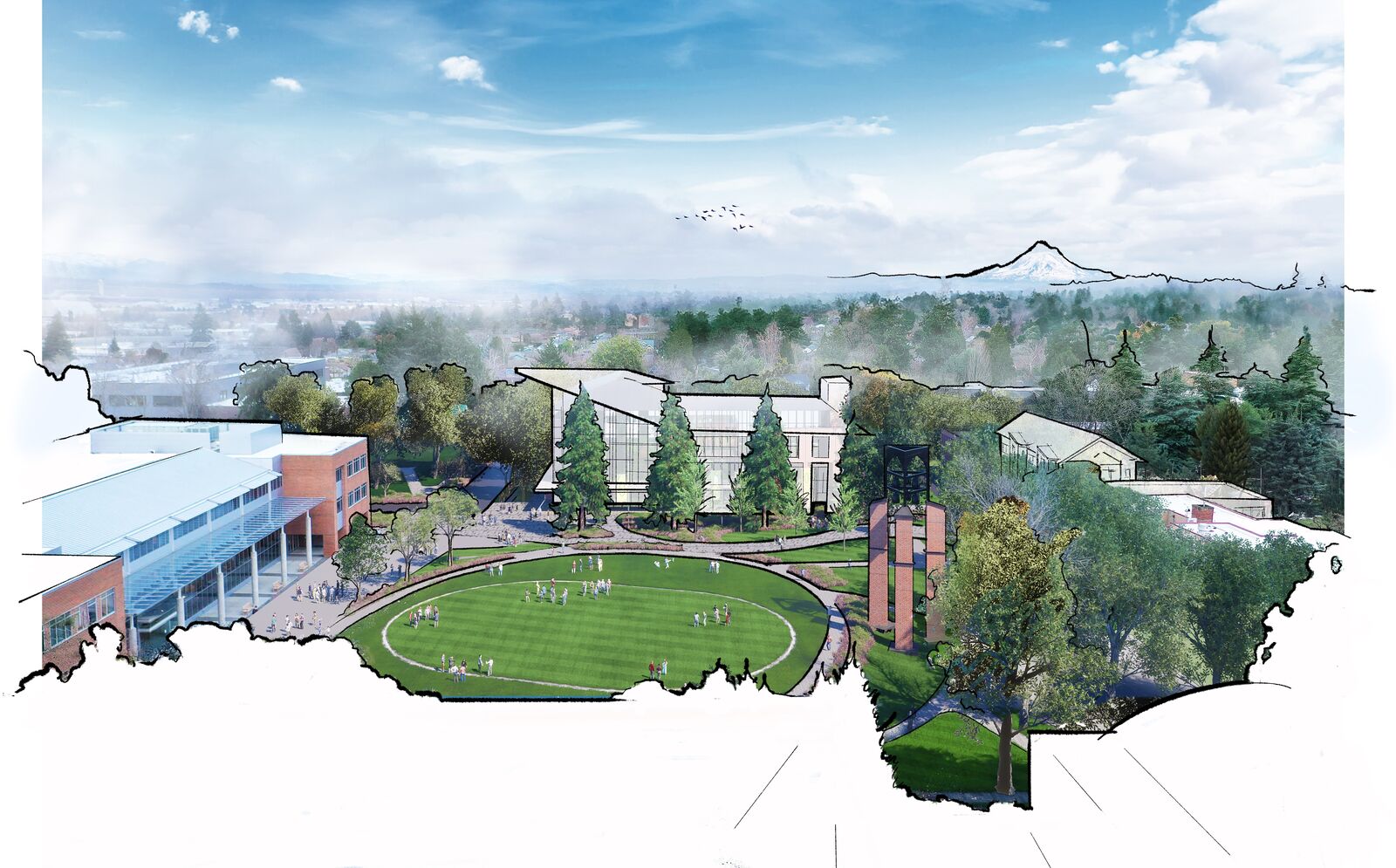
The UO Portland campus is a living academic community that is supportive of students, researchers, and visiting professionals. An open and enduring cornerstone of the Portland community—that will continue to grow and evolve while remaining connected to the history of its land and neighborhood.
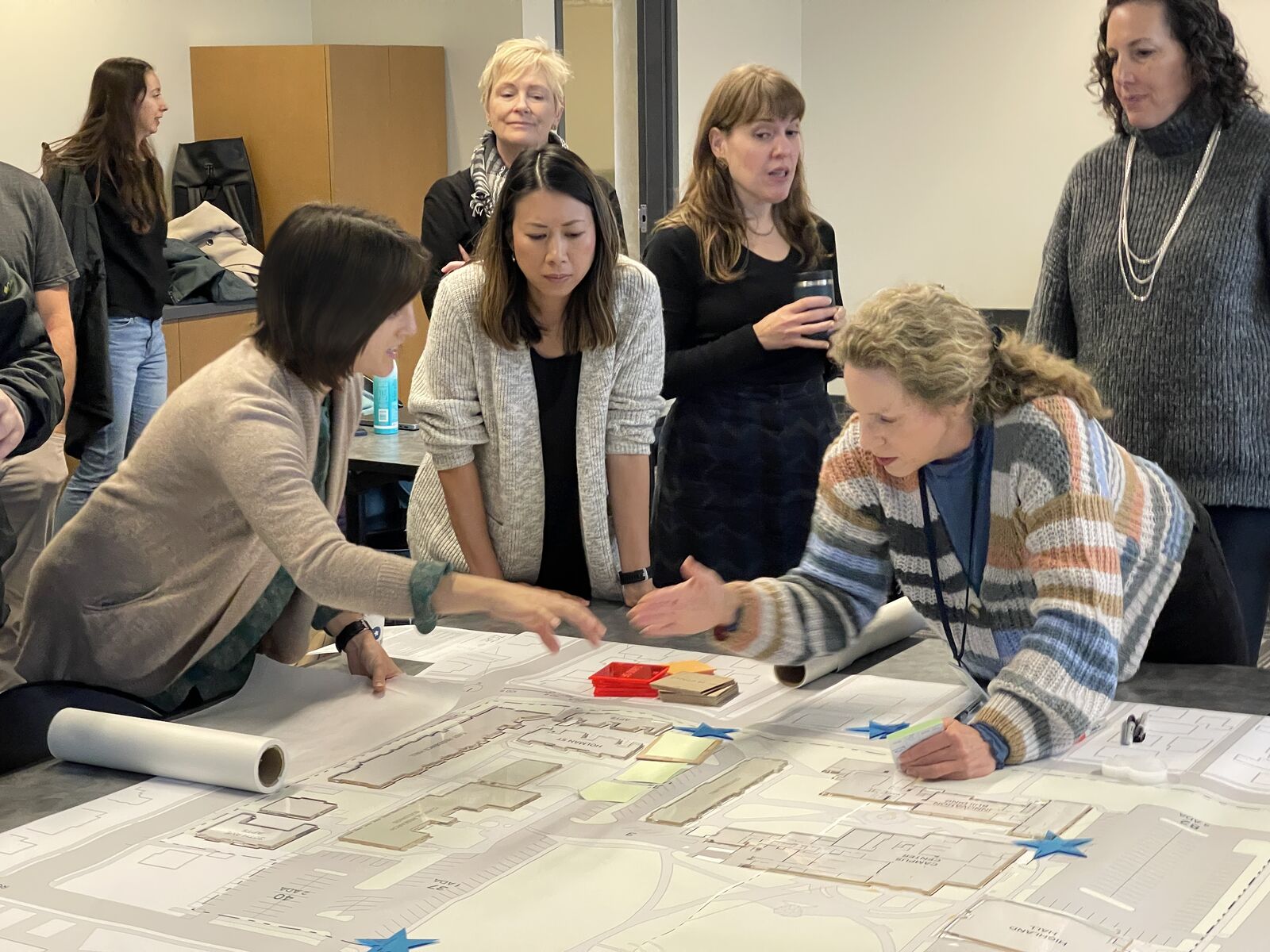
The master plan creates a comprehensive development framework that seamlessly balances functionality, aesthetics, and community integration. This framework focused on addressing critical aspects of campus planning, including potential building sites, activation of ground-level spaces, and maintaining a cohesive human-scale throughout campus.
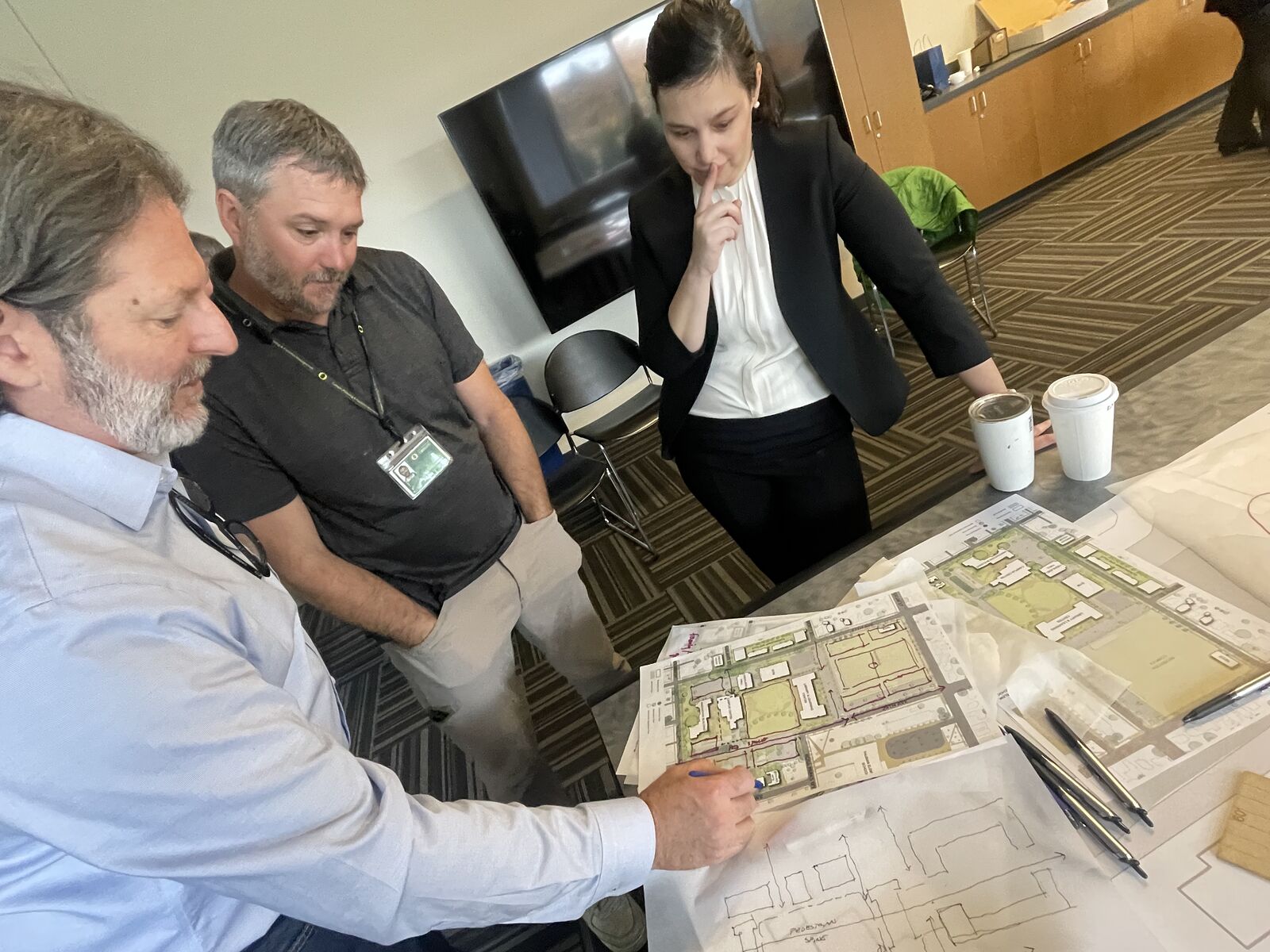
Building on the UO’s tradition of responsible stewardship, UO Portland is a model for sustainable campus development. The sustainability approach reflects a forward-thinking strategy to reduce operational carbon—emissions from campus energy use— lowering emissions today while taking advantage of the regional electric grid’s move toward carbon neutrality to achieve net zero in the future. Since acquiring the campus, the university has proactively worked to transition away from fossil fuels and to electrify buildings, significantly reducing emissions. The result is a campus that not only meets the university’s operational needs but also recognizes City of Portland commitments and contributes to global efforts to reduce carbon emissions.
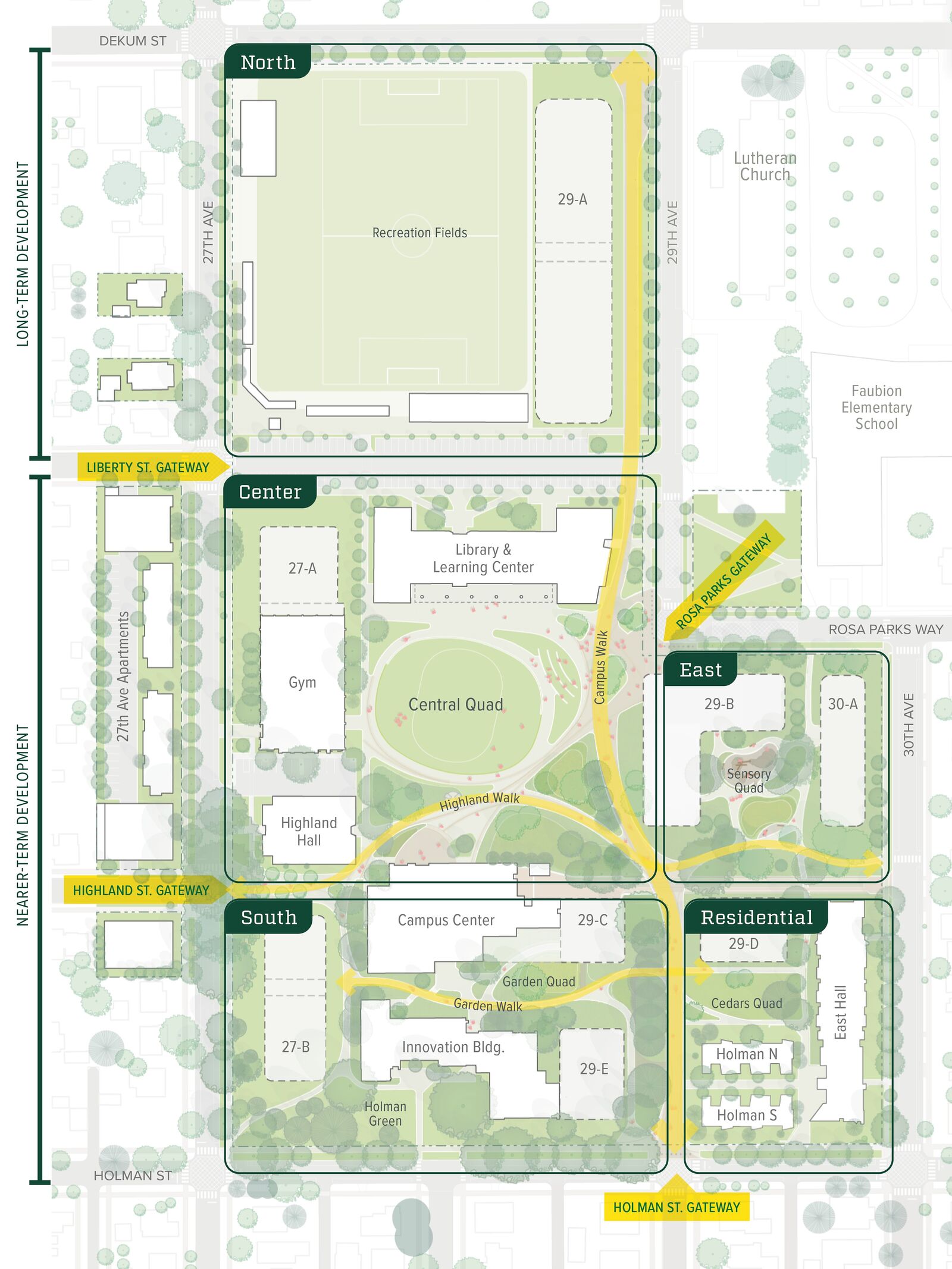
The master plan identified a clear physical framework of circulation routes “Walks” and open spaces “Quads”. Within this open space framework, sites for future development were outlined with how they could be developed to meet the university's goals with massing and function (academic/administrative versus residential uses).
Thoughtfully structured, the master plan acknowledges the value of the campus’s heritage and community connection—planting the university’s flag on its new campus and providing a roadmap for sustainable and strategic development. By capturing and celebrating the natural and cultural history of the site, the UO Portland master plan ensures that each element reflects both the university's vision and the neighborhood's character, fostering a harmonious integration and an enduring legacy.

Oregon State University, Engineering Next Playbook