Sourcing Healthy, Cost-Neutral Materials: A Rural Hospital Makes the Case
Jefferson Healthcare is undergoing a 56,000 SF modernization and expansion that will transform patient care while providing a model for sustainability and health equity.
Healthcare
Overlooking picturesque Port Townsend Bay on the Olympic Peninsula, Jefferson Healthcare is the largest critical access hospital in Washington state. ZGF and Abbott Construction, as a design-build team, recently completed a 56,000 SF campus expansion and modernization for Jefferson to provide vital new services and state-of-the-art care closer to home for the region's aging population.
Port Townsend, WA
56,000
2025
Architectural design services
Interior design services
Medical planning
A sibling building
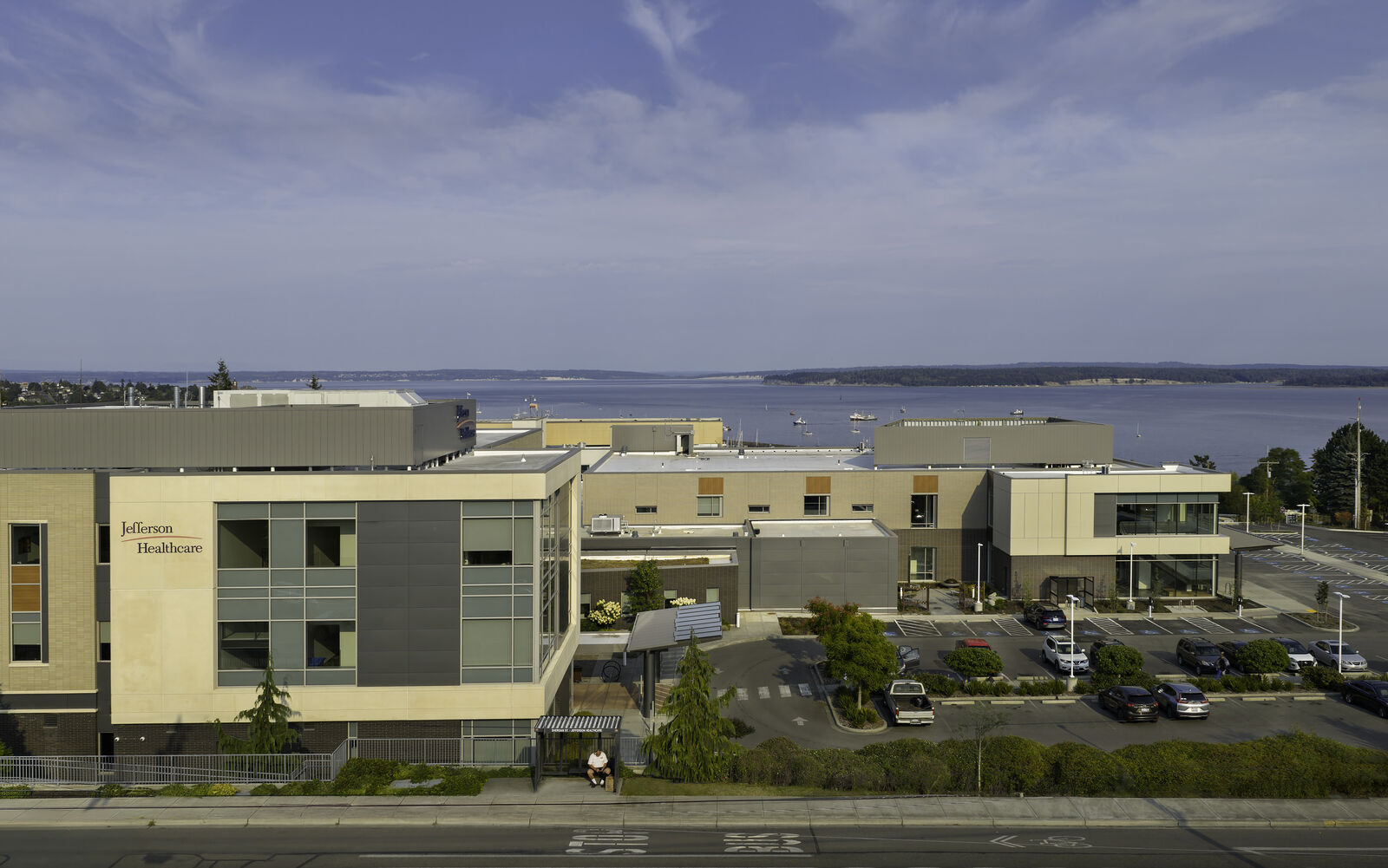
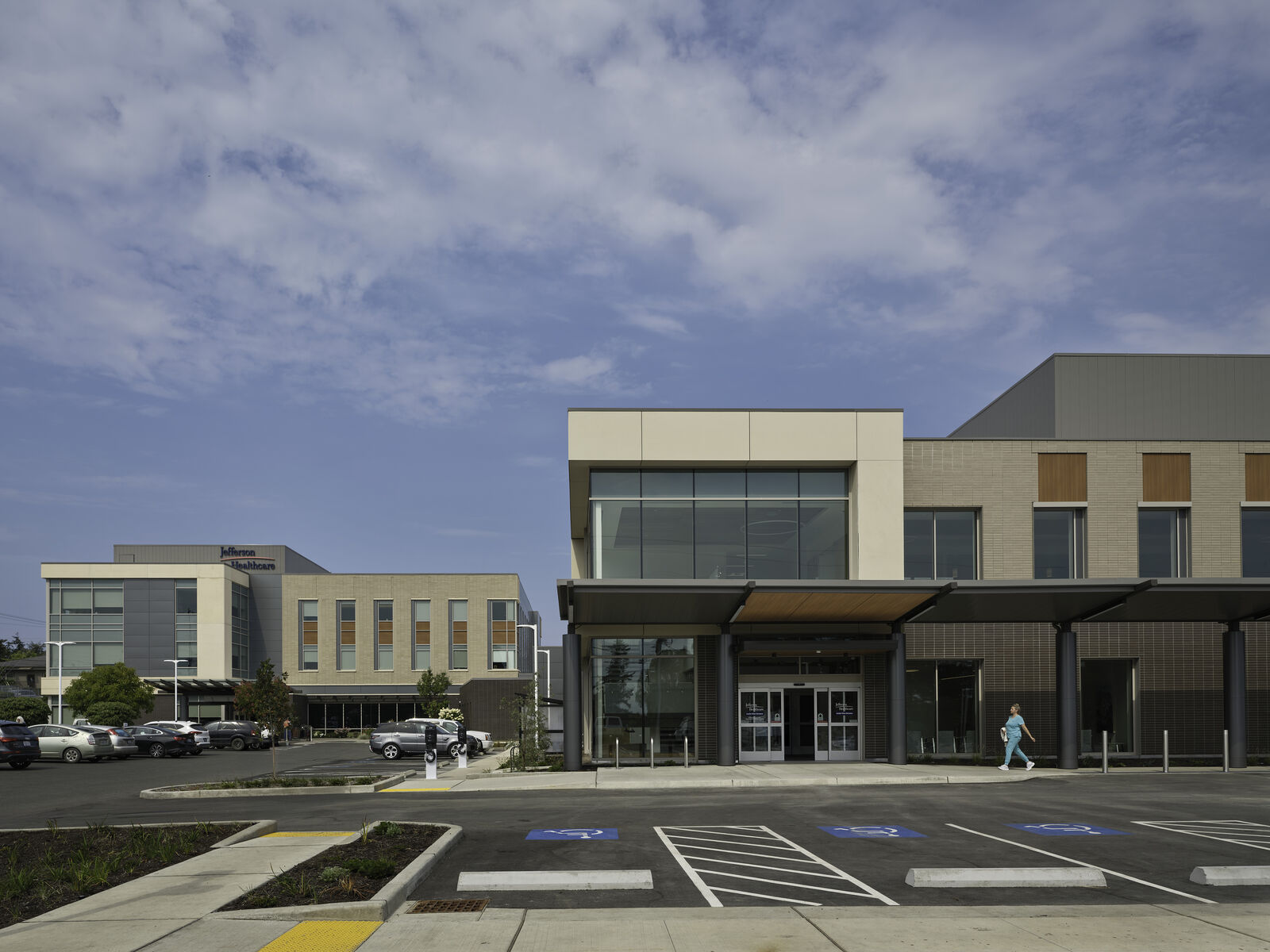
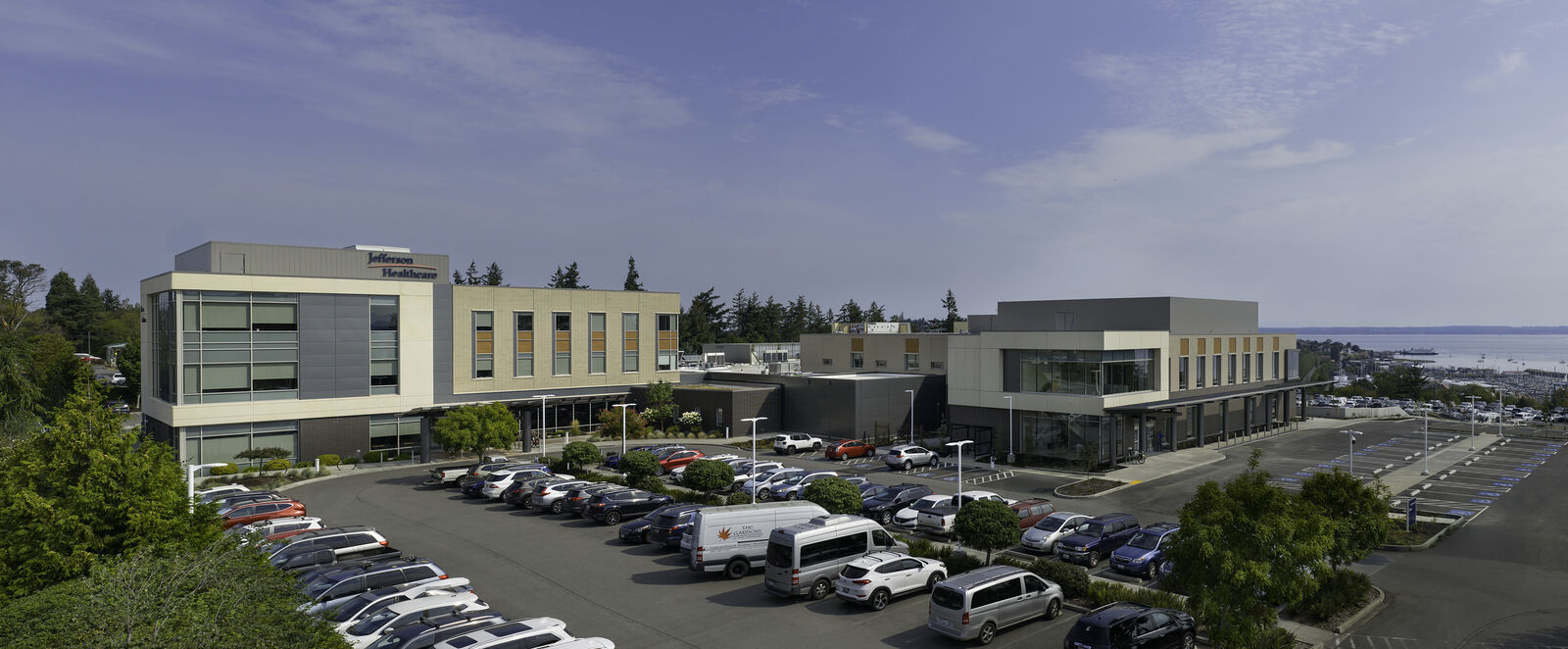
The exterior design reflects the existing hospital, beloved by the Port Townsend community, creating a sibling building to the 2015 addition it connects to. The new two-story volume—matching in colors, materials, and proportions—offers a more subdued version of the adjacent three-story building, which serves as the hospital’s primary entrance. The facades work together in concert and bookend the exterior design as patients and staff approach the campus.
The design team’s creative site planning allowed for much-needed expanded parking, an important driver for hospital outpatient services as well as providing a warm and welcoming arrival experience.
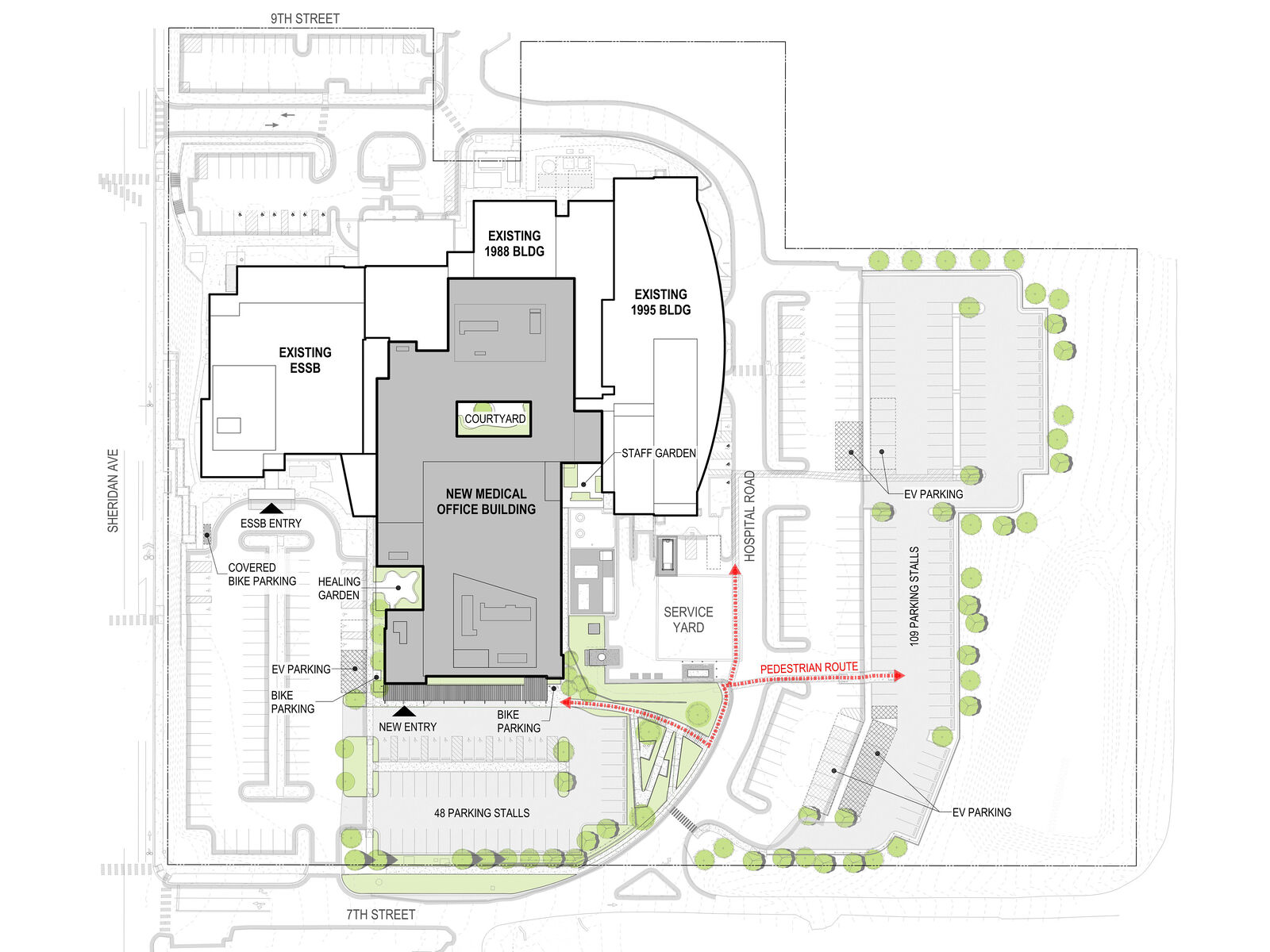
The hospital’s oldest building, constructed in 1965, was deemed beyond its useful life and demolished to make way for the new, larger facility, transforming patient care in East Jefferson County.
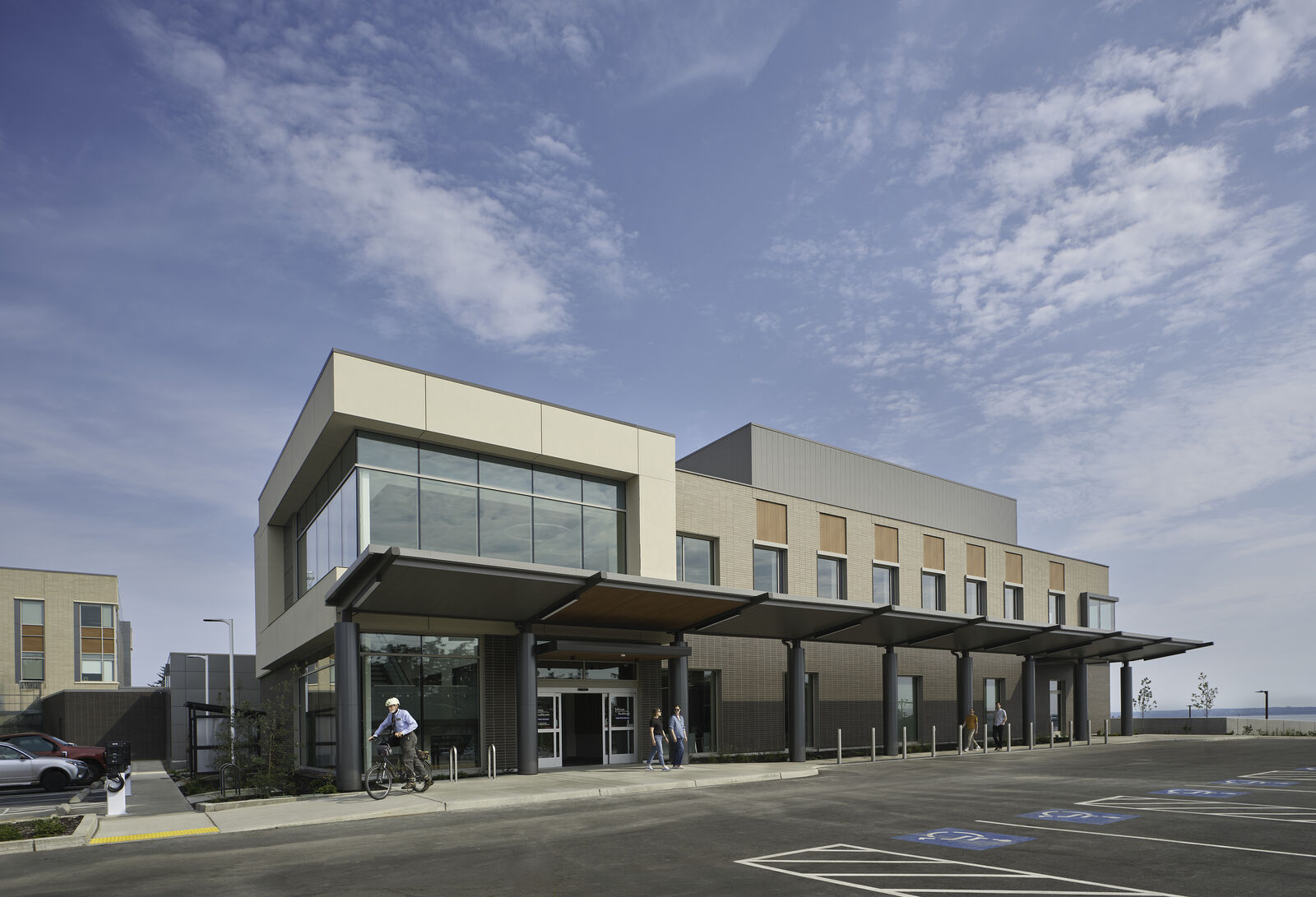
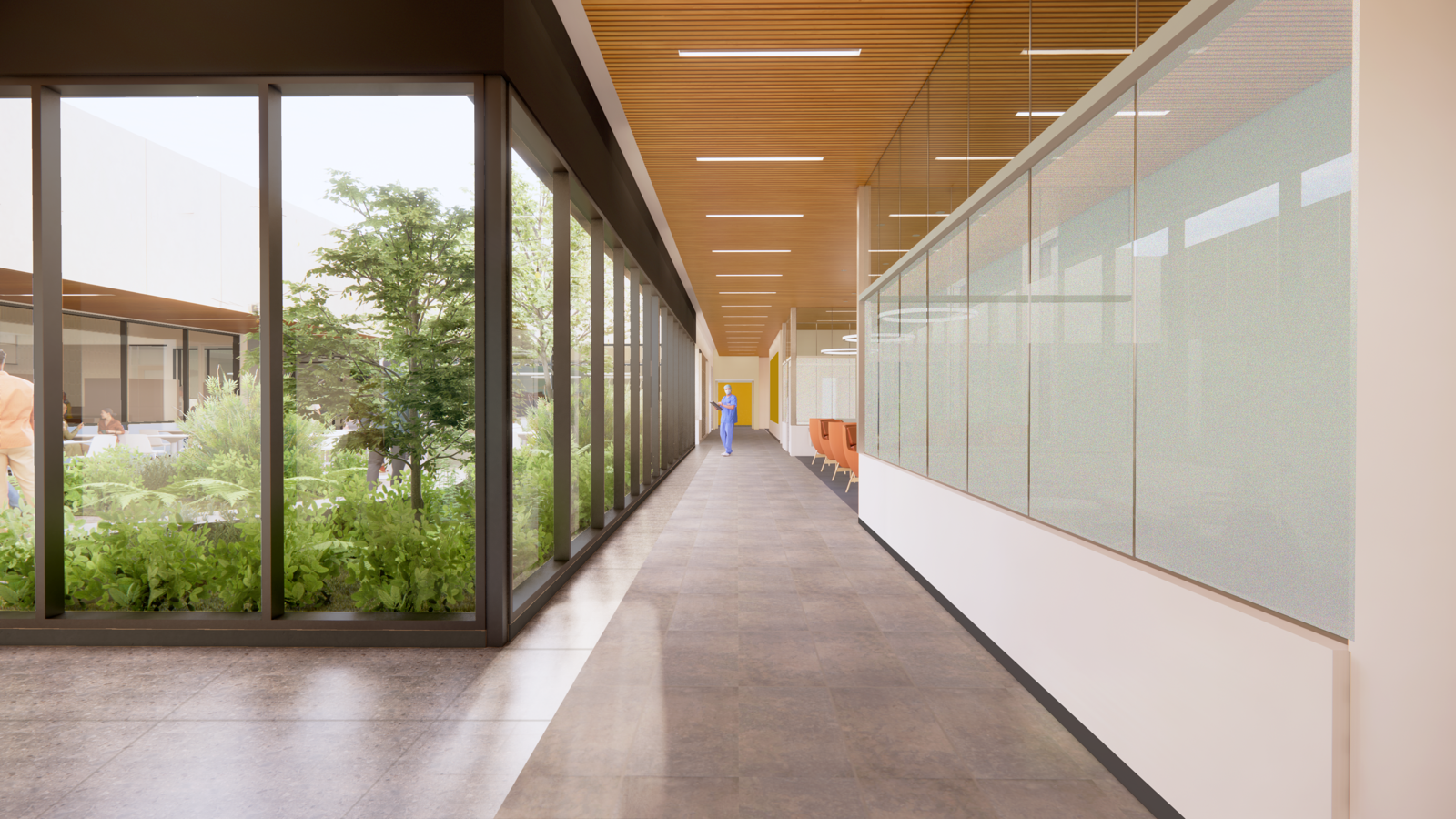
The new medical office building creates a second entrance to the hospital with sweeping views, multiple specialty clinics, and office space.
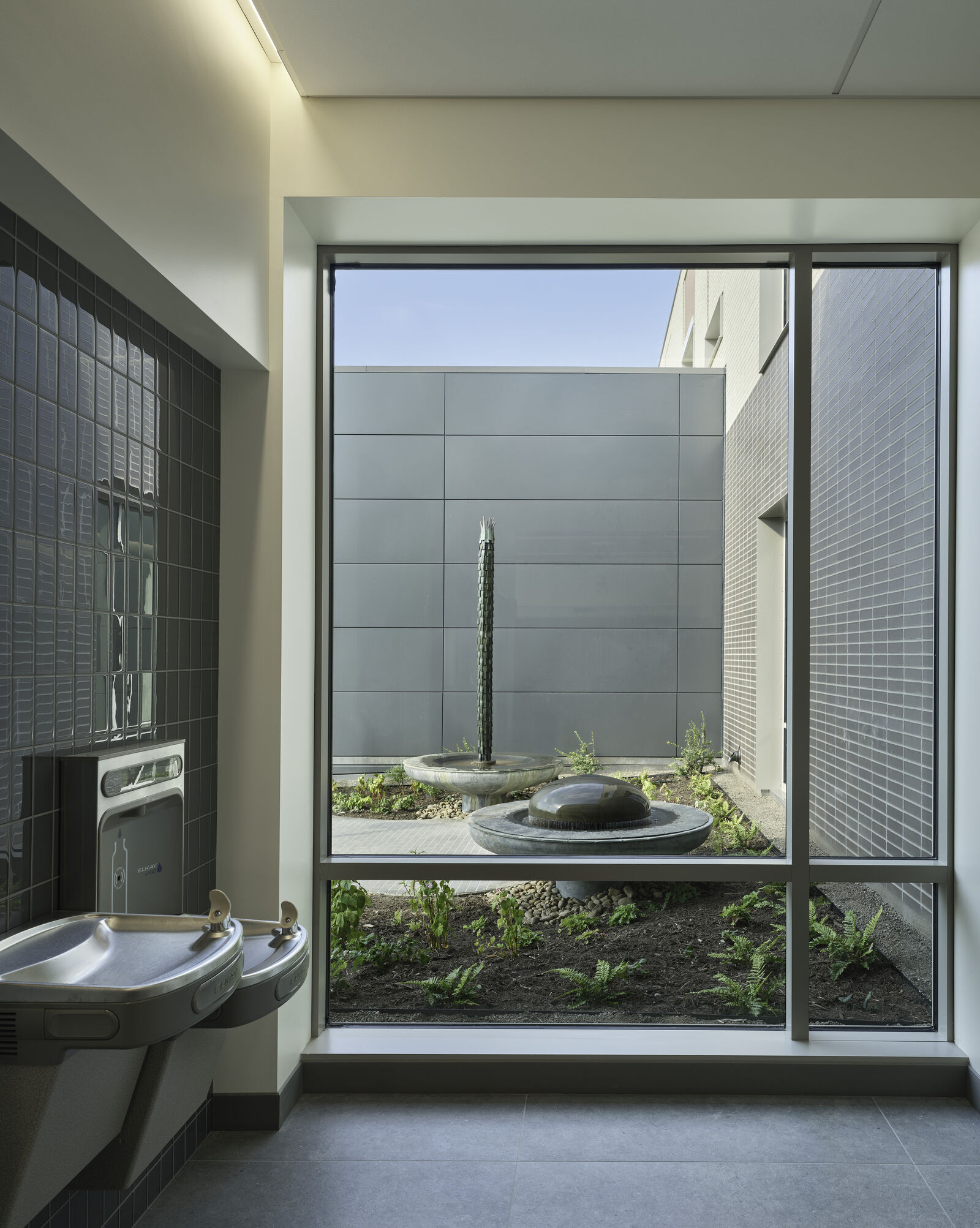
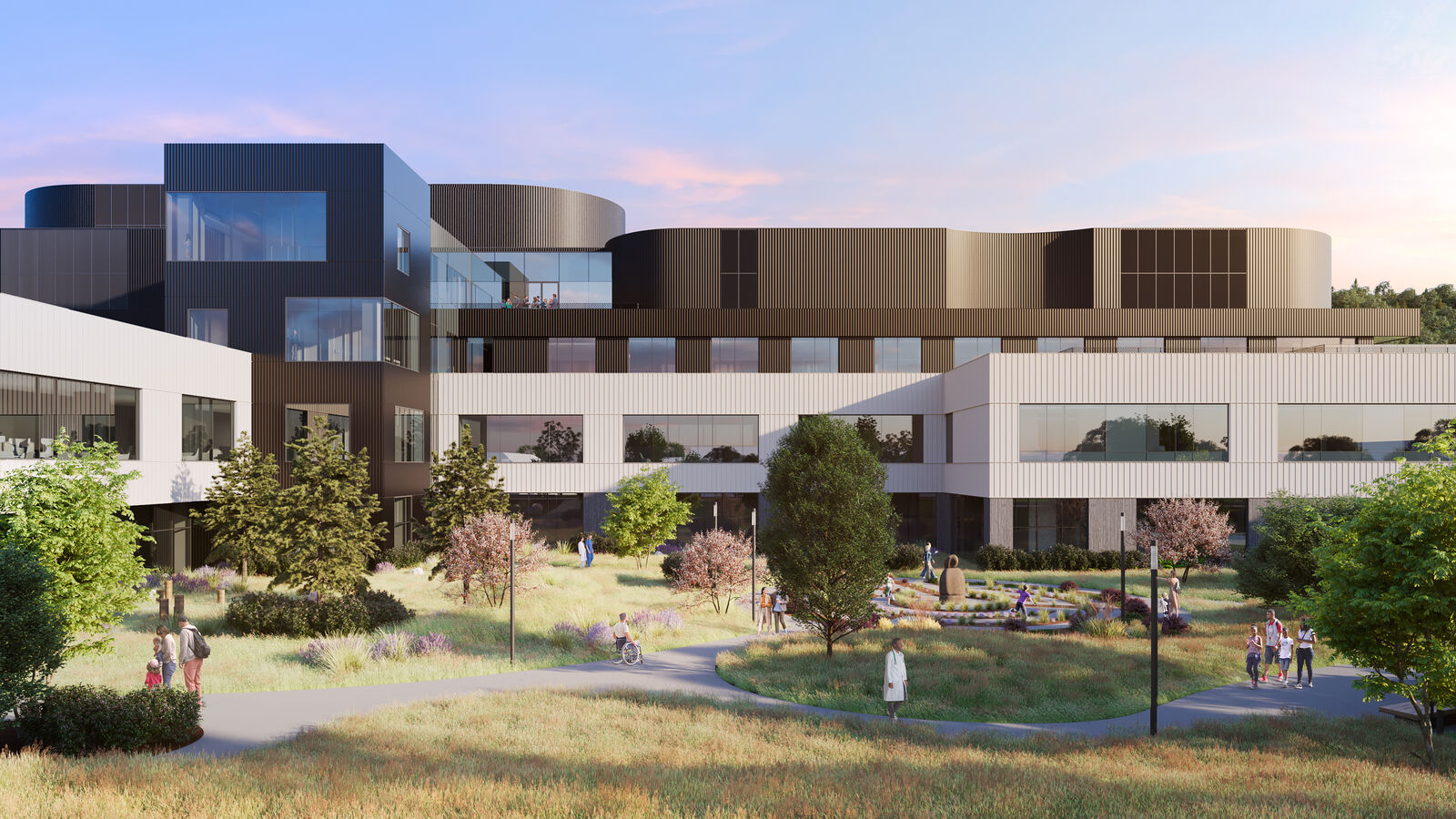
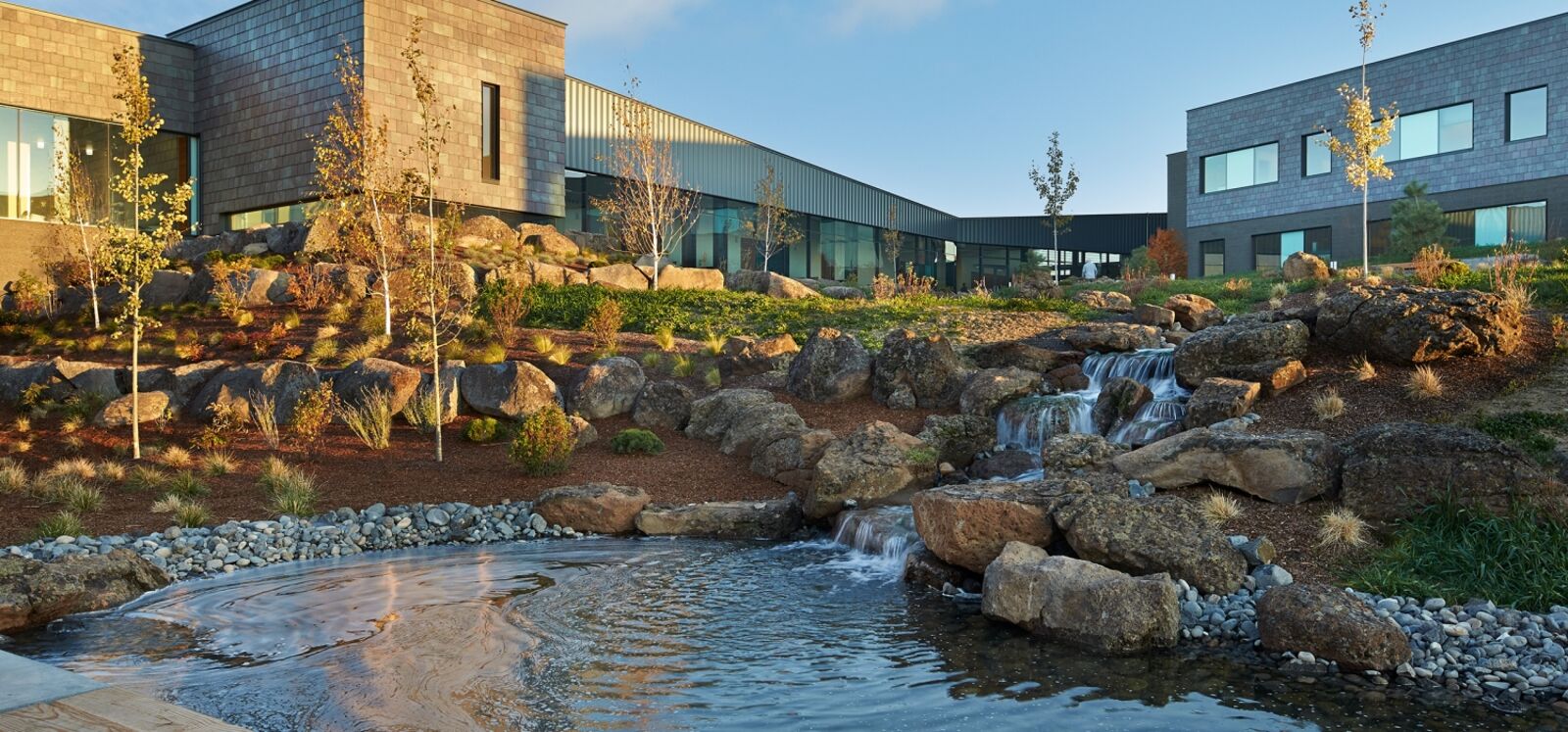
A healing garden provides moments of respite with calming water features salvaged from the original 1965 garden.
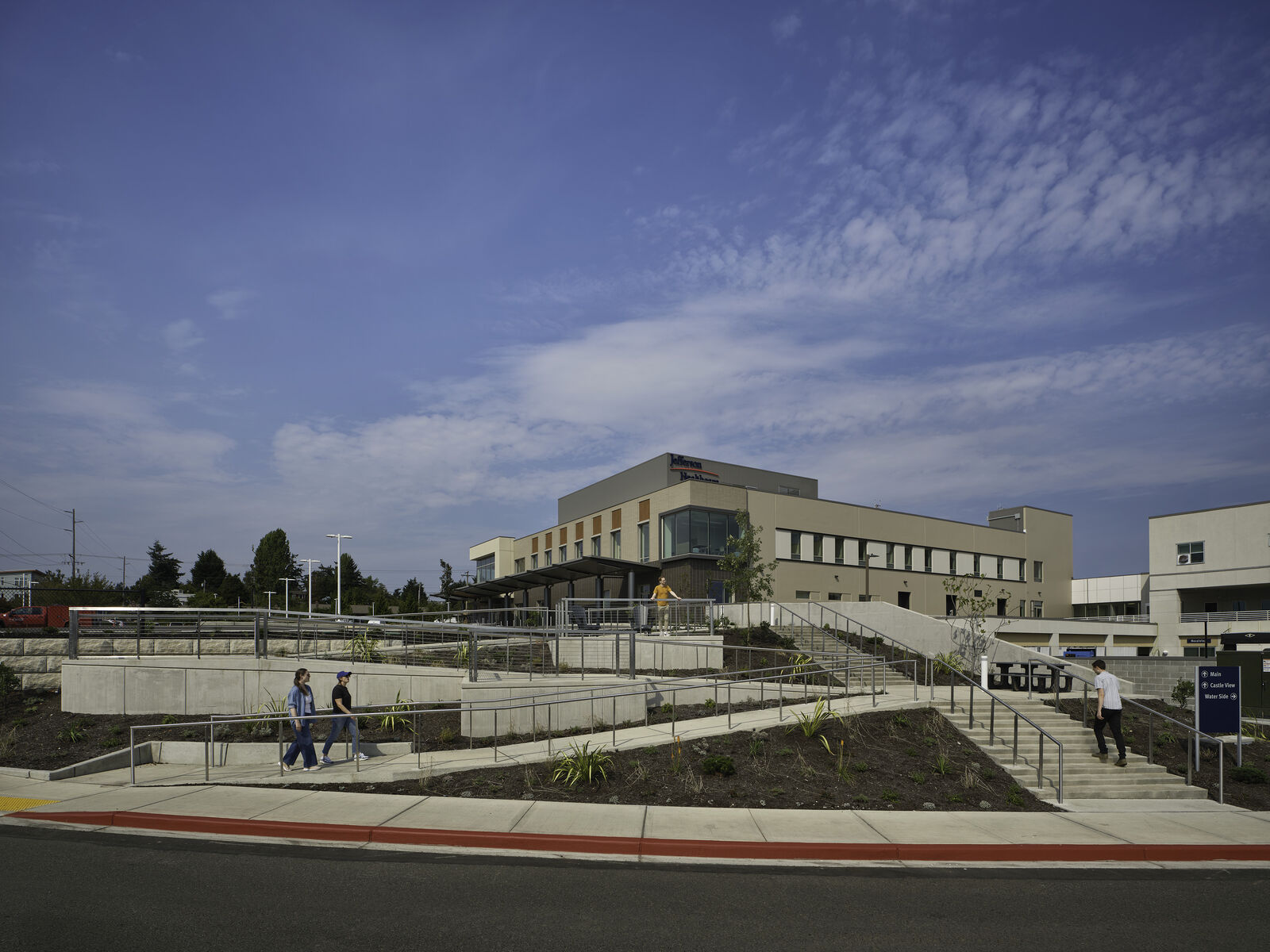
An ascending landscaped pathway creates a vista overlooking the Bay with seating to take it all in.
Surging demand
Nearly every specialty service that Jefferson Healthcare provides has doubled or in some cases tripled over the last decade. As a result, the hospital has quickly outgrown its existing facilities. To meet surging demand, this project includes a 19,000 SF infill renovation that relocates and expands critical infrastructure, including the OB/GYN clinic, imaging, surgery, support services, administration, and the hospital kitchen and café.
A new two-story, 37,000 SF medical office building is integrally connected to the infill facility as a single structure. It includes two ambulatory ORs and associated pre/post-op spaces at the ground level, as well as offices, a staff lounge, and specialty clinics on the second level. Expanded outpatient services include medical oncology, dermatology, and wound care. New services include radiation oncology, neurology, pulmonology, and ear, nose & throat care.
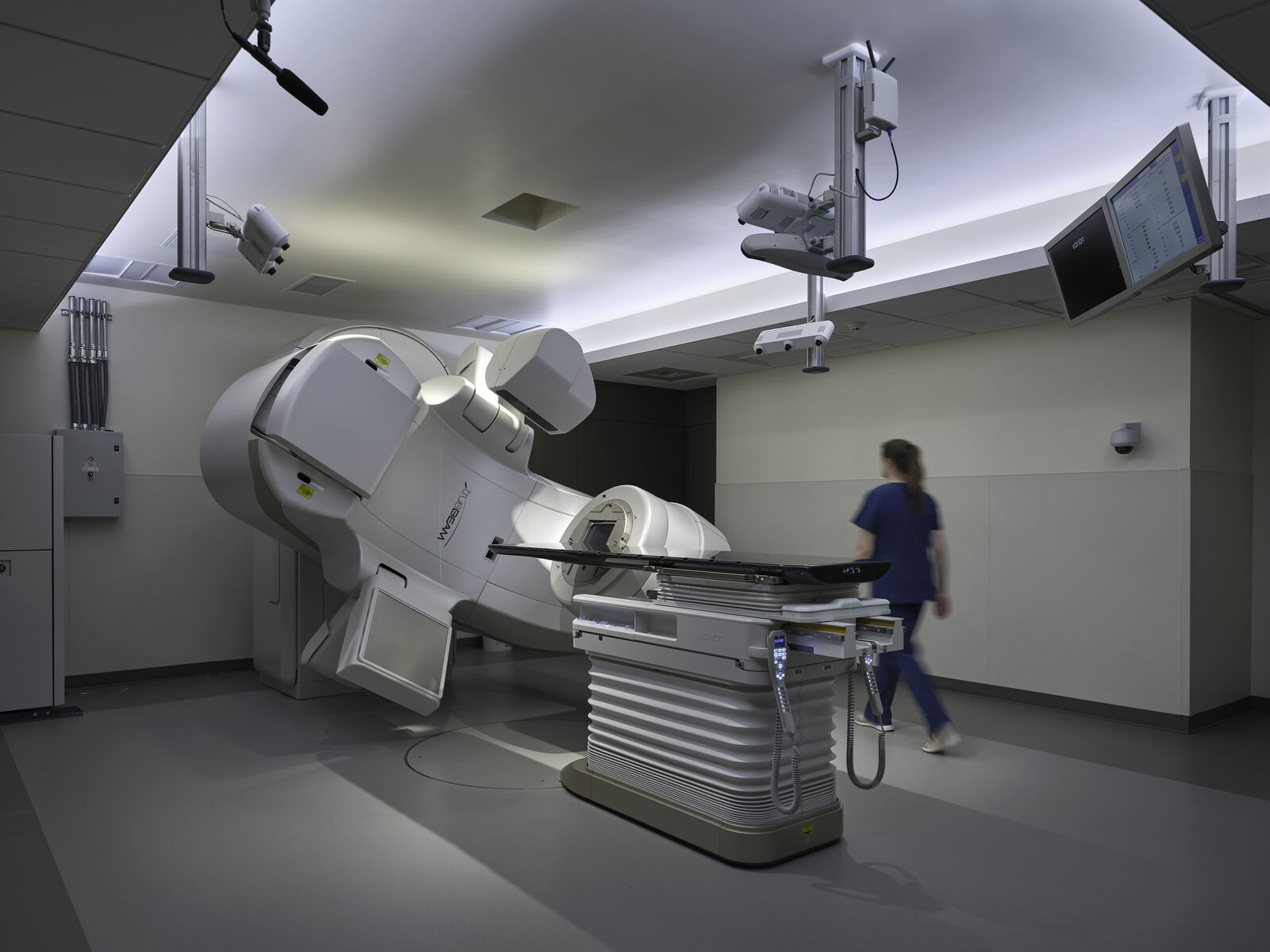
Jefferson Healthcare is the first critical access hospital in Washington state with a linear accelerator (LINAC), allowing it to provide radiation oncology as well as chemotherapy, which it already offered. Providing cancer care locally means patients don’t need to travel an hour or two to receive life-saving treatment.
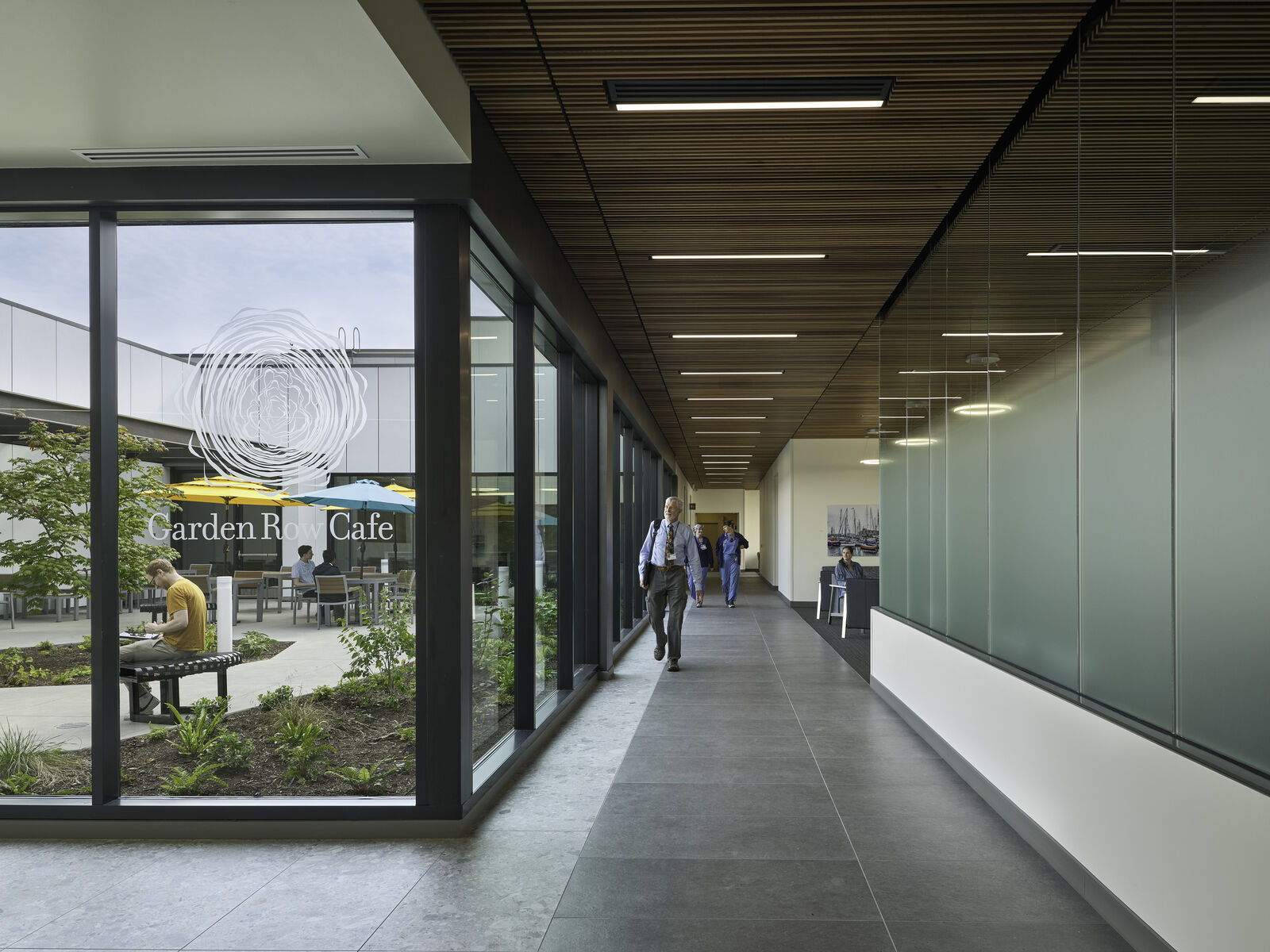
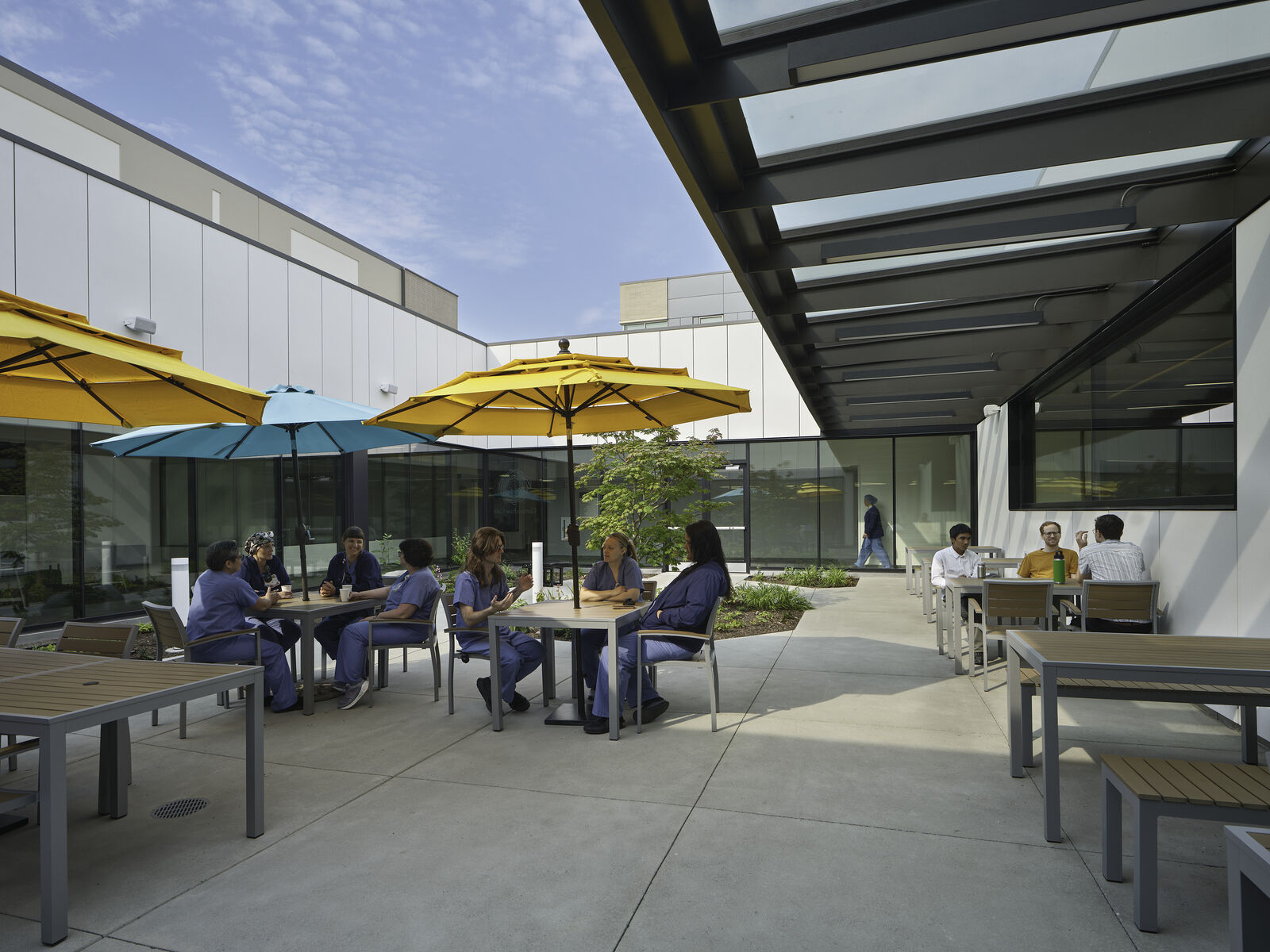
A new courtyard creates an outdoor oasis for dining and respite in the heart of the expansion.
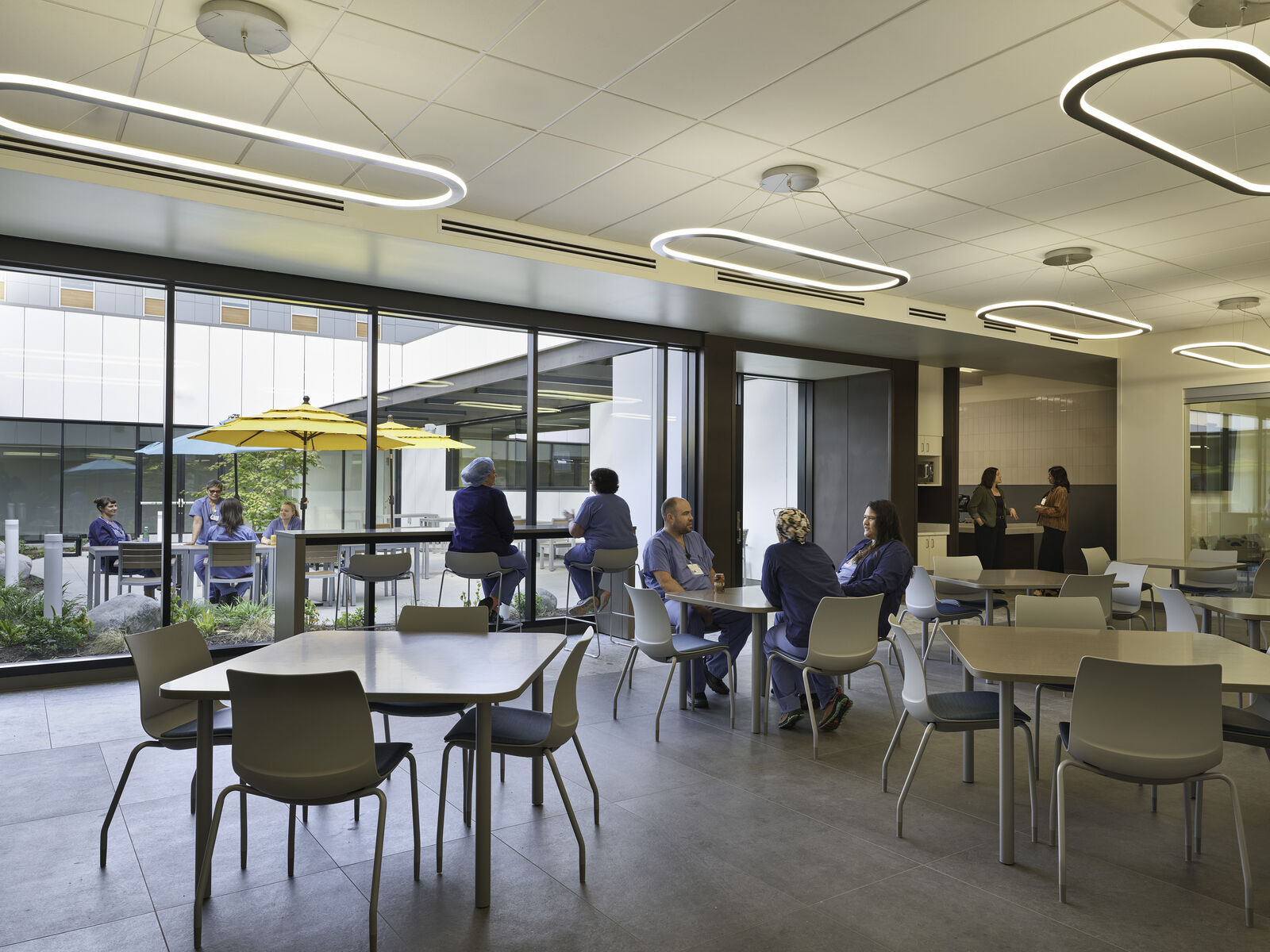
The Garden Row Café is not only an essential cafeteria service for staff and patients, it’s a culinary destination for the Port Townsend community. Head Chef Arran Stark provided input on the state-of-the-art kitchen and dining design, which nearly doubles the footprint of the previous café.
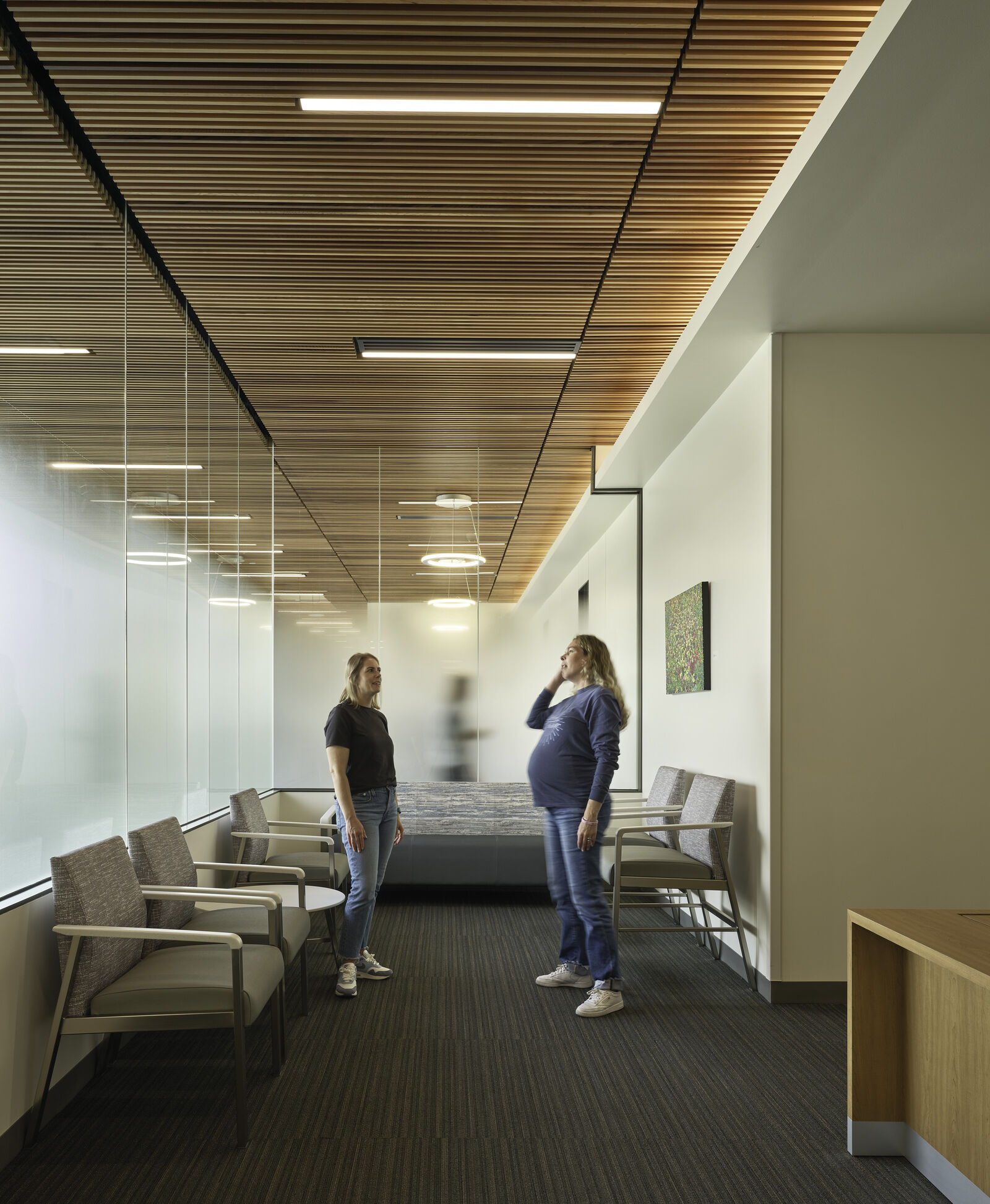
The relocated and expanded OB/GYN clinic provides more space to ensure patients get the care they need locally.
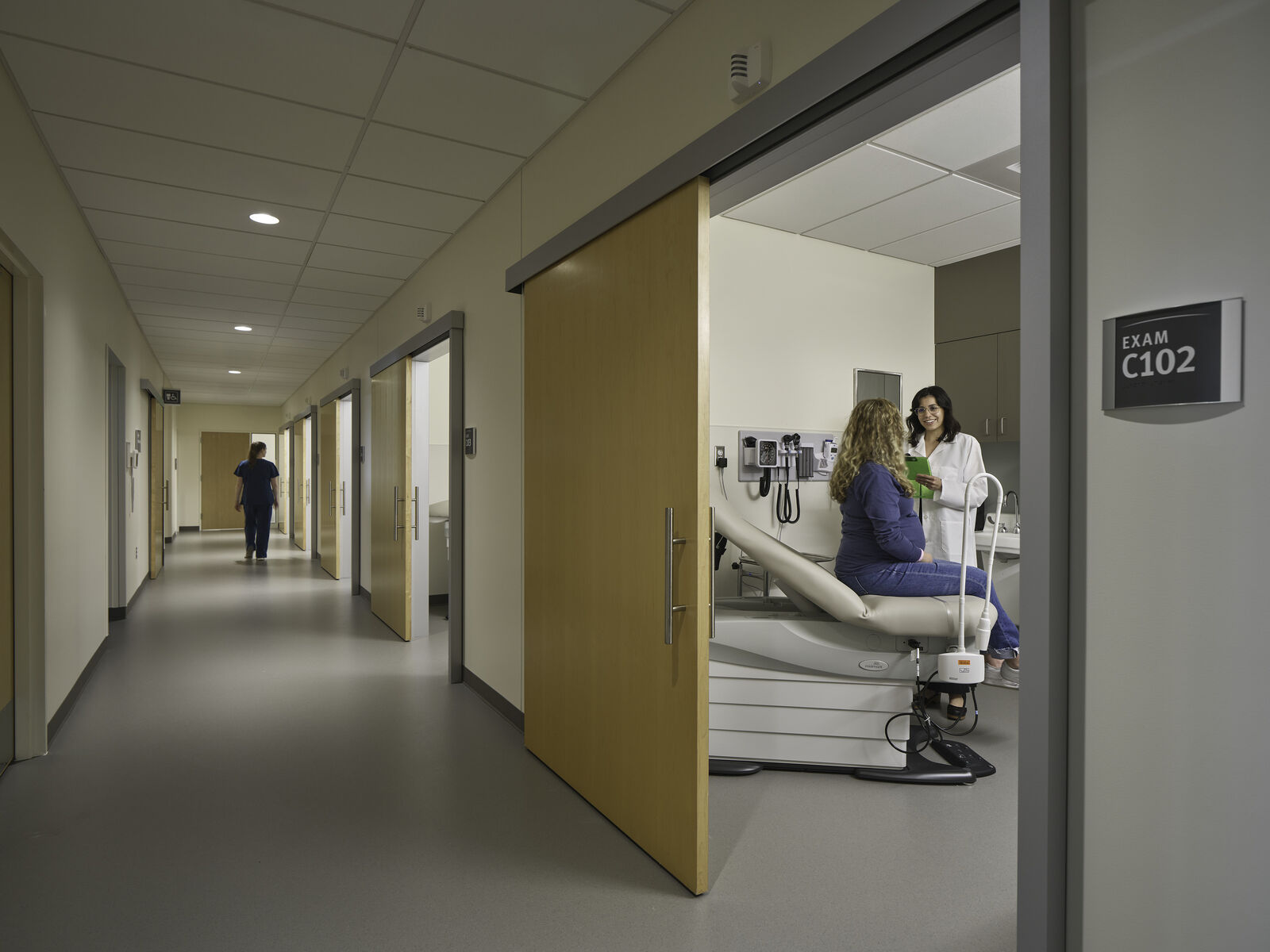
Jefferson salvaged the exam room barn doors from Harrison Medical Clinic in Bainbridge Island, WA.
Design-build done right
The design-build team collaborated with the client, user groups, and key stakeholders to develop innovative phasing solutions that integrate the campus holistically while maintaining circulation and connections between other campus buildings. Like many hospital renovations and expansions, this project scope abutted the major internal circulation path connecting the most crucial components—the Emergency Department to Imaging/Surgery and beds—where disruption was not an option. The sequencing allowed Jefferson to maintain operations throughout construction with minimal impact to the patient, family, and staff experience.
Jefferson Healthcare initially envisioned up to 105,000 SF of new construction, but sharp increases in construction and labor costs and issues with supply chains and material availability challenged the client to rethink the scope and scale of the project. ZGF facilitated workshops with hospital leadership that allowed them to revisit their project goals and strategically develop a scaled-down vision for the project that still addressed current needs for additional space while accommodating future growth and anticipated demand for services over the next decade.
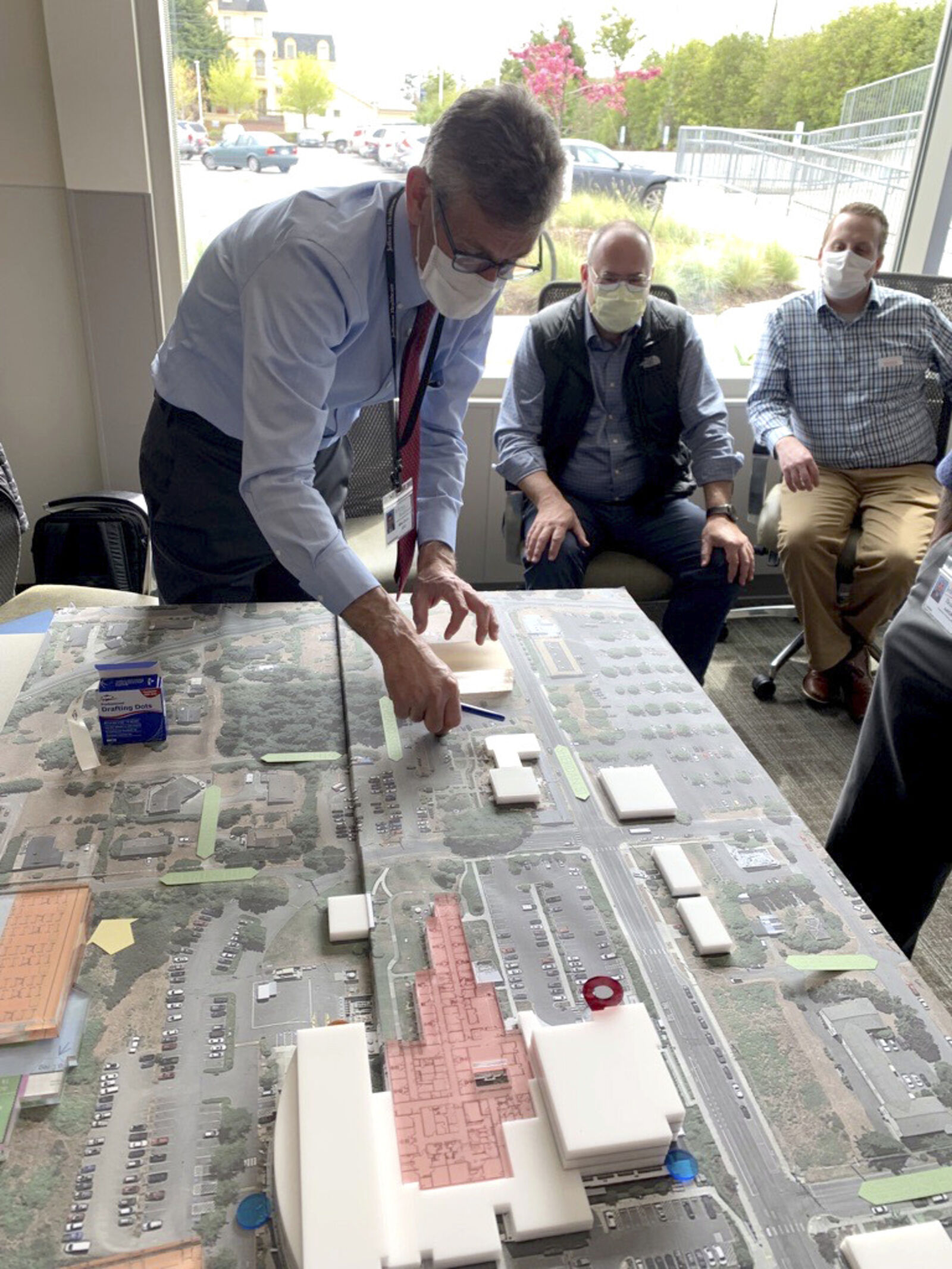
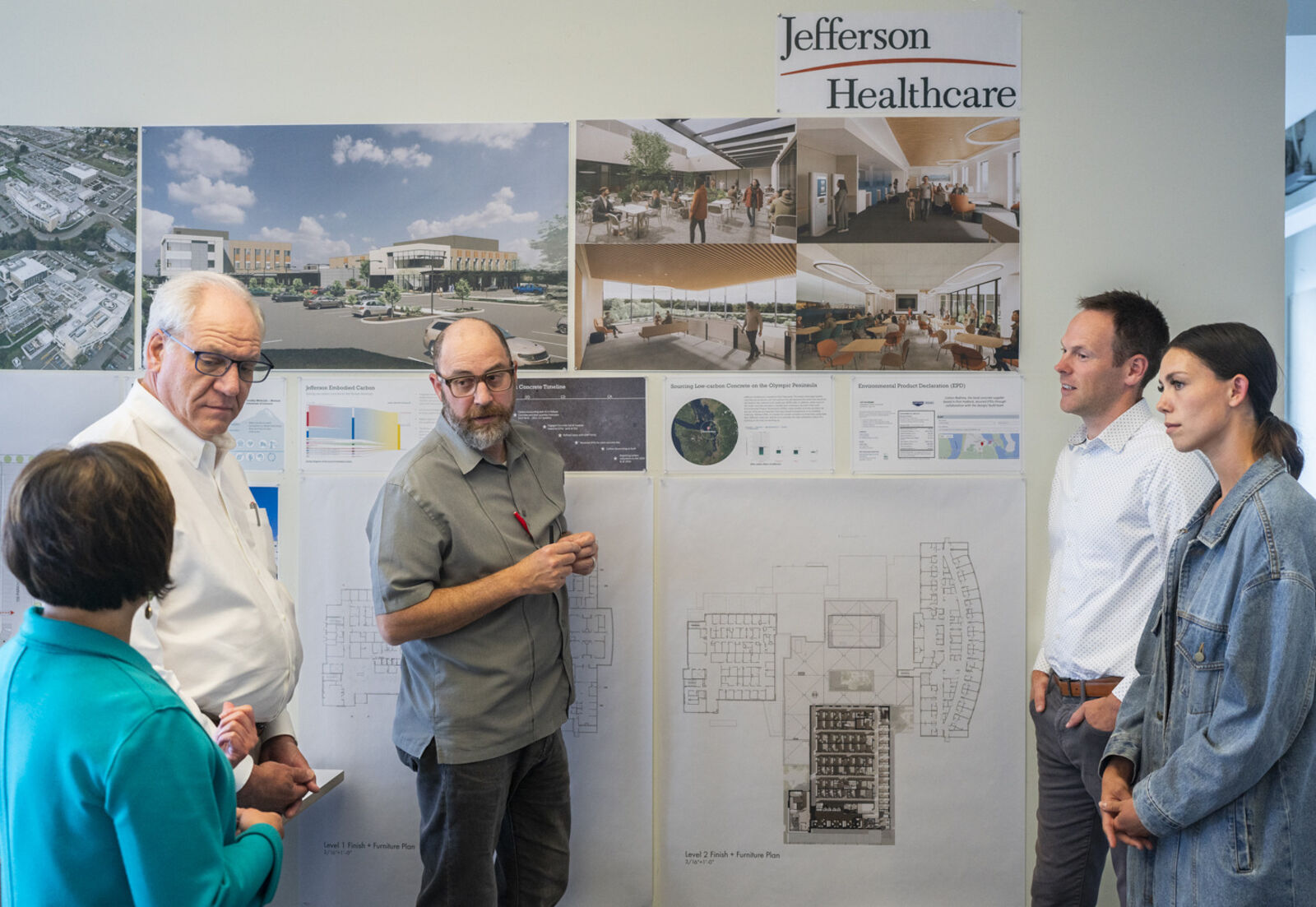
Jefferson Healthcare CEO Mike Glenn provided critical input during integrated design events.
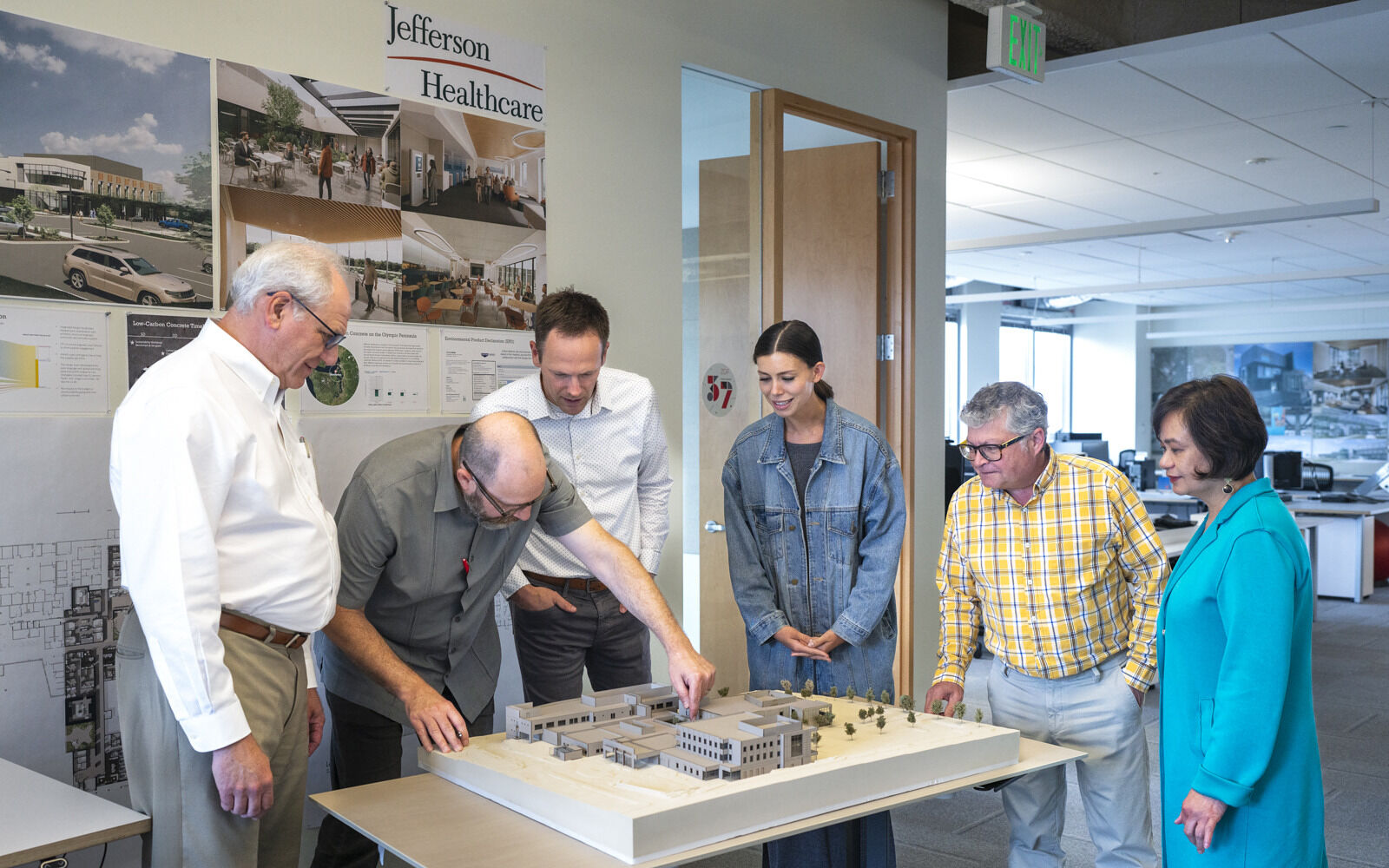
Through the design and construction process, the client became an enthusiastic supporter of design-build methodology.
No-cost sustainability
While cost, schedule, and reducing risk were paramount to the project’s success, the client also challenged the design-build team to find ways to improve both climate health and human health. ZGF and Abbott employed a three-pronged sustainability approach: going electric; sourcing low-carbon materials; and removing chemicals of concern.
The team set sustainability goals early on, ran cost and carbon numbers, and calibrated specifications throughout the project—staying flexible in the pursuit of sustainable products that would meet the hospital’s requirements while promoting health equity in the upstream and downstream communities where the building energy and materials come from. The project demonstrates it is possible for a rural hospital to integrate healthy, low-carbon strategies in all aspects of design—from mechanical to civil and structural to interiors—without compromising the hospital’s mission to put every dollar toward patient care.
Sustainable features include:
Jefferson Healthcare is undergoing a 56,000 SF modernization and expansion that will transform patient care while providing a model for sustainability and health equity.
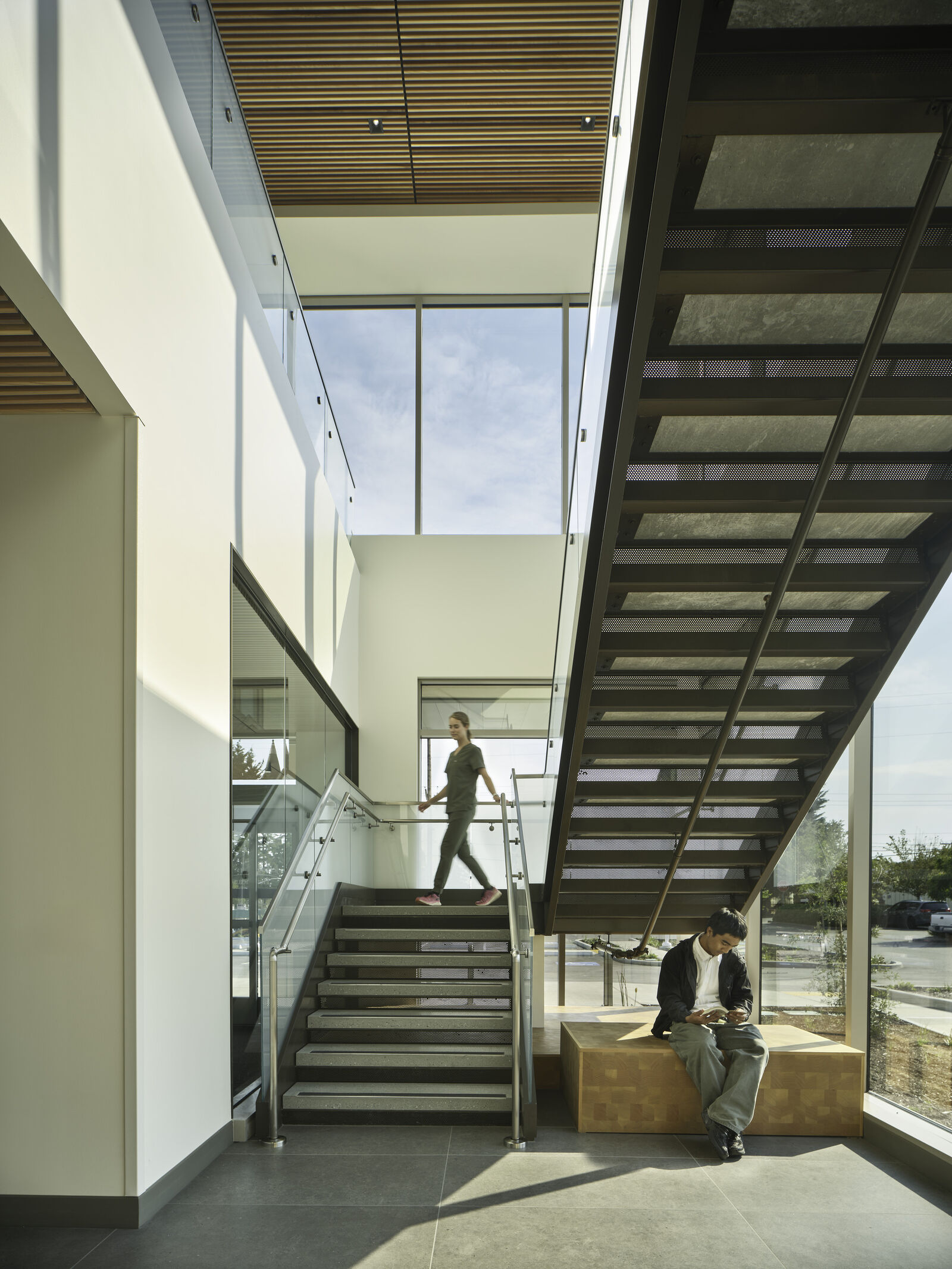
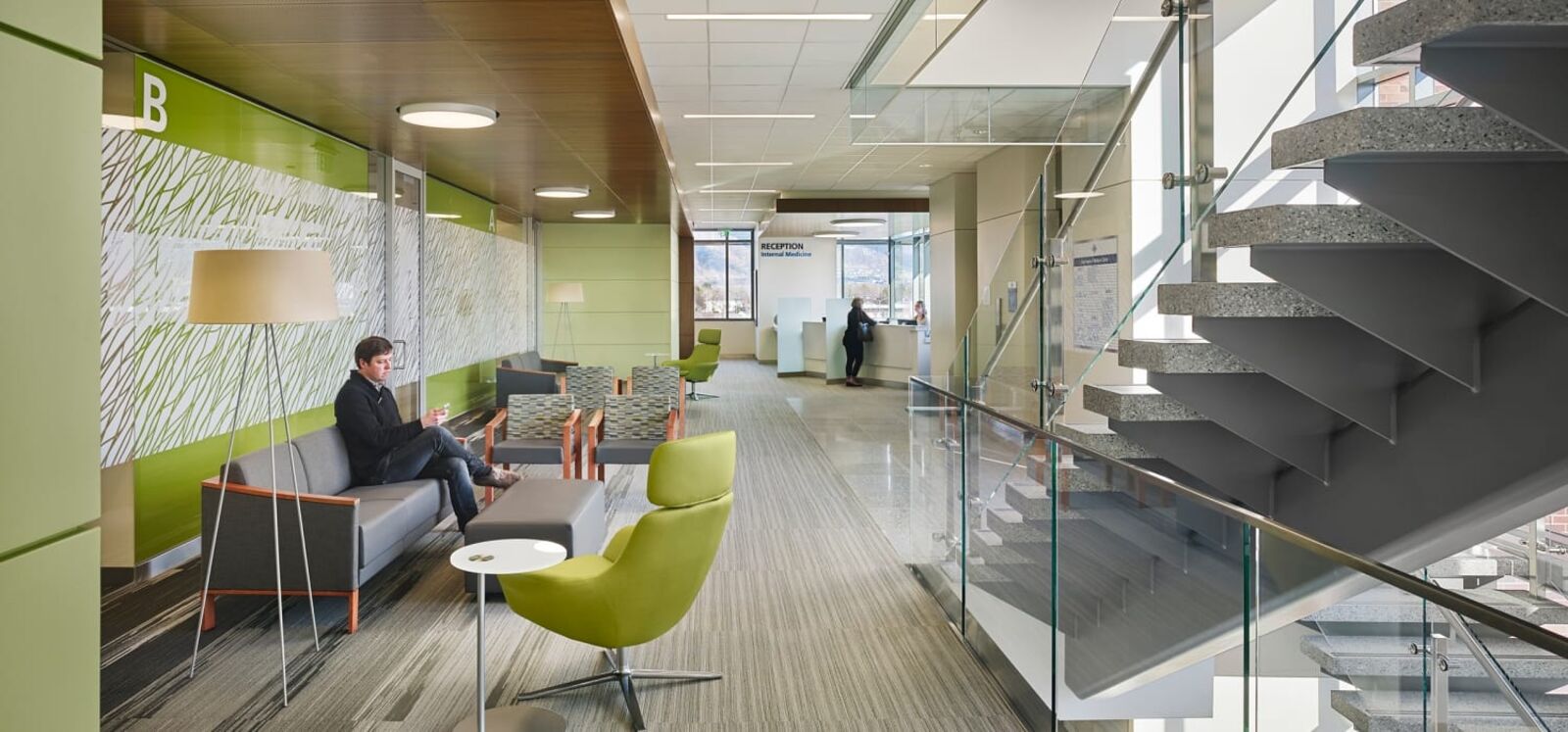
The feature stair leads to specialty clinics and staff spaces on Level 2.
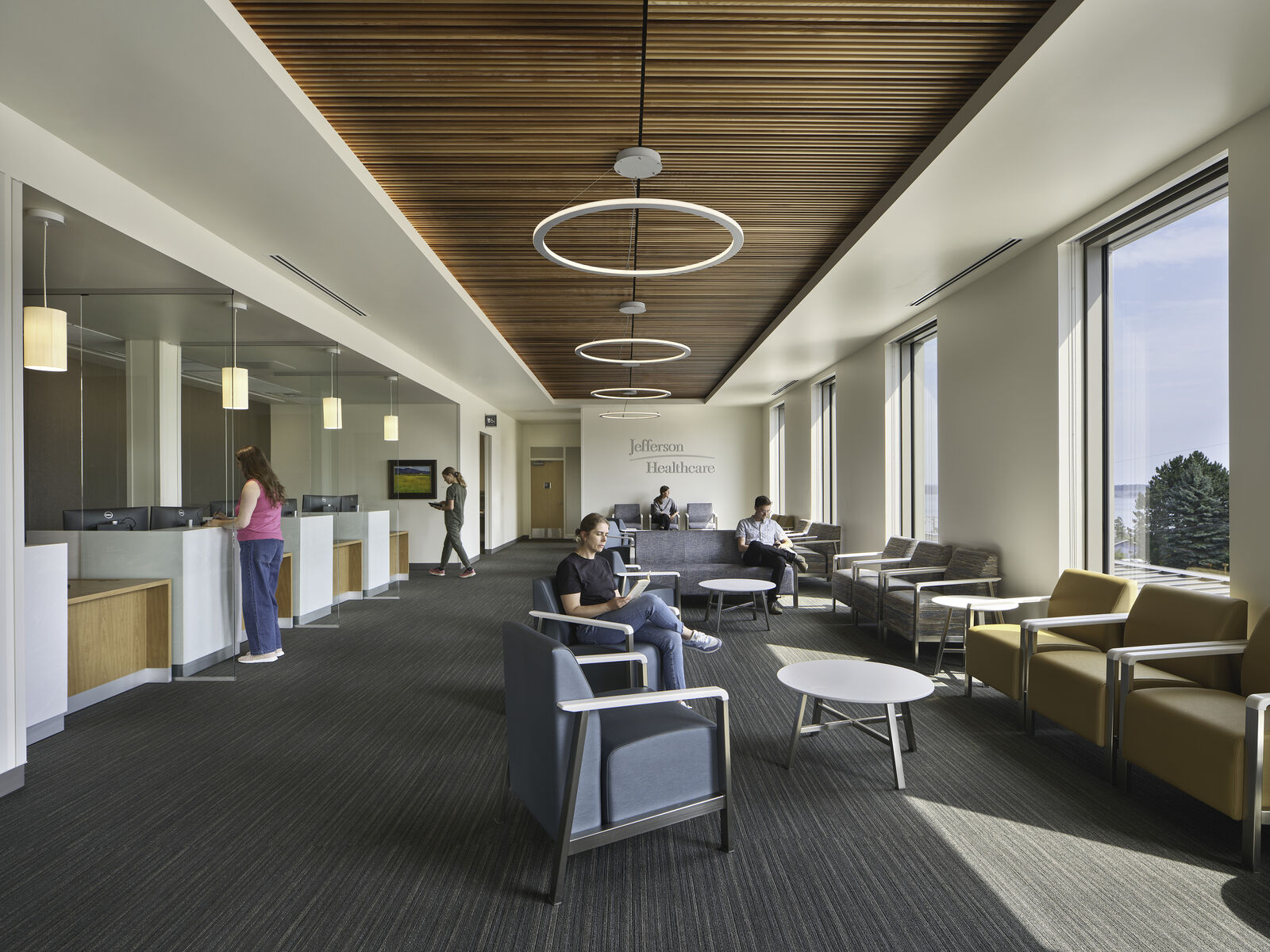
Healthy interiors
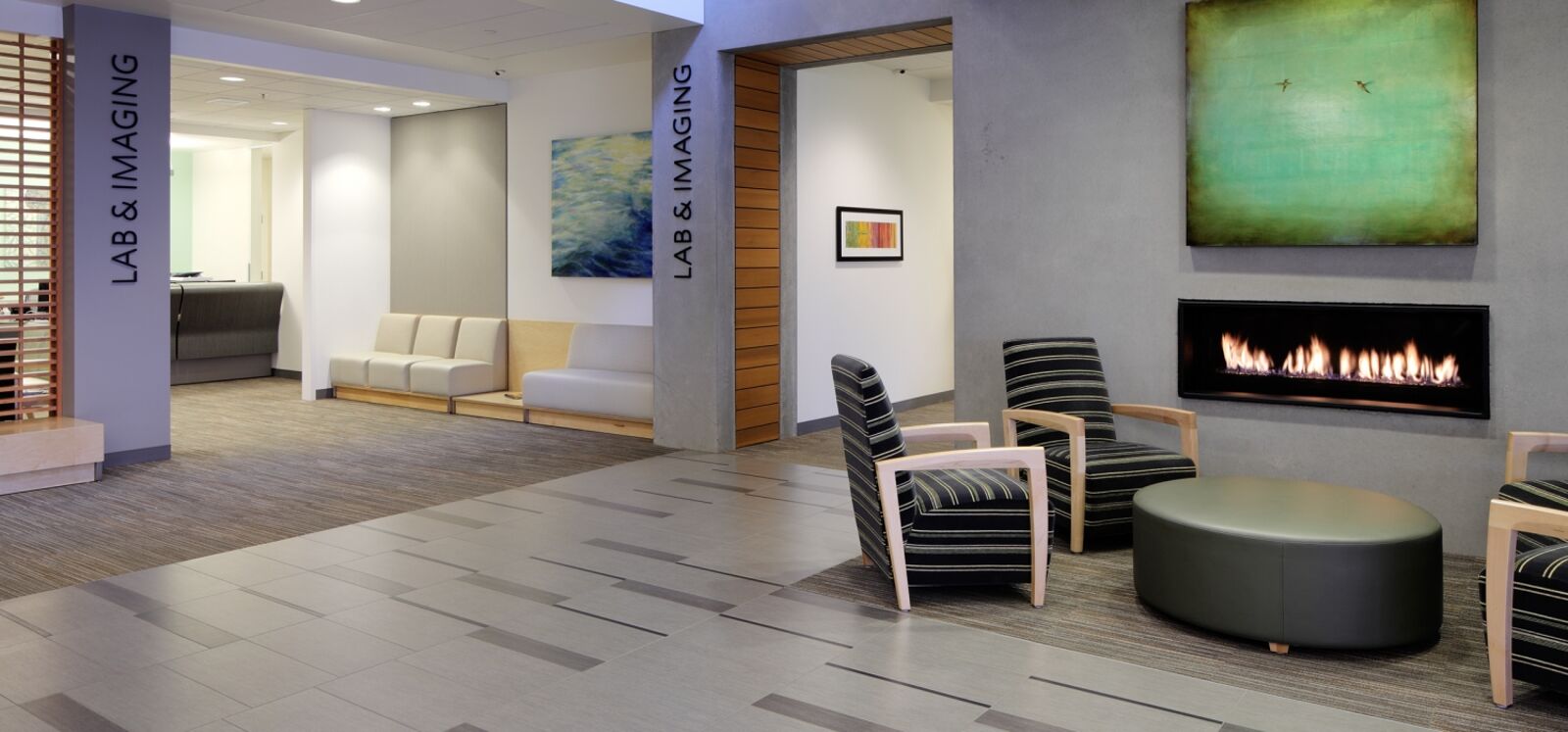
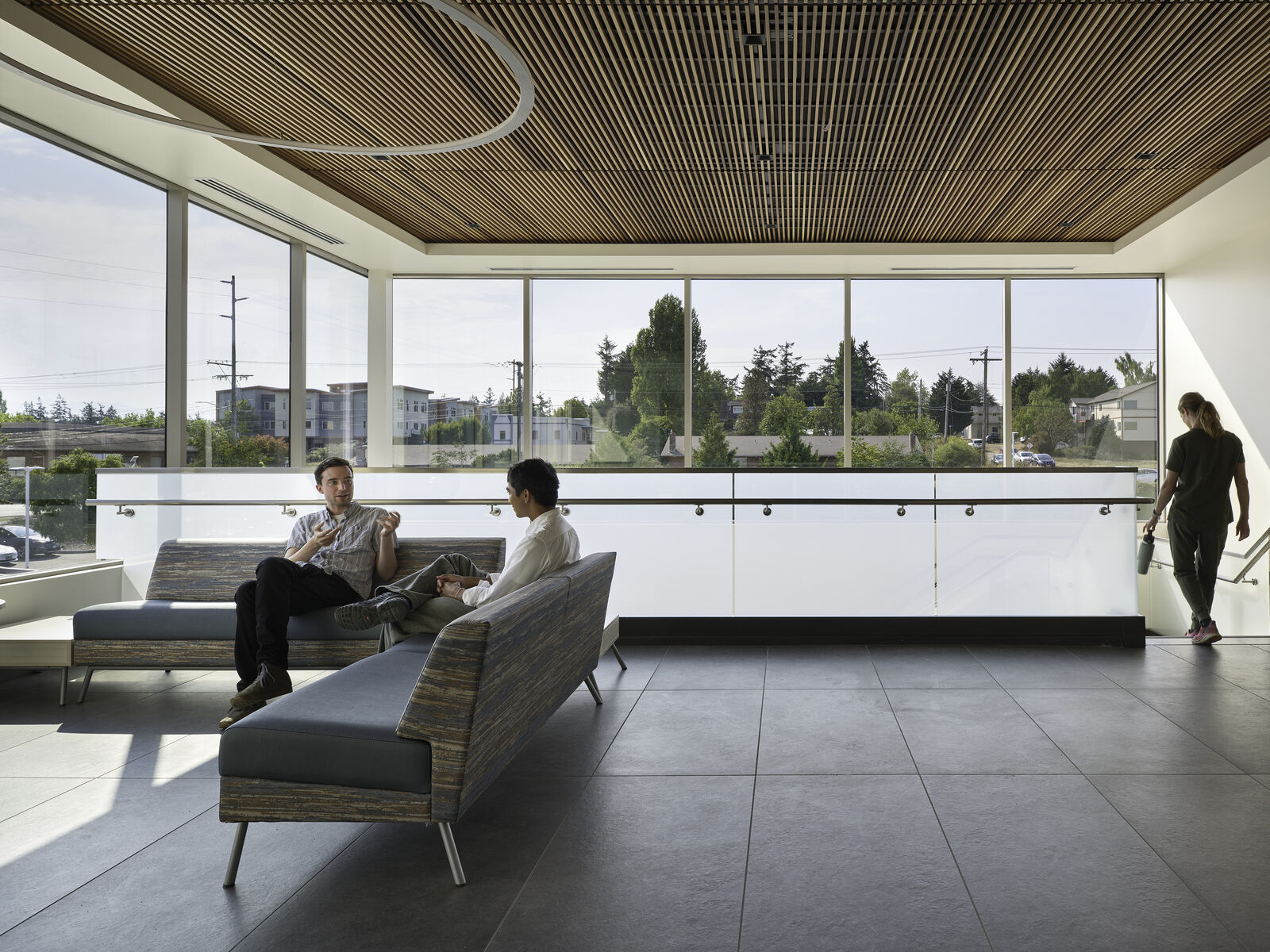
The interior design palette was carefully curated to create a complementary aesthetic to adjacent existing hospital wings. The team modernized certain material selections with an emphasis on durability, sustainability, and an overall atmosphere of warmth and welcoming to patients and staff. In particular, wood accents and panoramic views to the landscape connect the interior to the special setting on the Peninsula. Healthy materials were key to the project’s sustainability goals—using PVC-free, biobased, and lower-carbon products wherever possible without sacrificing performance.
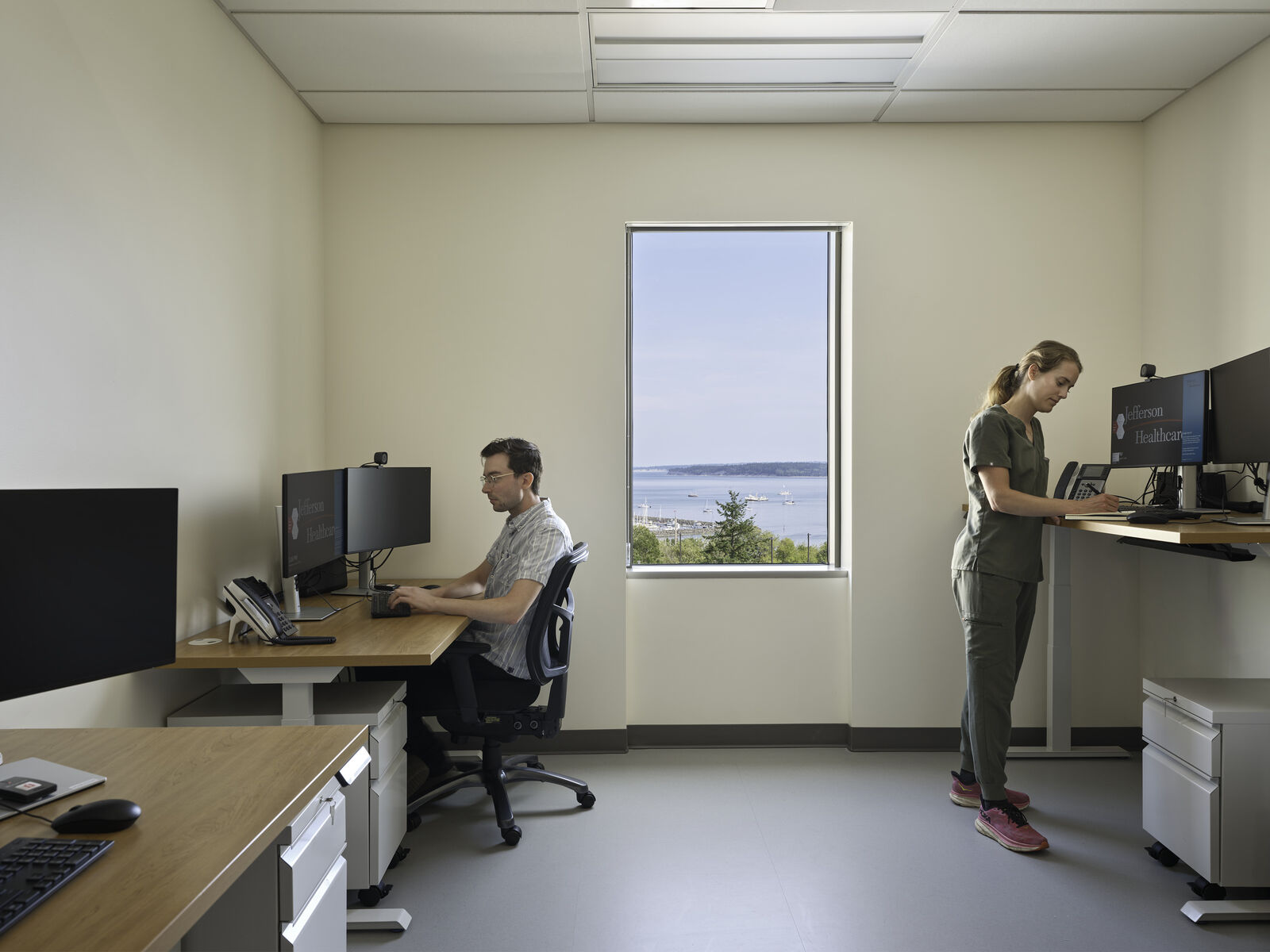
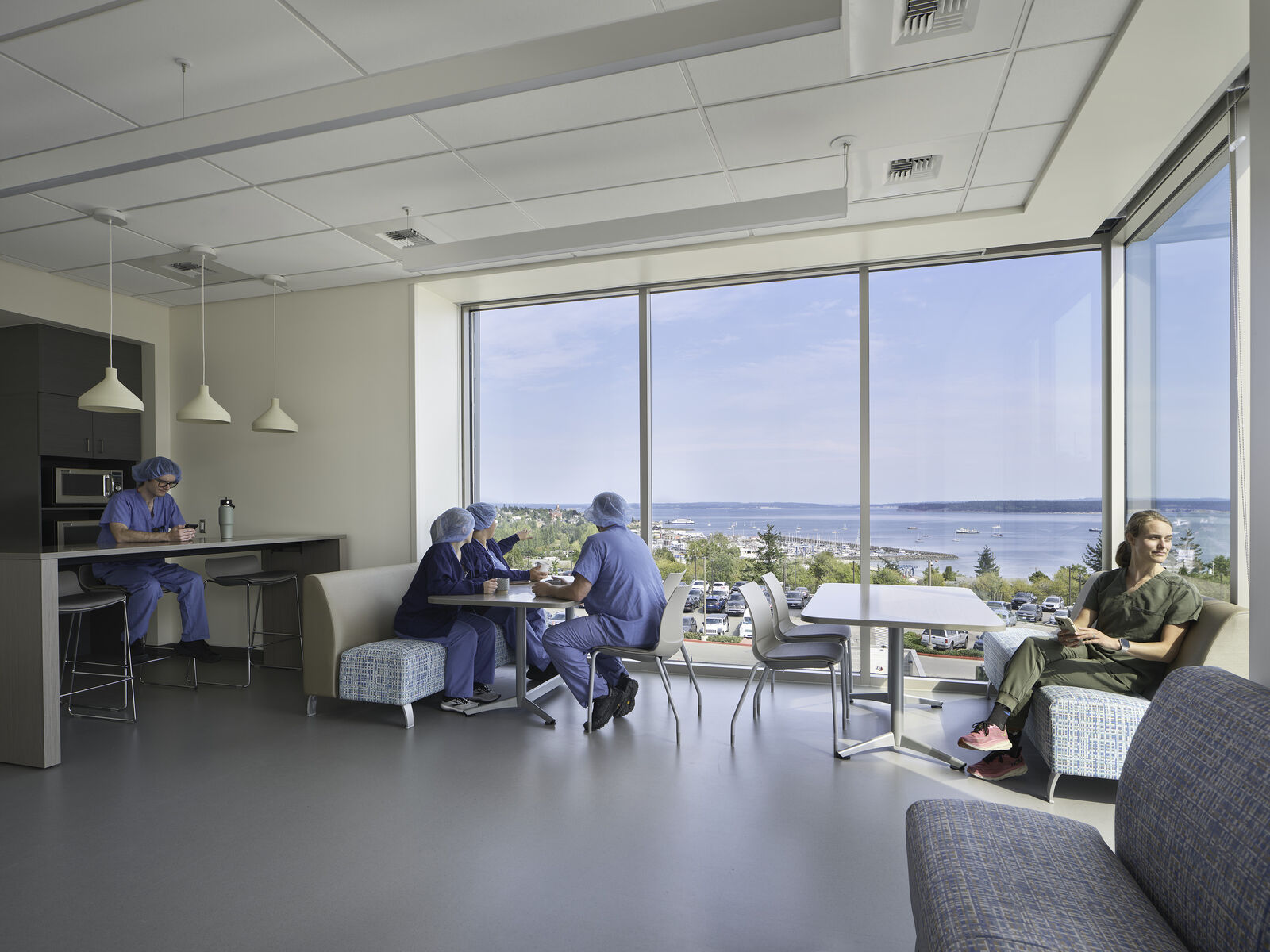
The staff lounge and workspaces maximize daylight and water views to support employee health and wellbeing.
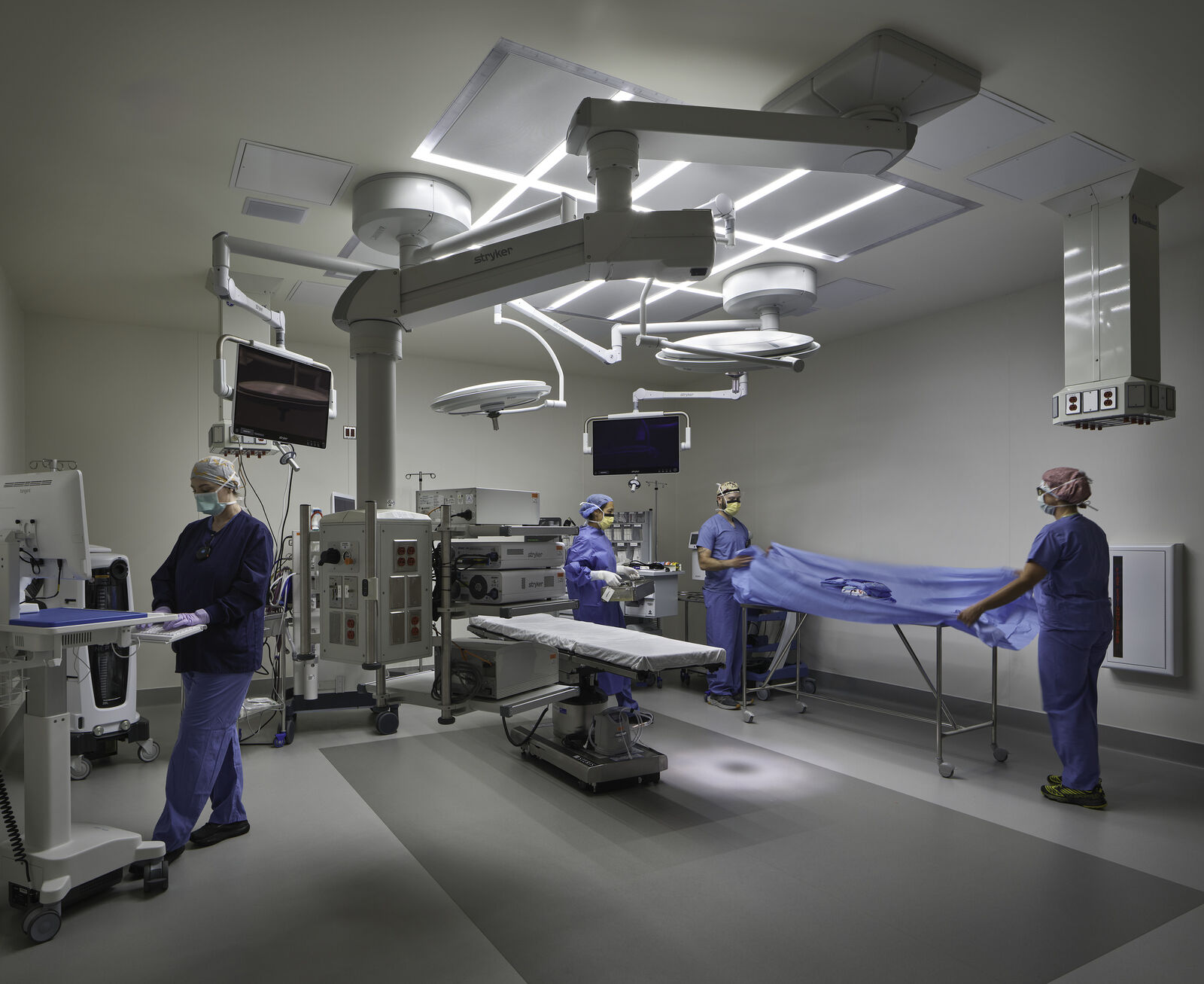
Two new operating suites expand capacity for outpatient surgeries. The interior design prioritizes materials with transparency labels showing they are free of toxic chemicals, such as PVC-free resilient flooring.