Advancing Clean Tech Through Community
University of California, Riverside / SoCal OASIS™ Park
Higher Education, Laboratories and Research
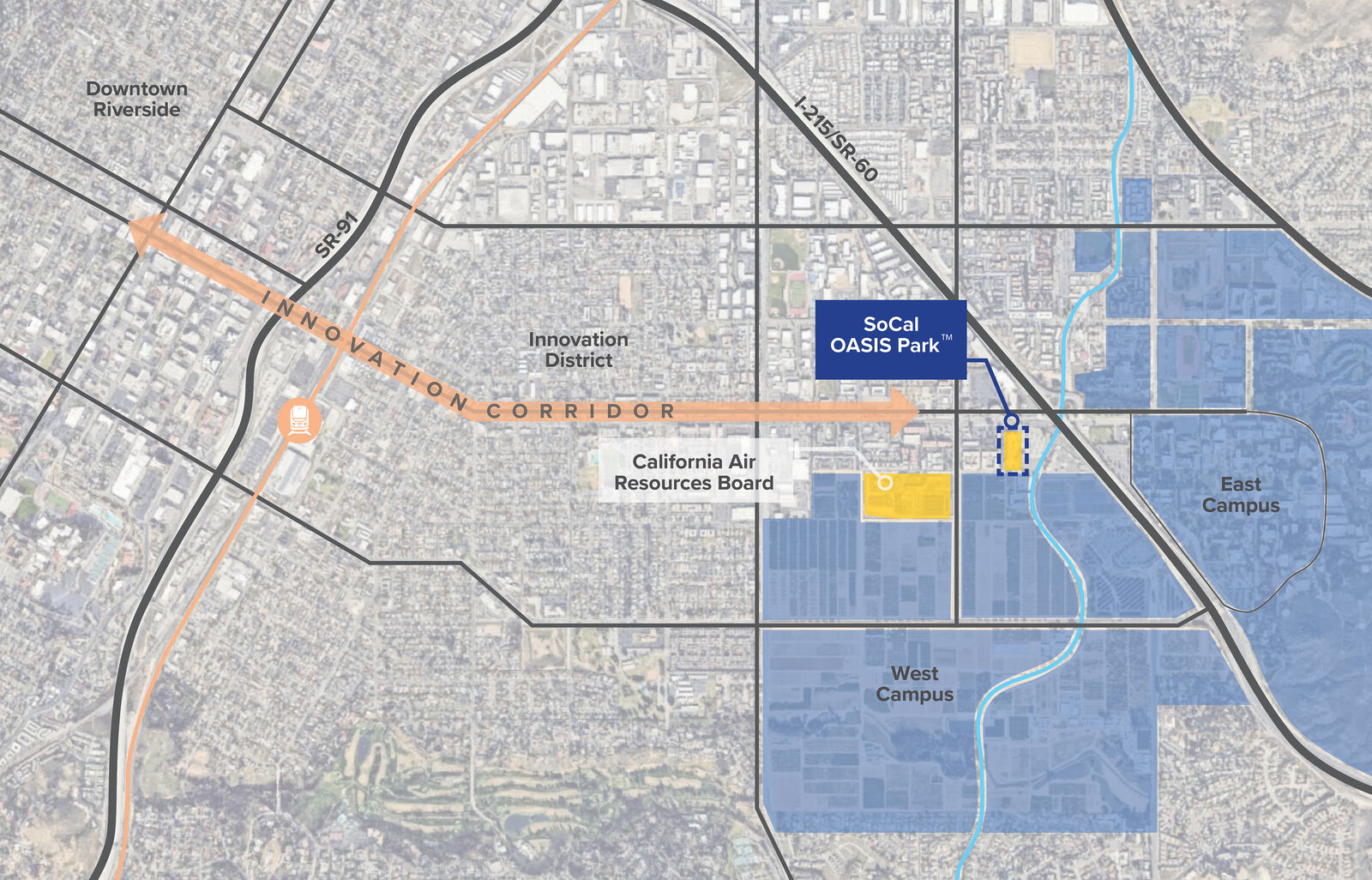
Named for its mission to create Opportunity to Advance Sustainability, Innovation, and Social Inclusion, SoCal OASIS™ Park is the University of Riverside, California’s 39,000 square-foot research and innovation hub dedicated to clean technology. Located along University Avenue between downtown and the UC Riverside campus, SoCal OASIS™ Park is imagined as a catalyst project for Riverside’s ‘Innovation Corridor’ and as a gateway to campus. The building offers a new educational paradigm for UC Riverside that will advance innovation, prepare the next generation of the clean technology workforce, and drive economic growth in California’s Inland Empire.
The building will provide leasable space for clean technology start-ups and scientists to work alongside student researchers and entrepreneurs, featuring incubator labs and makerspace for prototyping new technologies, offices, and community-oriented amenities at multiple scales, including hybrid rooms for meeting-and-learning, display space for showcasing prototypes, and shaded outdoor courtyards for shared community use.
The project is a collaboration between UC Riverside’s Bourns College of Engineering Center for Environmental Research and Technology, Office of Innovation and Entrepreneurship, and University Extension. The Park builds on UC Riverside’s established leadership in environmental research and expands its partnership with the California Air Resources Board, whose ZGF-designed Southern California Headquarters opened in 2021 adjacent to the project site.
Location
Riverside, CA
Square Feet
39,000
Project Component
Architectural Services
Interior Design and Space Planning
Laboratory Planning
The park is envisioned to serve as a living laboratory where innovative startups, established companies, and researchers can test new technologies and products under real conditions.
Rosibel Ochoa, University of California, Riverside, Associate Vice Chancellor for Technology Partnerships
A Welcoming Gateway on Riverside’s Innovation Corridor
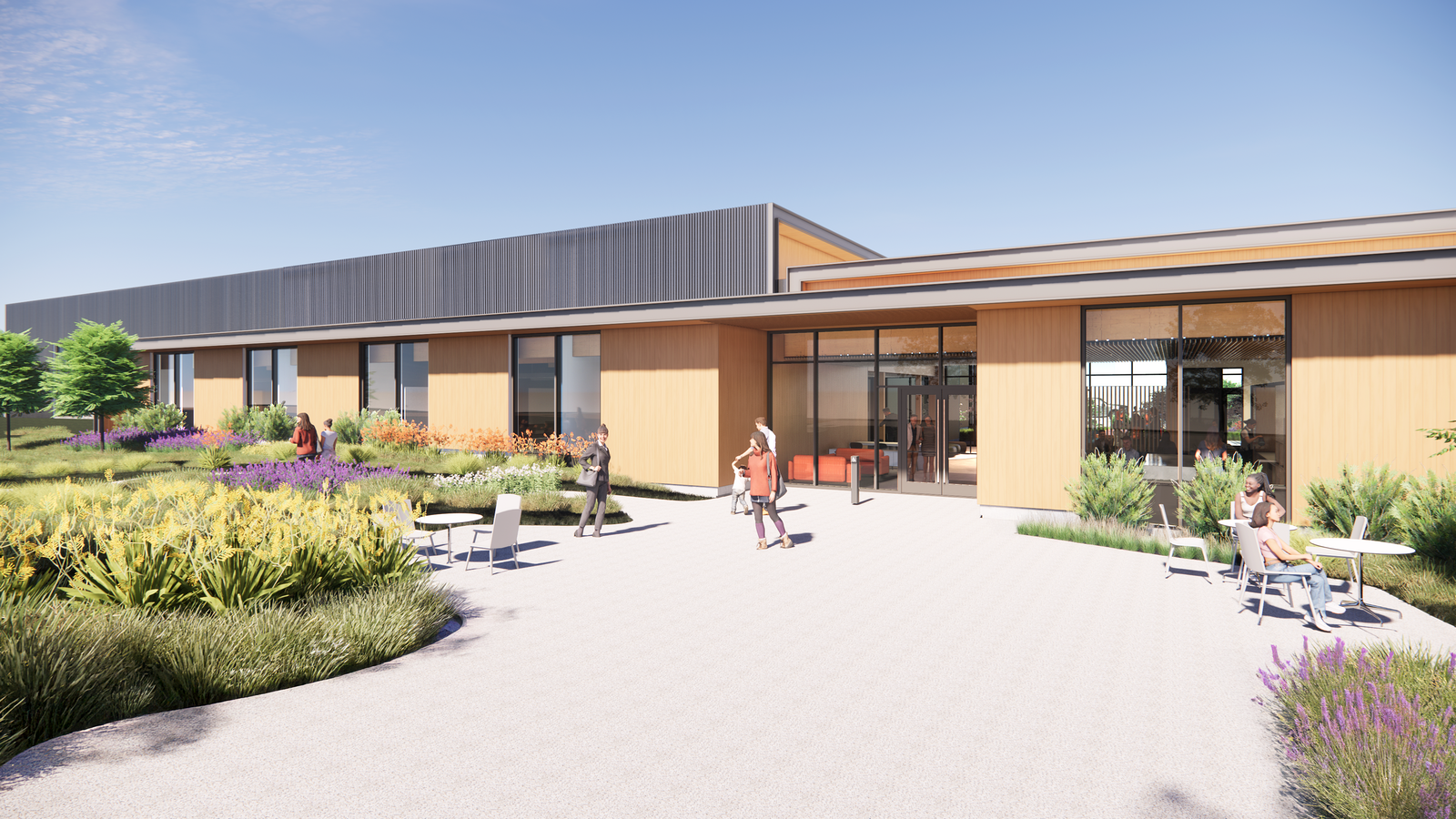
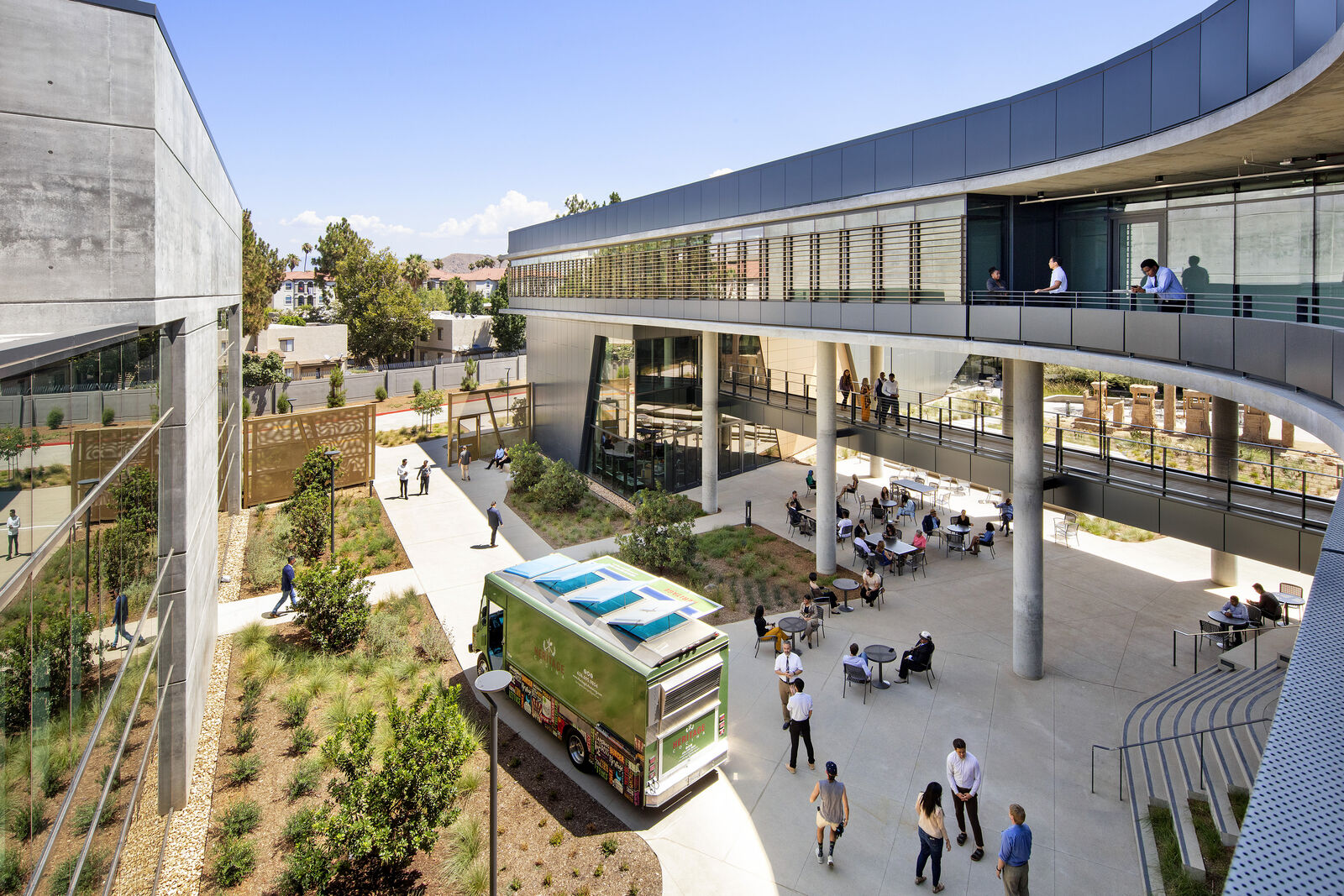
SoCal OASIS™ Park sits at the intersection of key transit routes, research hubs, and urban destinations in Riverside. The site is located along Innovation Corridor, which links the University to downtown Riverside. Situated between the 91 and 215 freeways, the site required thoughtful design solutions to establish an inviting presence along University Avenue. A landscaped plaza draws people into the site through a multimodal pedestrian and bicycle corridor that connects University Avenue to Everton Place. Along this landscaped path, there are multiple opportunities for gathering at a variety of scales.
Creating The Connected Village
OASIS™ Park’s design concept, The Connected Village, is centered on community, collaboration, and well-being. The environment is designed to be intimate in scale and rich in human connection. A village-like setting where nature and architecture are interwoven creates a blurred relationship between the buildings and the landscape.
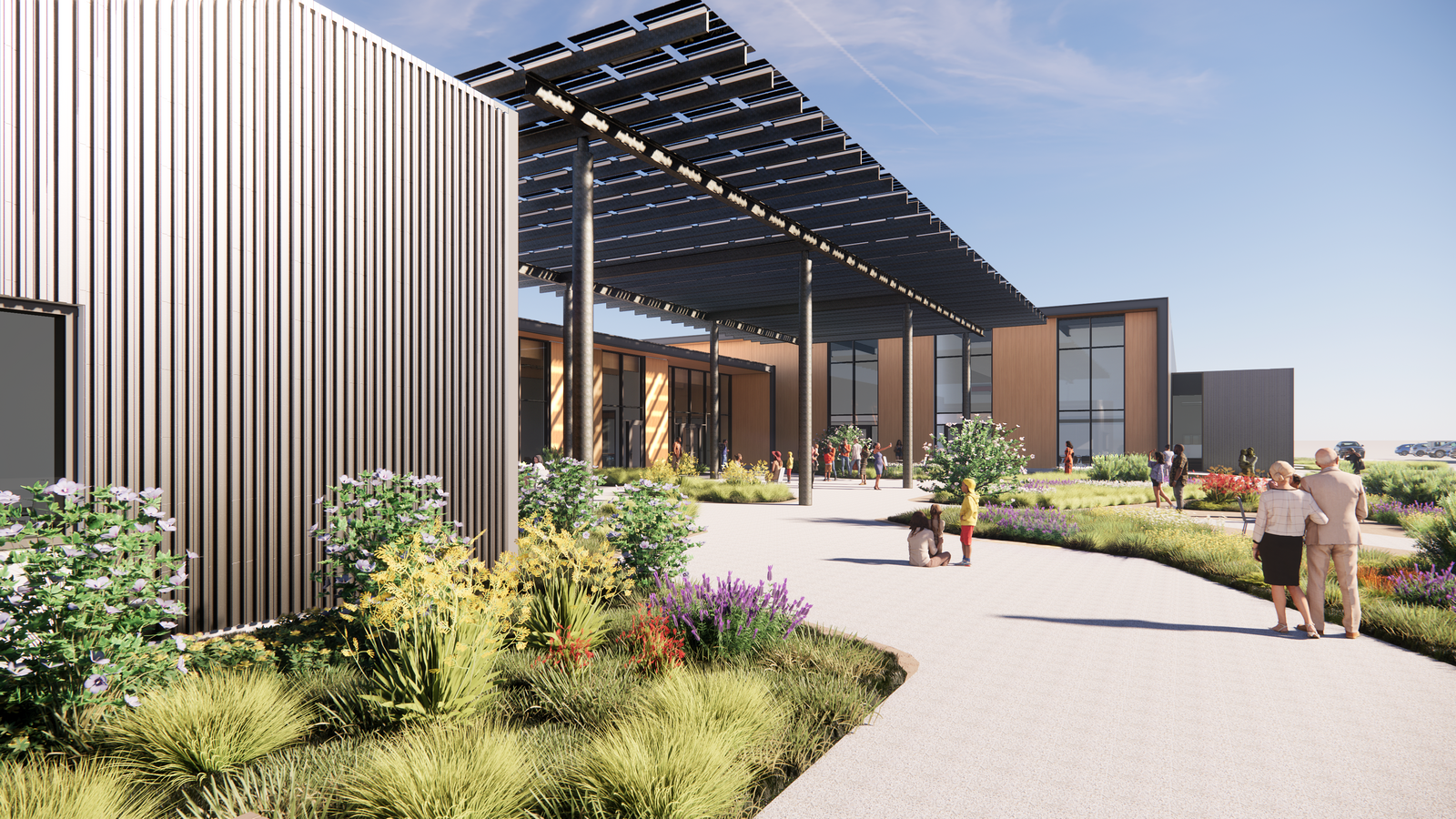
The building is a one-story composition defined by a grand entrance framed by a series of articulated portal lanterns in varying sizes, each calibrated to reflect OASIS™ Park’s diverse programs and their adjacencies. This variation of distinct yet jointed segments breaks down the overall massing and creates approachable, human-scale spaces that provide a welcoming presence.
At the heart of the site, a breezeway-style lobby connects to the multimodal pathway, laying an adaptable framework for future development to the east. To the south, the laboratory wing rises above adjacent volumes to meet spatial demands, providing a backdrop to the courtyard and reinforcing the buildings’ village composition.
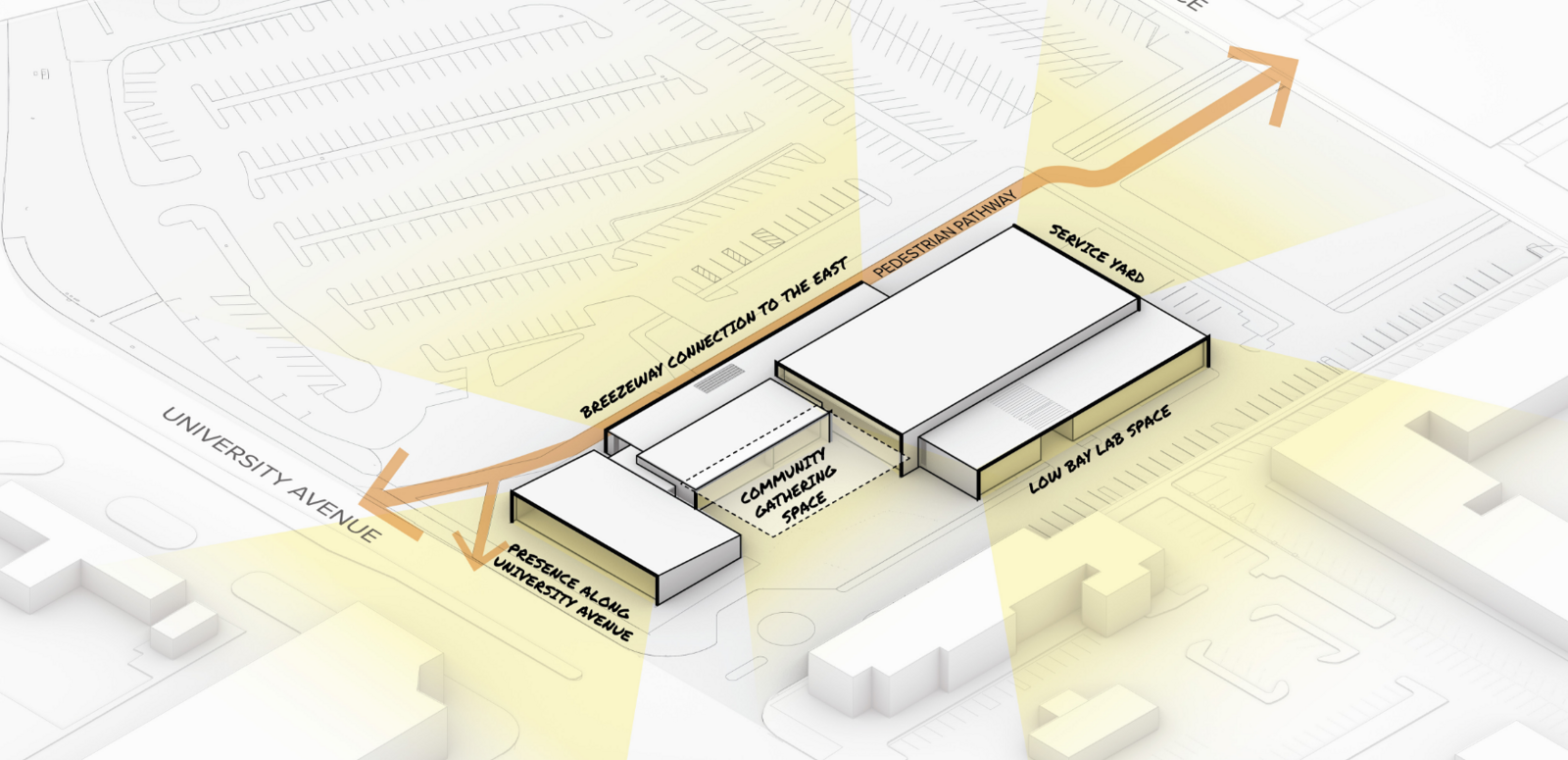
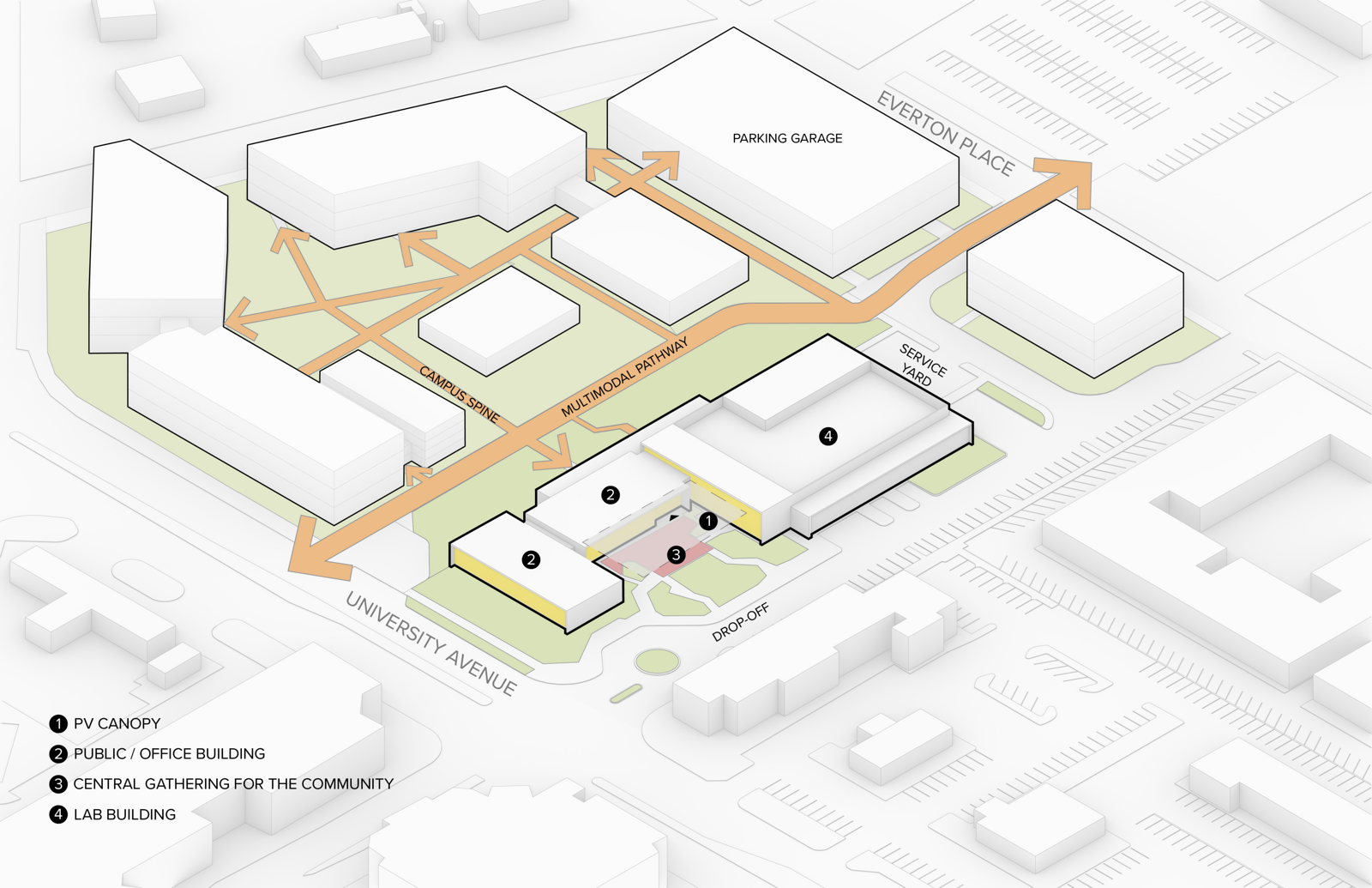
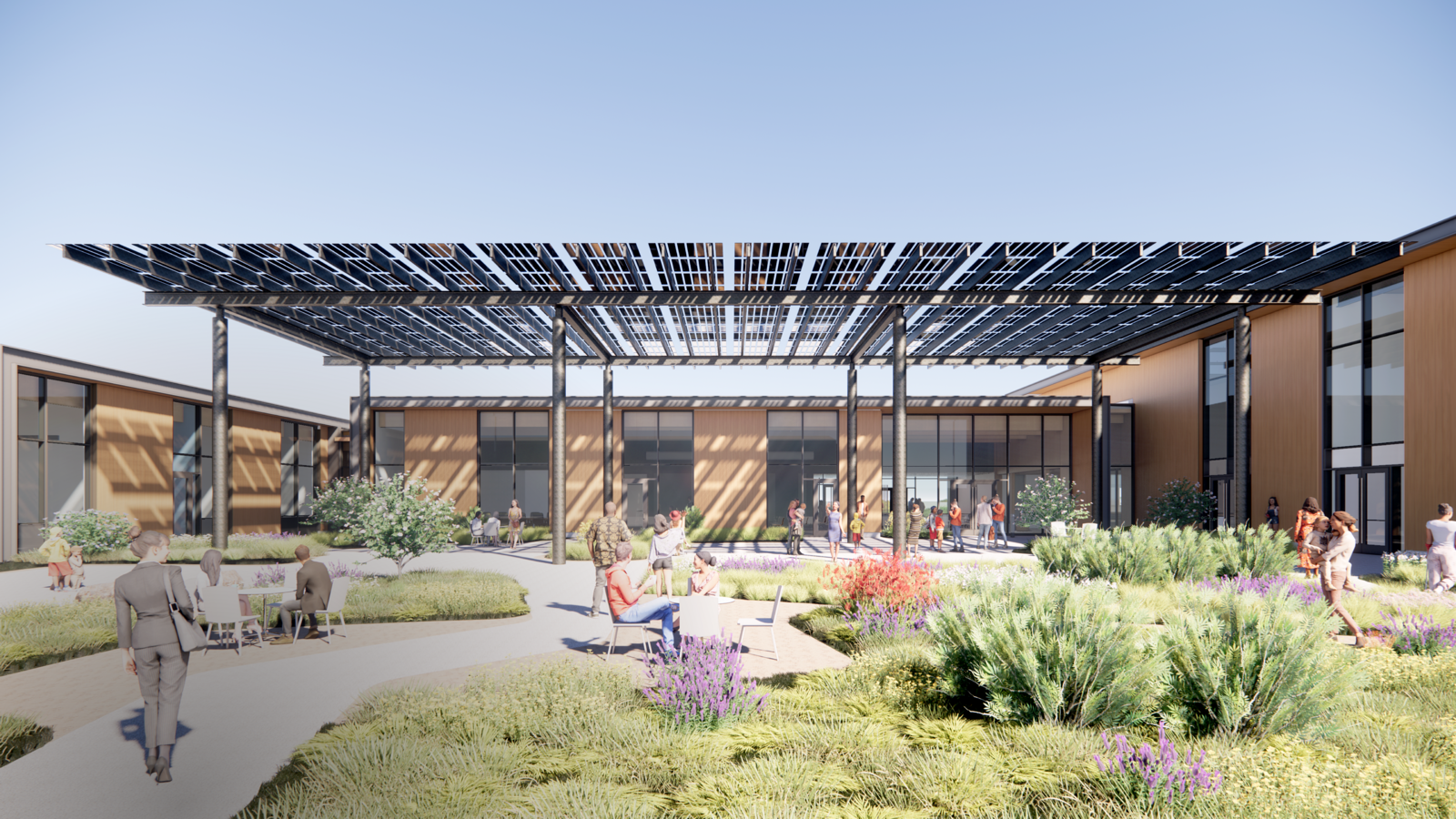
The central gathering space features native plantings and a photovoltaic (PV) canopy that provides shade while generating on-site renewable energy. The design of the flexible outdoor space supports both special community events and everyday use. The PV canopy also serves as a research platform for studying local microgrids, further integrating sustainability and innovation into the site design.
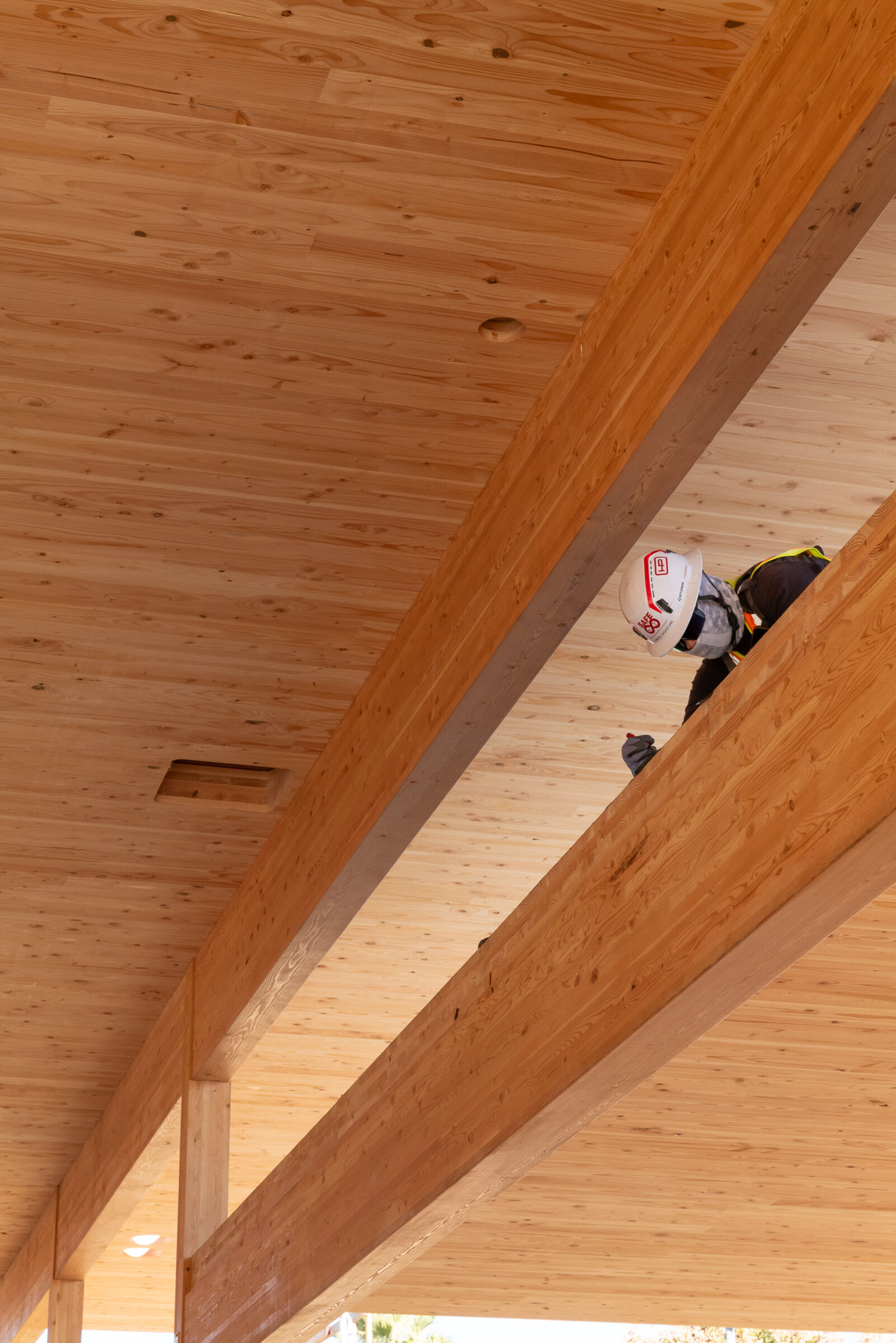
The use of glulam beams, columns, and cross-laminated timber (CLT) reflects the project’s sustainable mission, while feeling approachable and human-scaled. A mass timber structure was designed for the community zones, the incubator and offices pairing structural performance with the warm, familiar sensibilities of exposed wood. The research wing utilizes a steel structure to accommodate specialized equipment and testing needs.
The exterior material palette is composed of four primary elements: box-ribbed metal panel, Accoya wood soffits and walls, floor-to-ceiling glazing, and textured concrete walls. The use of glass was carefully studied to achieve multiple goals: visually connecting indoor-outdoor spaces around the central gathering area, ensuring comfortable daylighting in the office spaces, and putting research activity on display.
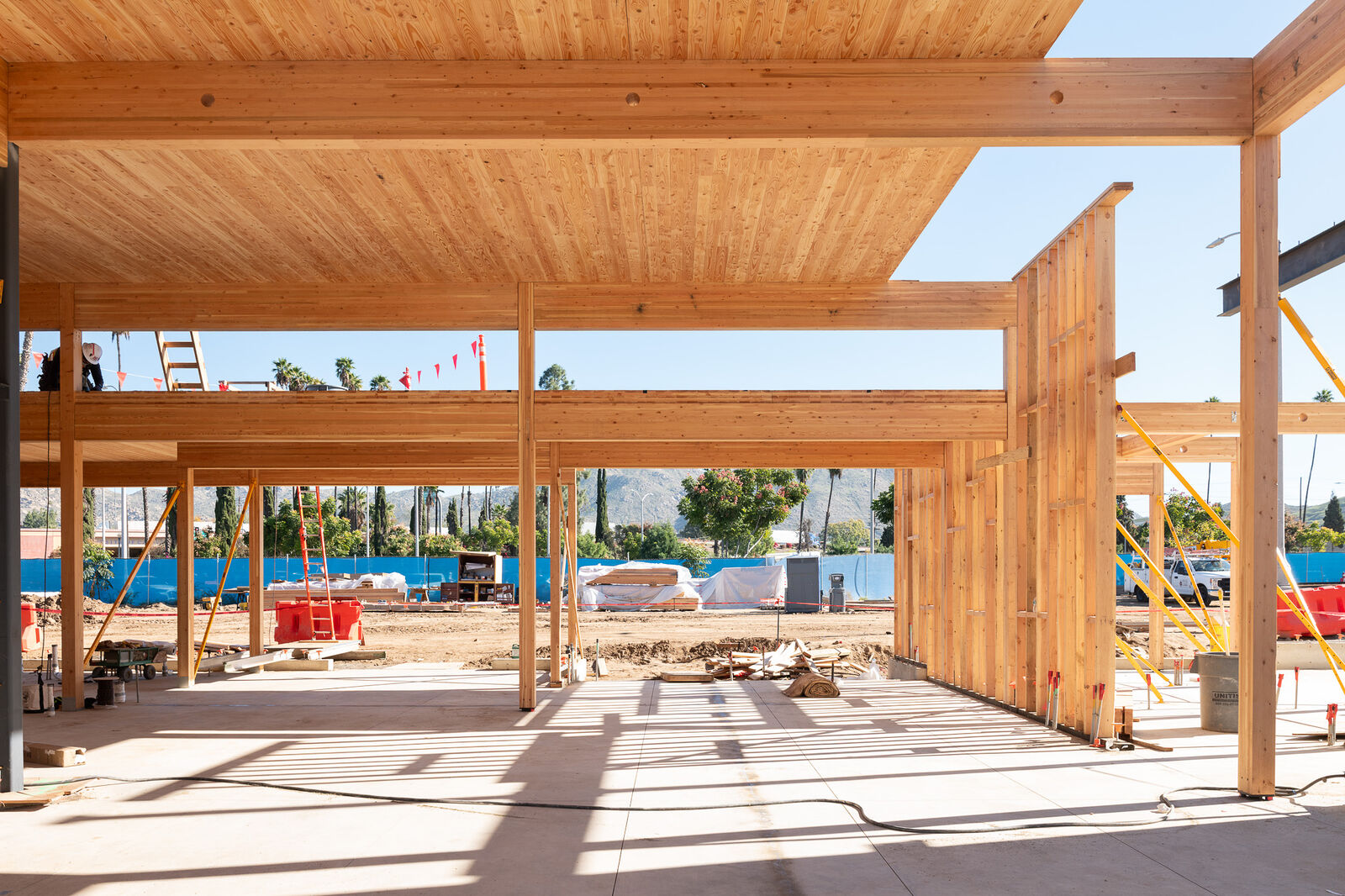
Construction of the mass timber components reaches completion in December 2025.
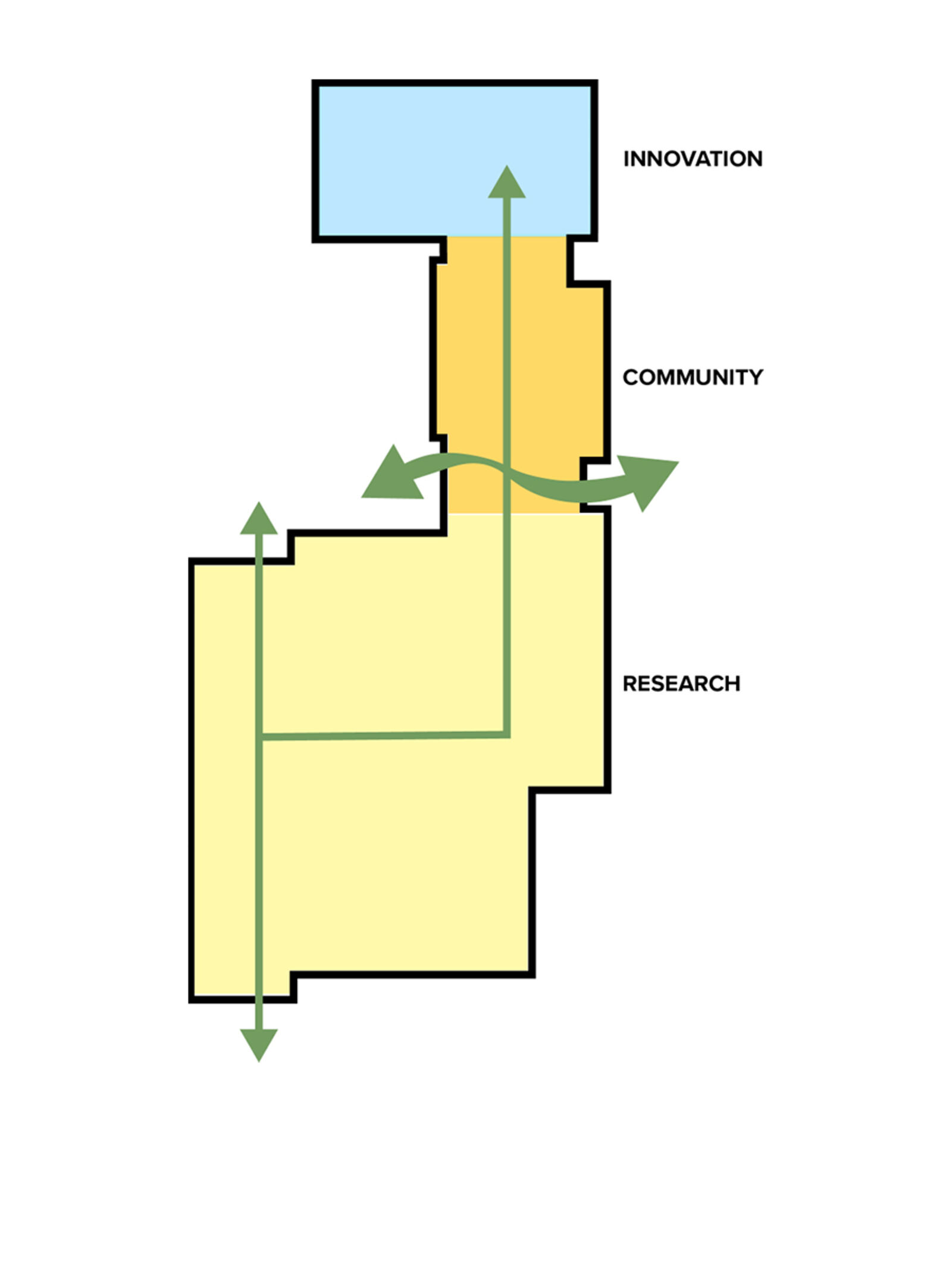
The program is organized to balance collaboration with efficiency. Programmatic elements are arranged in three functional zones (Innovation, Community, and Discovery) to support fluid movement and interaction across indoor, outdoor, and transitional spaces. On the north facing University Avenue is innovation, an incubator space with a flexible, utilitarian environment that supports early-stage ventures and entrepreneurs in clean tech.
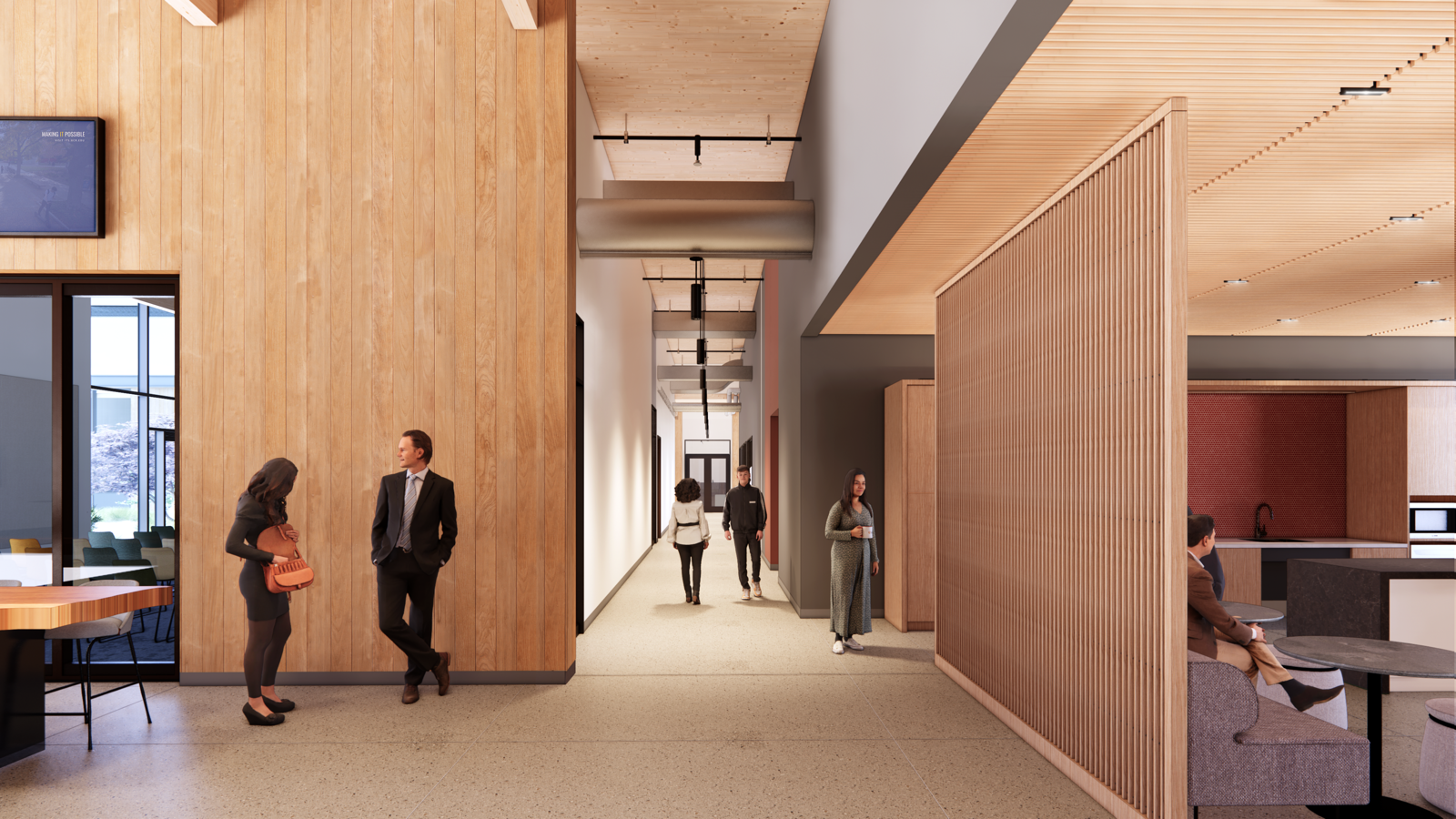
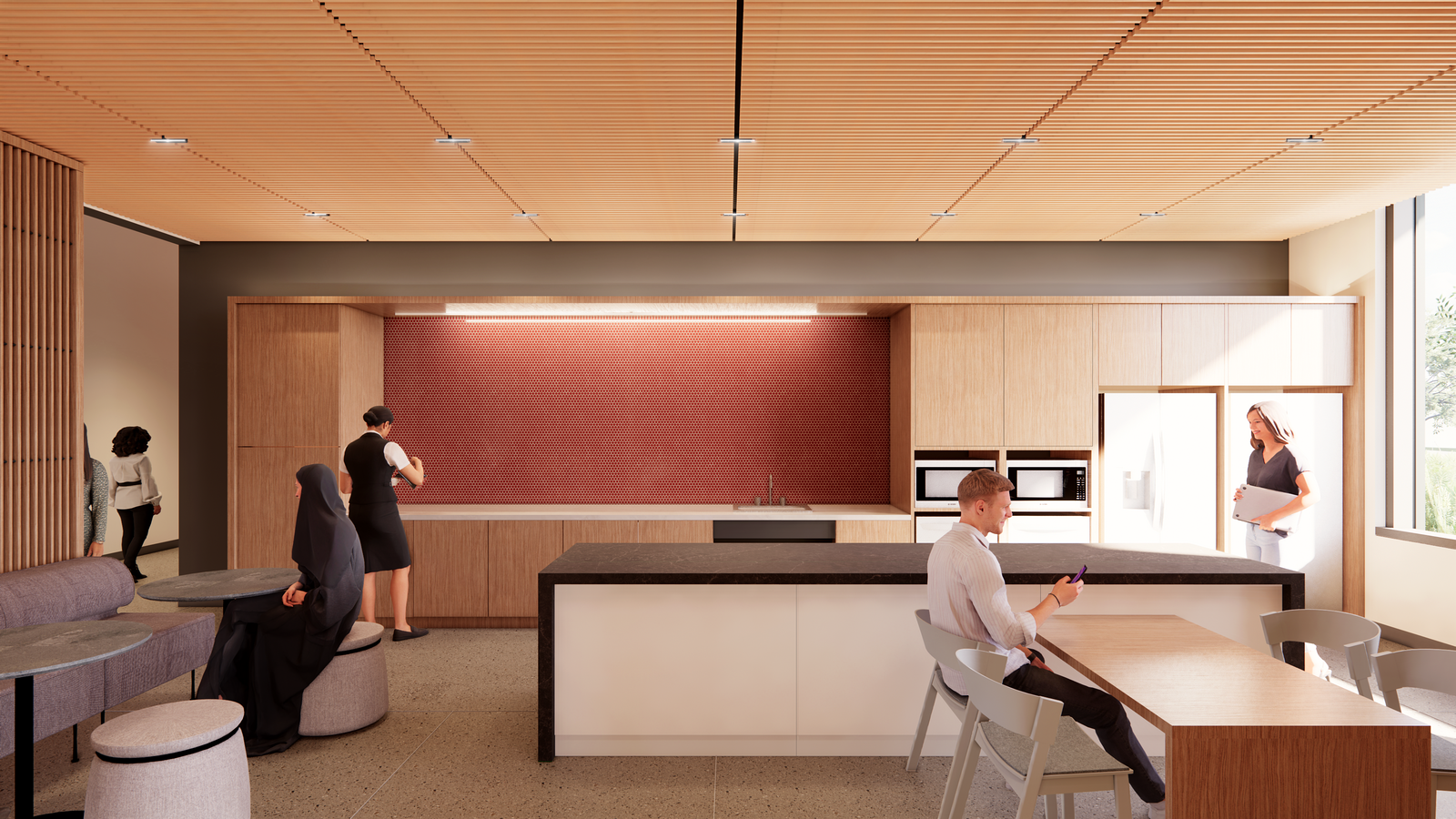
In the center of the building is community, a breezeway-style lobby connects the courtyard to the multimodal pathway and serves as a link between the incubator space to the north and research zone to the south. This transparent lobby, with floor to ceiling glazing, provides informal places to linger, connect, and share ideas. Spill out areas near the active learning classroom, the maker space, and the break room encourage occupants to interact and collaborate. Within this community-oriented zone, shared conference rooms and a recording room provide state-of-the-art facilities for students and startups to present and pitch their ideas.
The southern end is dedicated to discovery, featuring laboratories that house specialized research equipment for sustainable transportation, clean energy, and air quality solutions testing. The maker space is on display, visually connected to the courtyard and opening directly to the lobby. This transparency invites the community to observe innovation and research happening in real time.
An Inclusive Home for Innovation
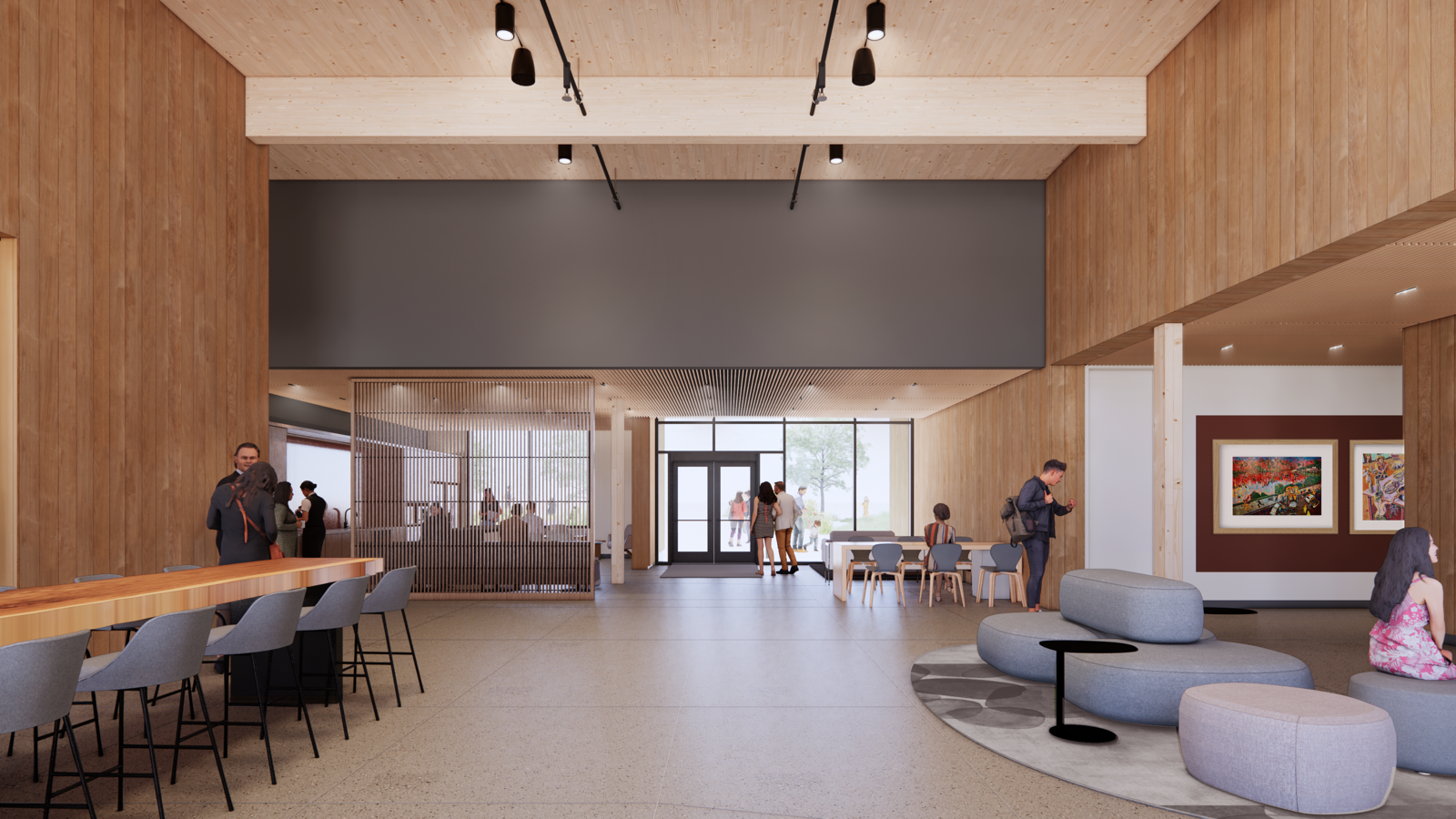
The interior is designed to bring people together in an inclusive environment rooted in the local community. The interiors foster a sense of psychological safety and belonging through shared access to resources and the use of approachable materials, creating a setting where the Inland Empire’s diverse population and underrepresented groups in clean tech feel welcome and supported.
This concept comes to life in the central lobby. Framed by exposed glulam timber columns and beams, Accoya wood walls, and CLT ceilings, the breezeway-style space establishes a clear and open passage through the heart of the building. Wood materials extend from exterior soffits and walls into the interior, reinforcing the connections between the inside and outside and lending a sense of natural warmth and approachability.
The interior is further enhanced by community artwork and vibrant accents, such as Talavera tiles, that reflect the cultural richness of the region—creating a space that feels familiar and inviting to the people it serves. Centering people and place in the design creates a foundation for discovery—one that is both accessible and dedicated to advancing innovation in Riverside.
UC Riverside SoCal OASIS™ Park marks a significant step in positioning Southern California’s Inland Empire as a leader in sustainable innovation. As a new gateway to campus and destination among Riverside’s growing Innovation Corridor, it brings together students and industry to provide a welcoming foundation for the future of clean technology.
This project is being brought to life by the Design-Build team of Hensel Phelps and ZGF.
An All-Electric Future: Approaches to Electrifying Our Building Stock