PUTTING PEOPLE FIRST IN DOWNTOWN SEATTLE
City of Seattle, Pike Pine Streetscape and Bicycle Improvements
Urbanism and Landscapes, Civic and Public
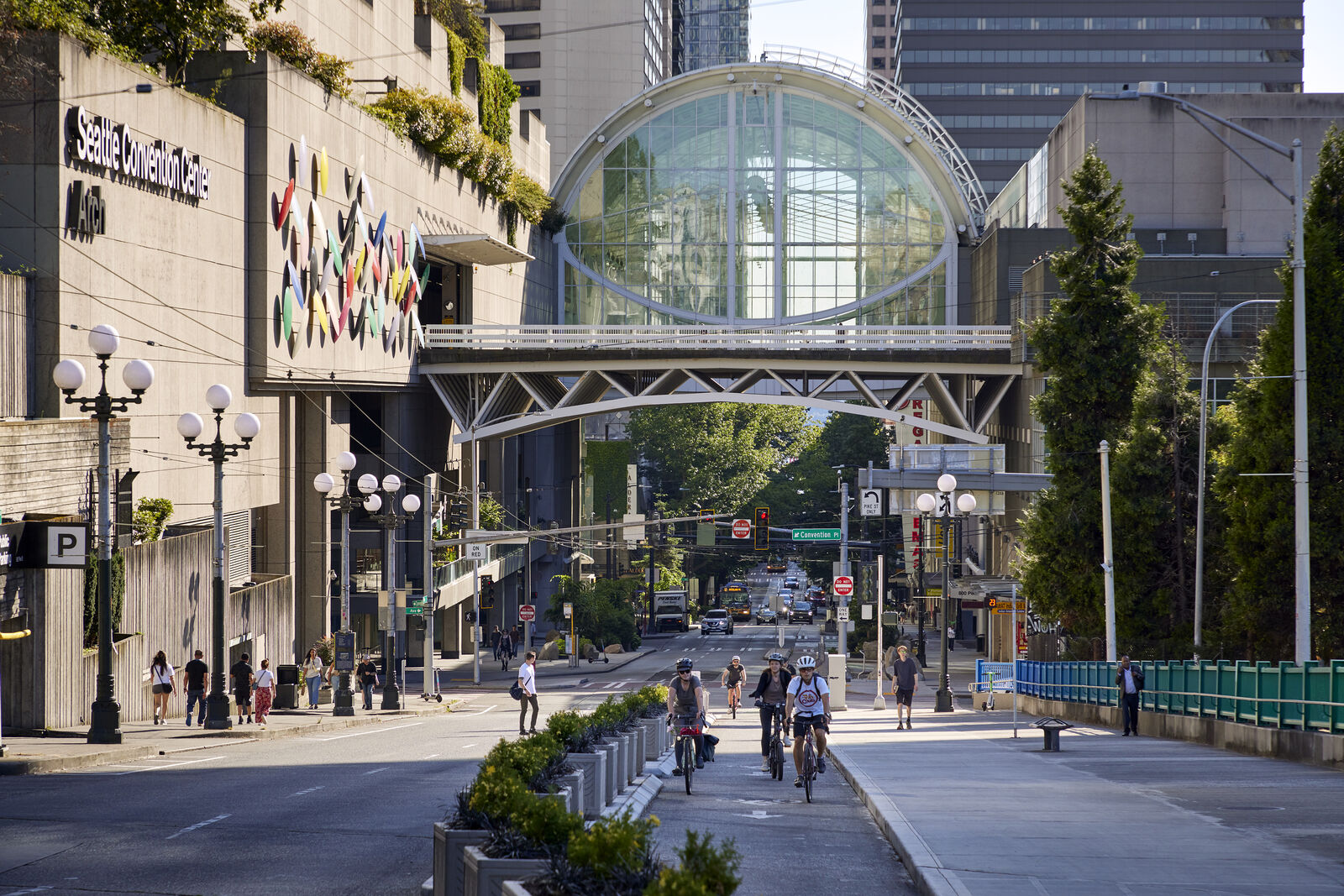
This overhaul to one of Seattle’s most walked corridors transforms the streetscape for an improved pedestrian and bicycle experience. ZGF's urban design and landscape architecture teams created a cohesive identity and improved safety for 23 blocks on the parallel Pike and Pine Streets, from Pike Place Market up to the Capitol Hill neighborhood. The updates link bus and light rail routes to the Market, Westlake Park, the Convention Center, and the downtown retail core.
Location
Seattle, WA
Completion date
2025
Project Component
Urban Design
Landscape Design
A More Walkable Downtown
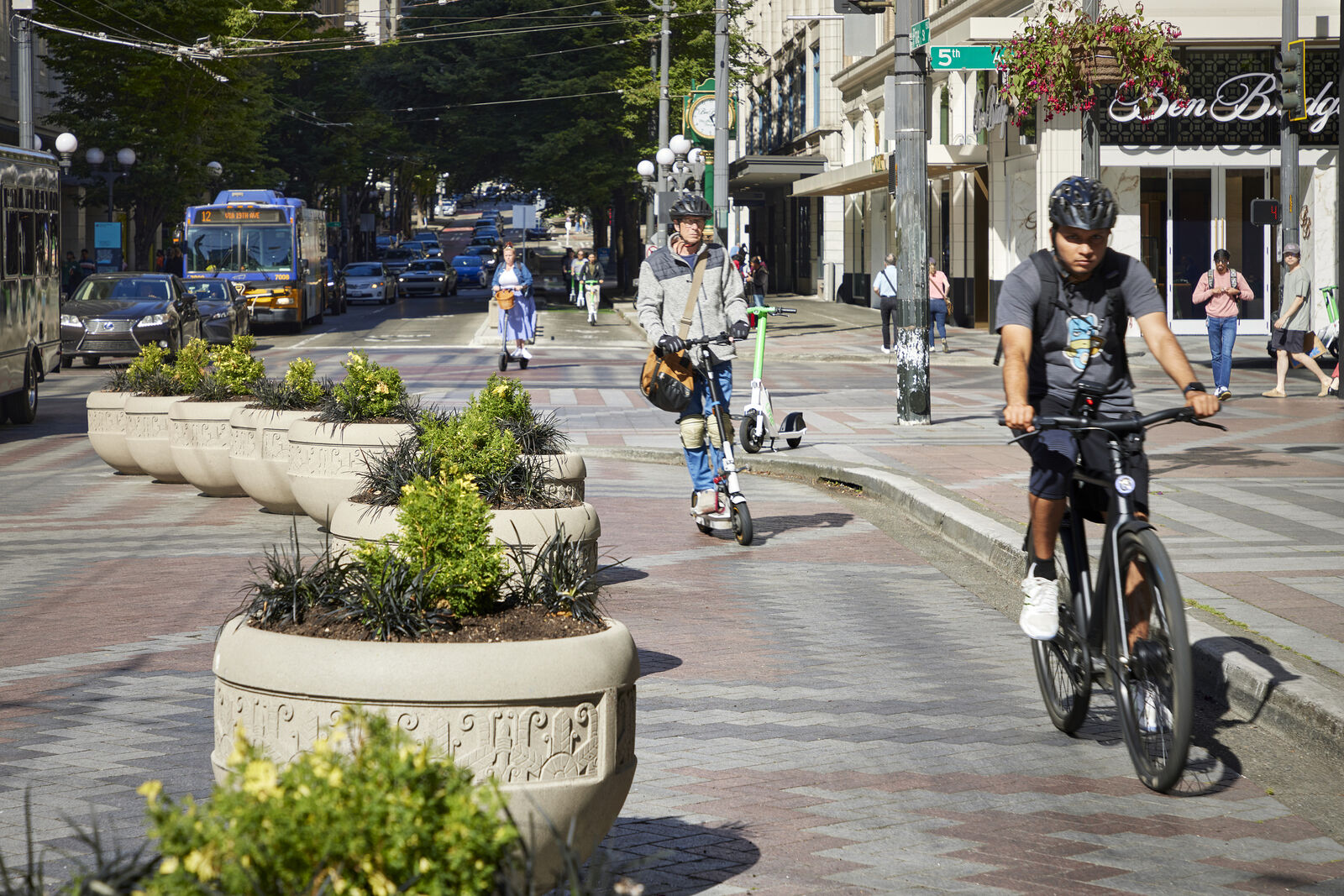
The project introduced several quality of life changes in the neighborhood: protected bike lanes, a curbless public square, widened sidewalks, integrated art elements, seating, as well as numerous accessibility and navigation updates. Crosswalks have improved signaling and new curb ramps with contrasting colors to support pedestrians. ZGF's design introduced new public art, weaving safety and aesthetic enhancements. Custom planters dot Pike and Pine to protect sidewalks and bike lanes, designed by artists on Seattle's Public Artist Roster. Two bridges above Interstate 5 with key connections to Capitol Hill have newly installed railings with unique designs, new lighting, as well as substantially widened sidewalks.
“With more people returning downtown for in-person work, major events, shopping, dining, and exploring, this project delivers upgraded infrastructure that makes it easier and more comfortable to walk, roll, or ride to your destination."
Former Mayor Bruce Harrell
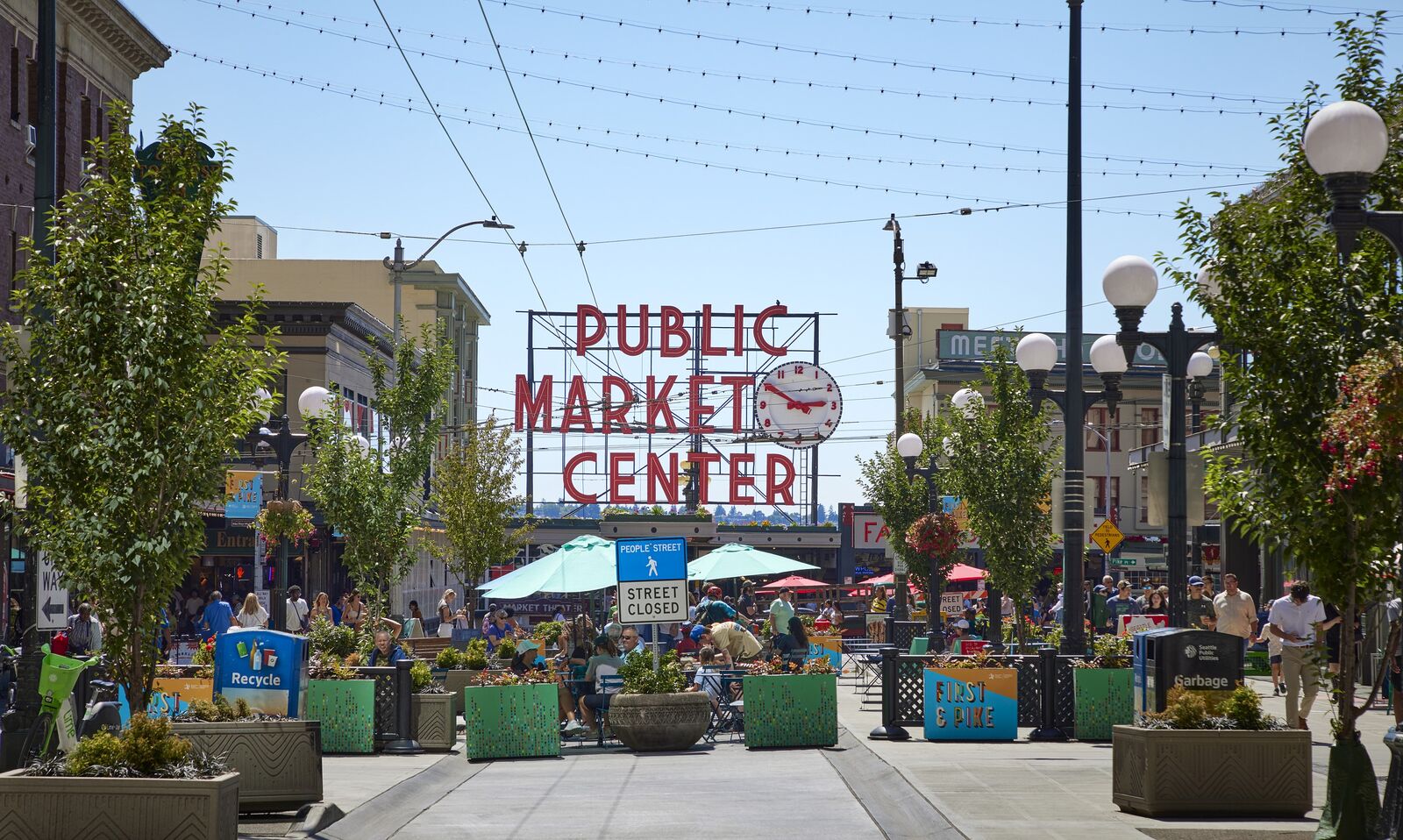
A Pike Place Plaza
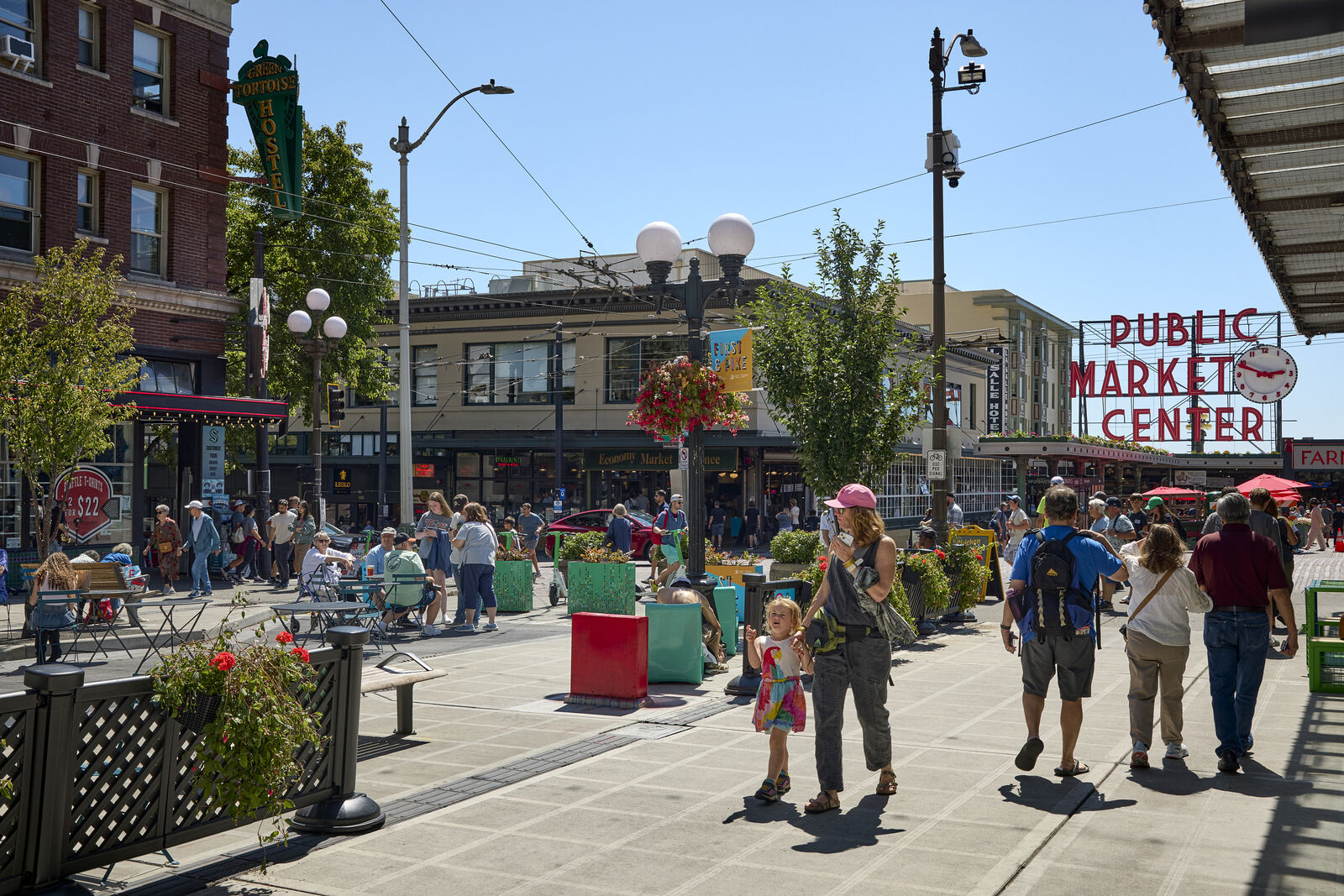
On the blocks closest to the Pike Place Market, the current streetscape has been transformed into a haven for pedestrians, bicyclists, and people on other wheeled devices. A safer, curbless block reduces traffic around the destination and creates a public plaza with seating and greenery for visitors.
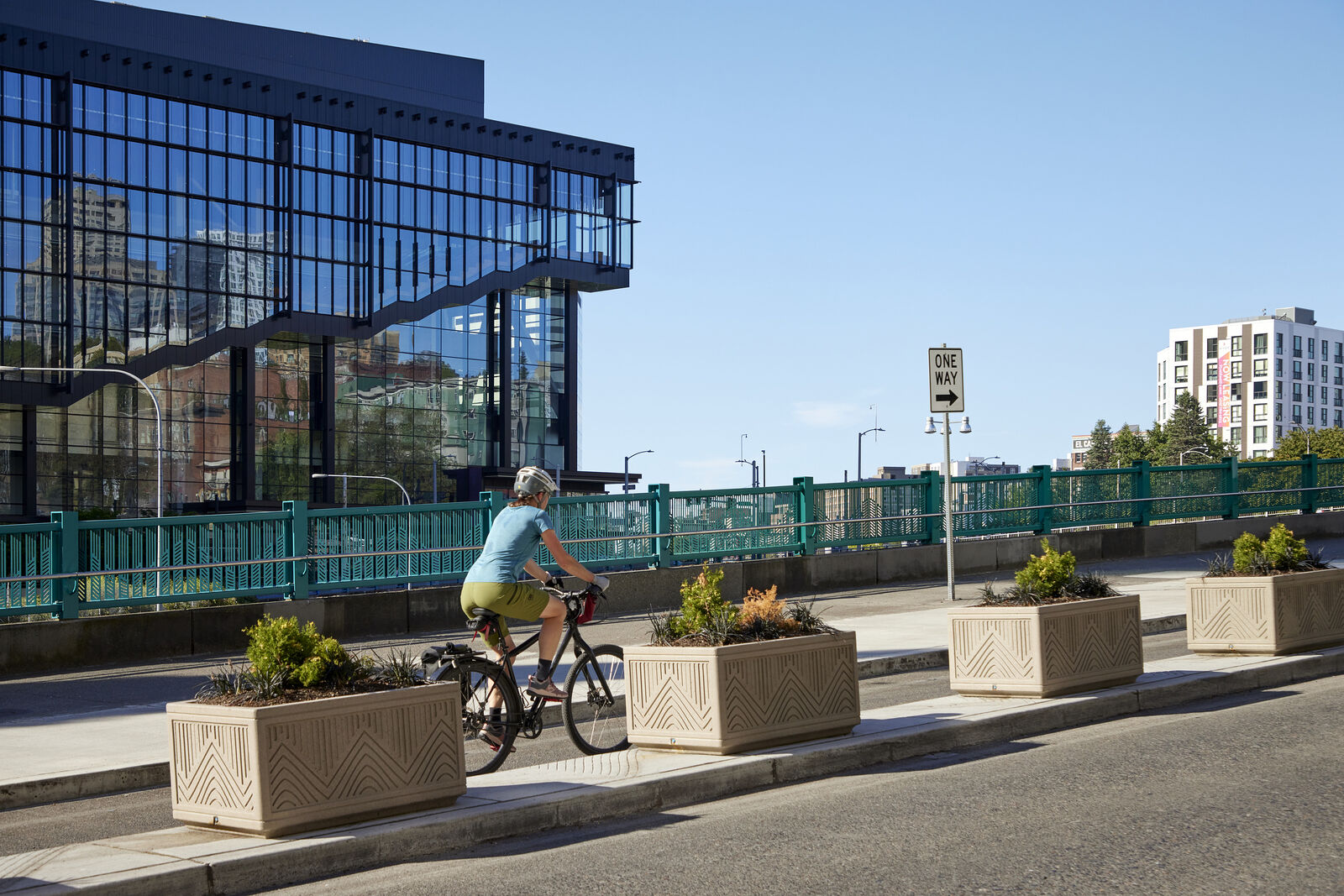
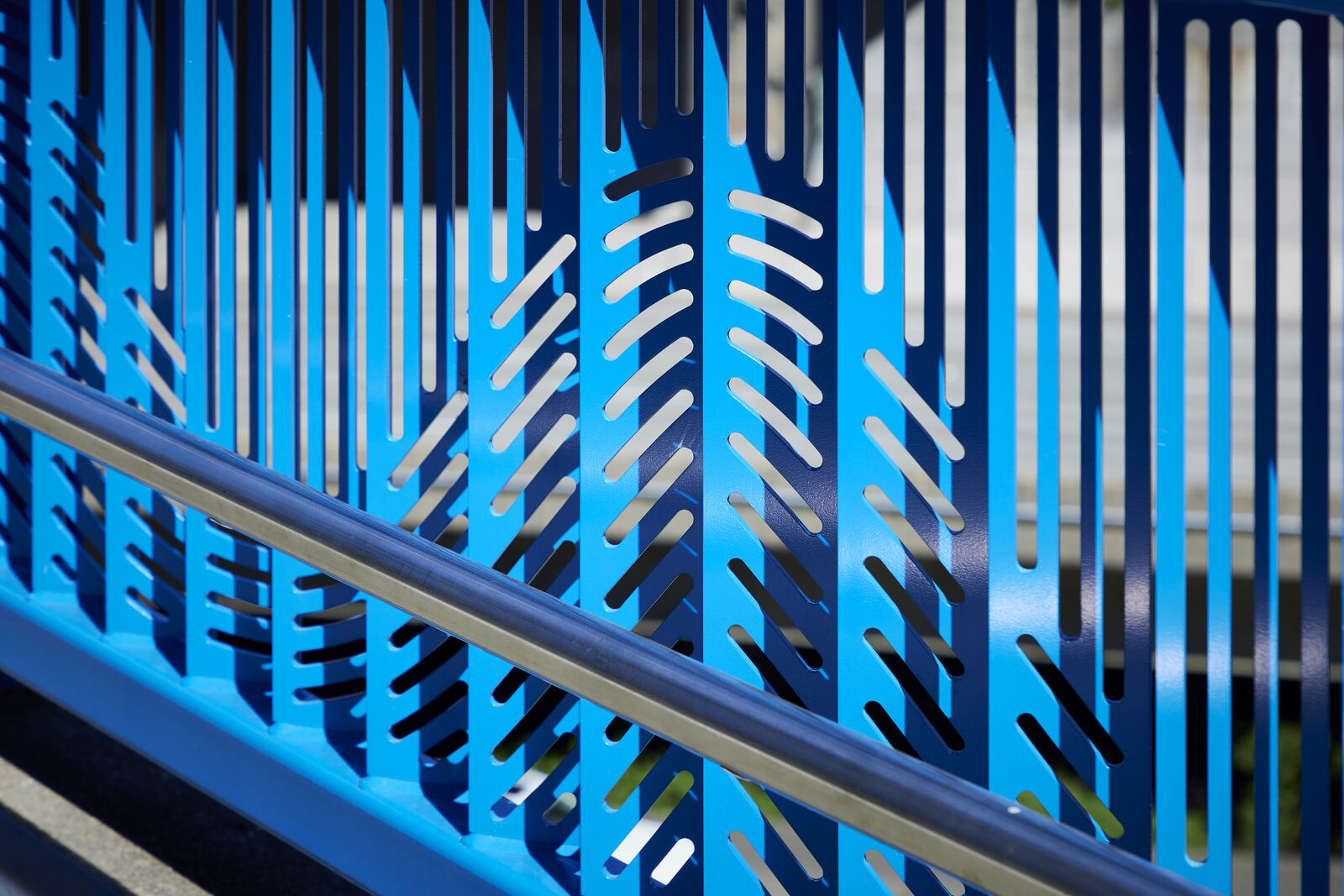
The new railings gradually shift from blue to green and feature unique designs from local artists.
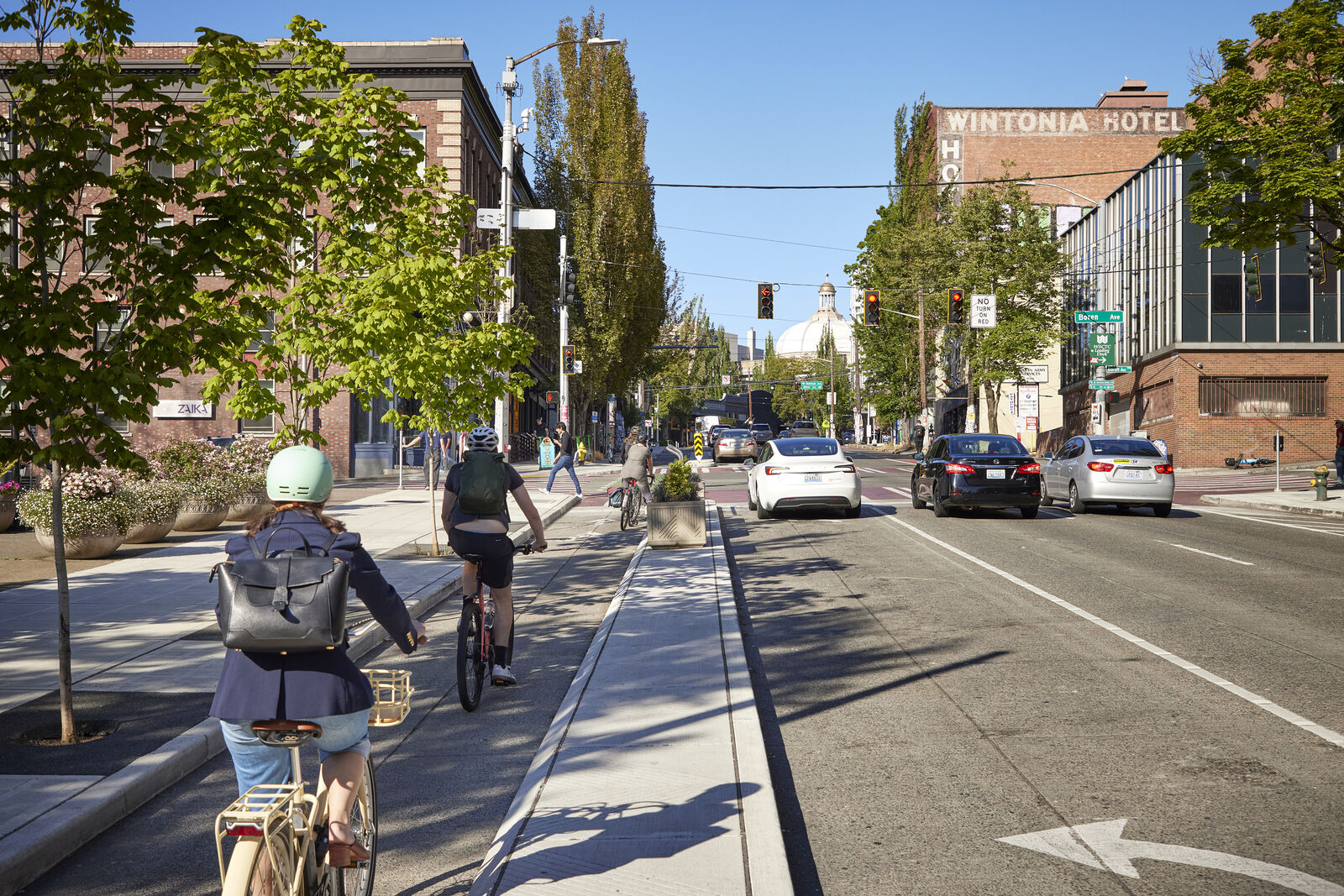
The Pike Pine effort included outreach to the community, including a stakeholder panel with representatives from the Pike Place Market Preservation & Development Authority, business and property owners, and developers.
Learn First, Design Later
At the outset of the project, over multiple days in both summer and fall, ZGF's data team collected information at key blocks along the corridor to record how many people moved through the space, their perceived age and gender, their mode of travel, and what activities they were engaged in. After collecting data through mobile devices and surveys, the team broke down the numbers and visualized their findings. The team quantified pedestrian volume along the corridor, transportation modes utilized, how existing bicycle infrastructure was utilized, and where individuals were utilizing micromobility options. The team was also able to classify different activities to show where people's activities were more passive versus active, introverted versus extroverted, or where diverse individuals felt safe lingering. All of these data points, shared with the City, informed how our design team approached the project and prioritized specific areas.
I-5 Rose Quarter Independent Cover Assessment