Exploring Embodied Carbon in Canada
Fueled by a shared passion for problem-solving and a profound sense of responsibility toward the world, ZGF’s design philosophy emphasizes sustainability and stewardship. Each project presents an opportunity to innovate, inspire, and create lasting change—from developing new tools to reduce embodied carbon in design and construction, to cultivating more transparent supply chains for the mass timber we use in our buildings.
In Vancouver, BC, ZGF was recently recognized with the Organizational Commitment to Change Award at the second annual Carbon Leadership Forum (CLF) BC Embodied Carbon Awards. This honor is a testament to our dedication to reducing embodied carbon in the built environment in BC and beyond.
Data-Driven Innovation
We may not have all the answers, but we do know that decarbonizing the built environment requires unprecedented creativity, leadership, education, and collaboration—plus measurable results. As architects and designers, we’re primed to influence change, facilitate meaningful conversations, and contribute to the collective pursuit to a low-carbon future.
Internally, ZGF’s project performance team develops tools and resources such as our Carbon Playbook to support the implementation of low-carbon strategies. Our internal Carbon Dashboard allows us to measure and track reductions against 2030 goals. Externally, our experts share insights through advocacy, publications, panel discussions, and multidisciplinary studies to advance awareness of embodied carbon.

The Organizational Commitment to Change Award recognizes a company that has shown exemplary leadership in reducing embodied carbon in British Columbia’s built environment. (Left to right: Molly Walsh, Ayme Sharma, Iain MacFadyen, accepting the award on behalf of ZGF.)
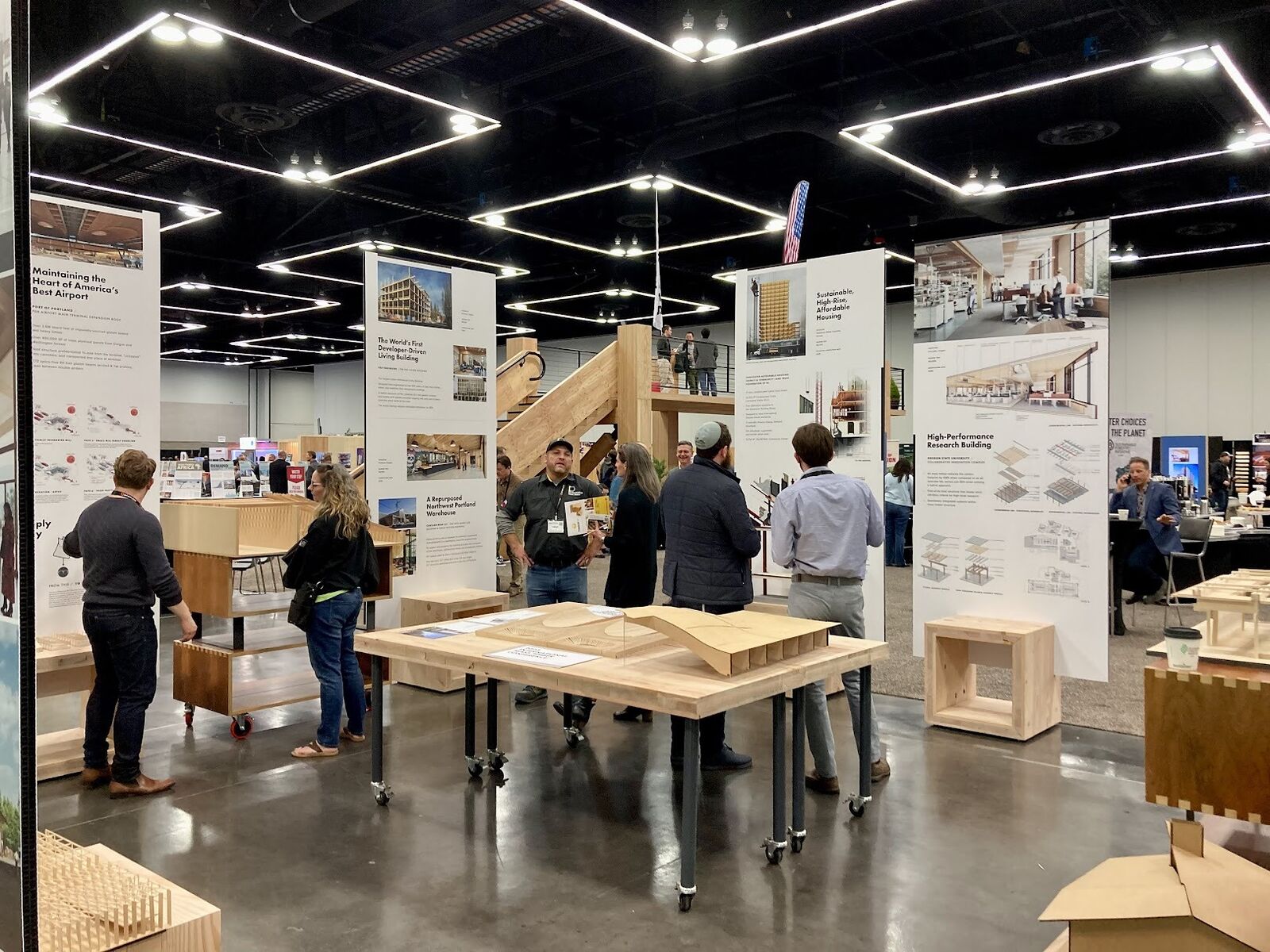
ZGF Vancouver gave 16 conference presentations in 2023, largely focused on building performance initiatives. (2023 International Mass Timber Conference, Portland OR)
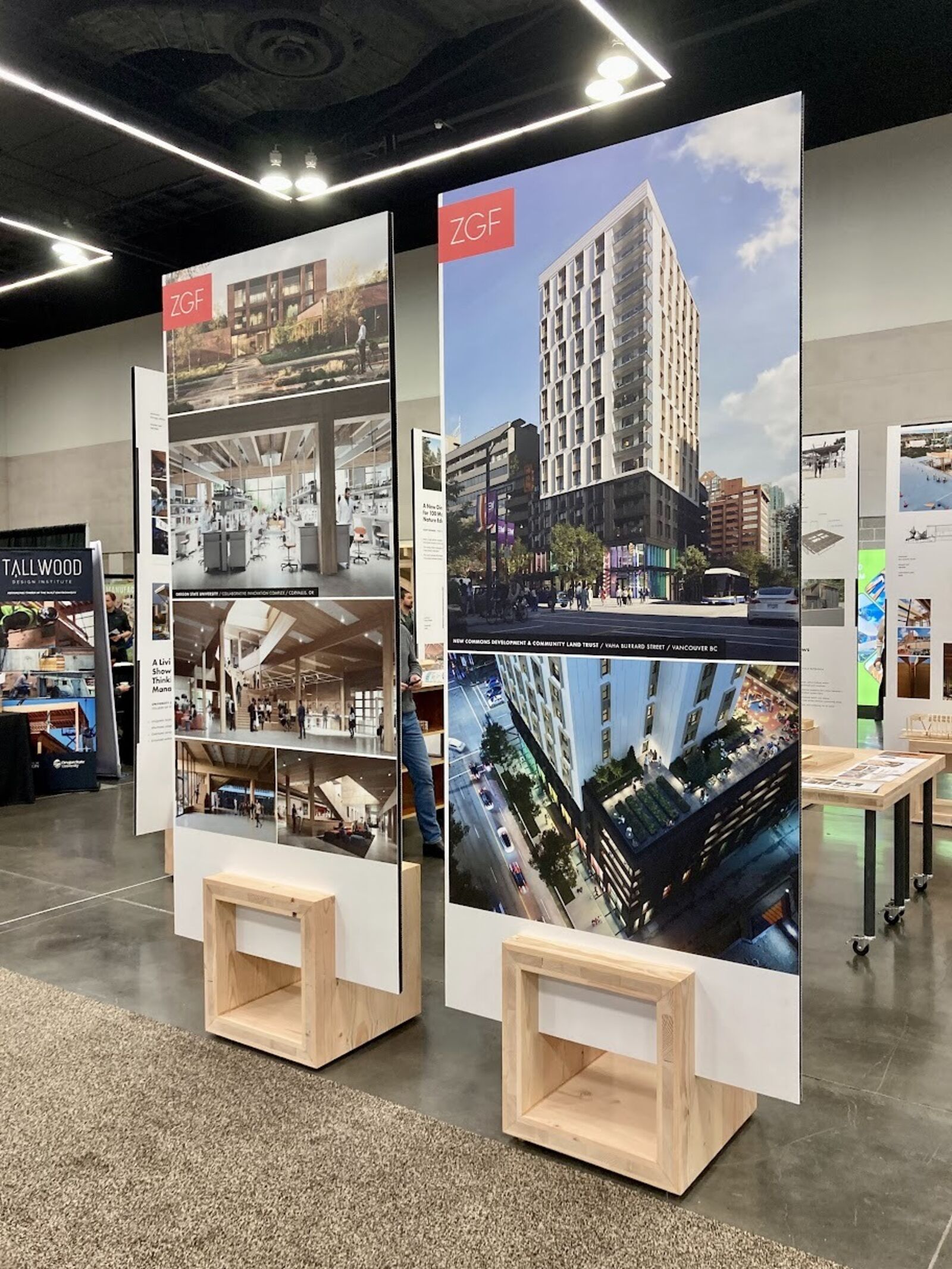
These project examples further highlight our commitment to lasting change:
Decarbonizing BC’s First Fully Electric, Net Zero Hospital
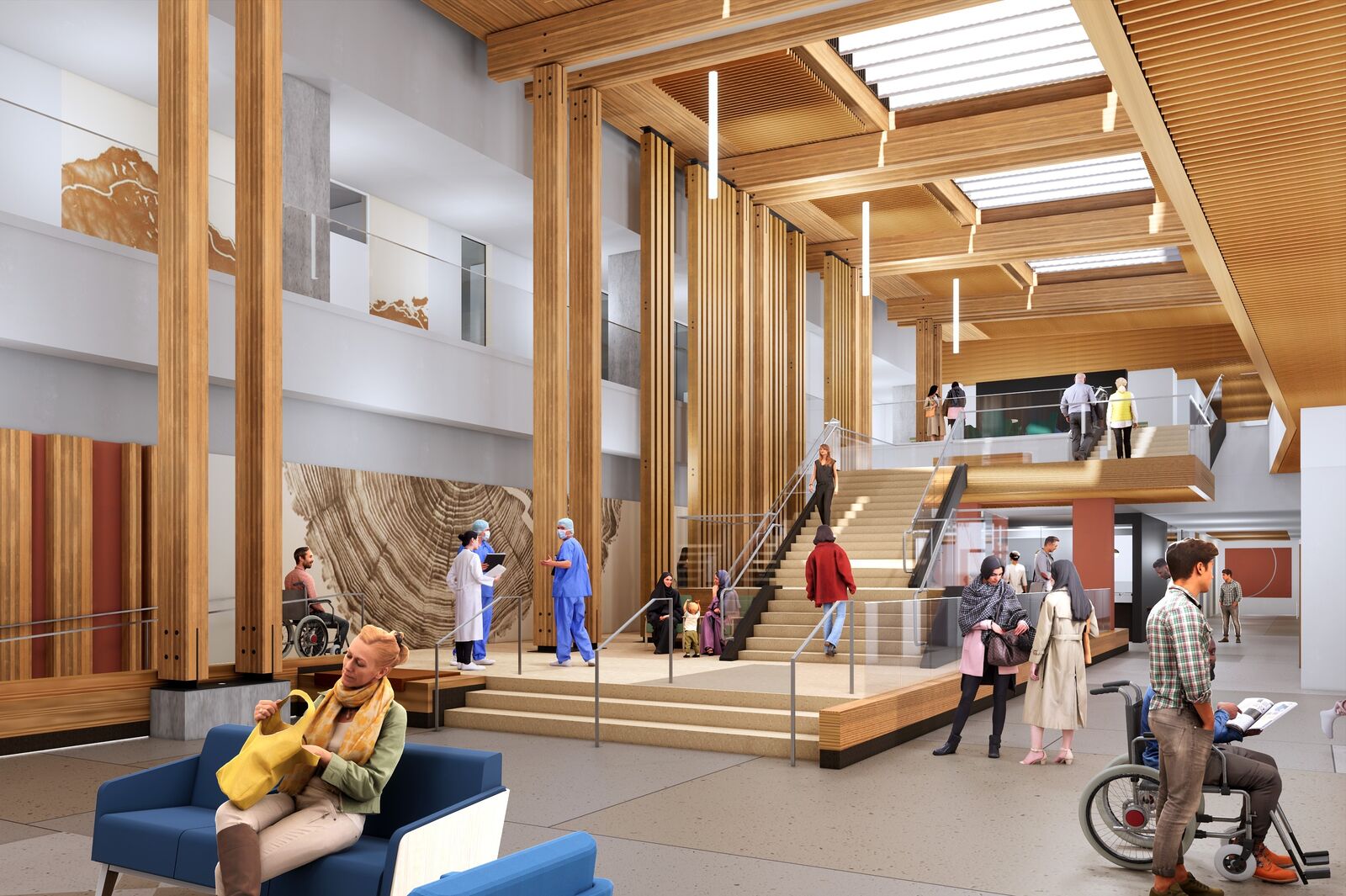
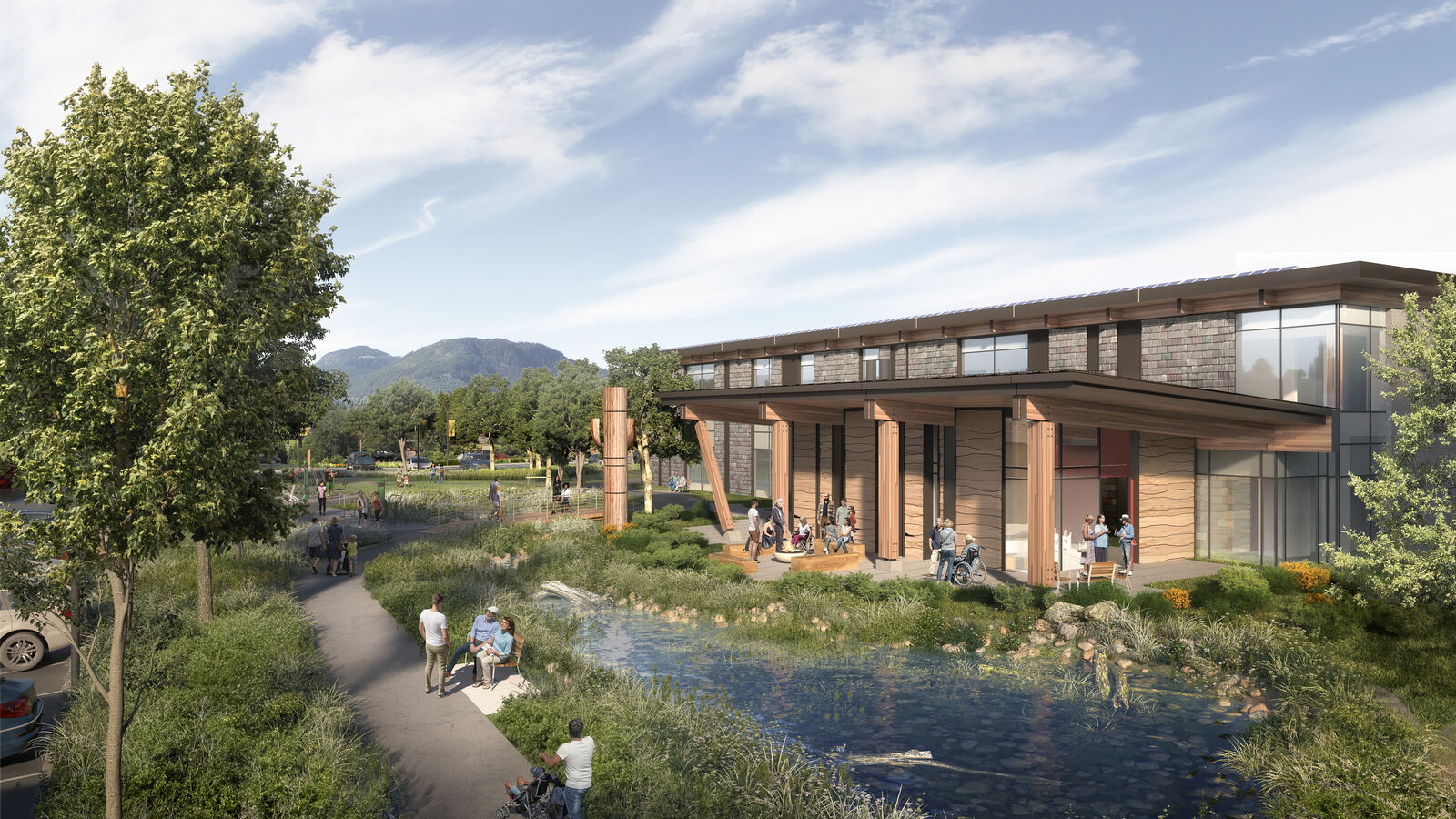
The future Cowichan District Hospital is set to become the first fully electric, net zero hospital in BC targeting the CaGBC Net Zero Carbon Design Standard and LEED Gold certification—embodying a shared vision for the future of healthcare in Vancouver Island.
The project’s first-of-its-kind-in-Canada Alliance delivery model has enabled the team to create unprecedented value-driven building performance, including development of the first pain share/gain share mechanism and target for embodied carbon. Early-stage whole building life cycle analysis (wbLCA) identified materials with the largest embodied carbon impacts and directional analysis to evaluate opportunities for savings, resulting in a 24% reduction from the baseline. ZGF developed a specification tool combining LEED and Global Warming Potential (GWP) performance targets that supported the integration of embodied carbon requirements into our specs and evolved into a construction tracking tool for material selection.
Through early project integration we were able to break down typical project silos and unlock low-carbon material selection for:
- Concrete: Placed performance-based requirements for maximum GWP on individual mix designs
- Rebar: Utilized electric arc furnace steel instead of blast furnace steel
- Insulation: Developed maximum GWP limits for insulation products
- Mass timber: Utilized in public spaces
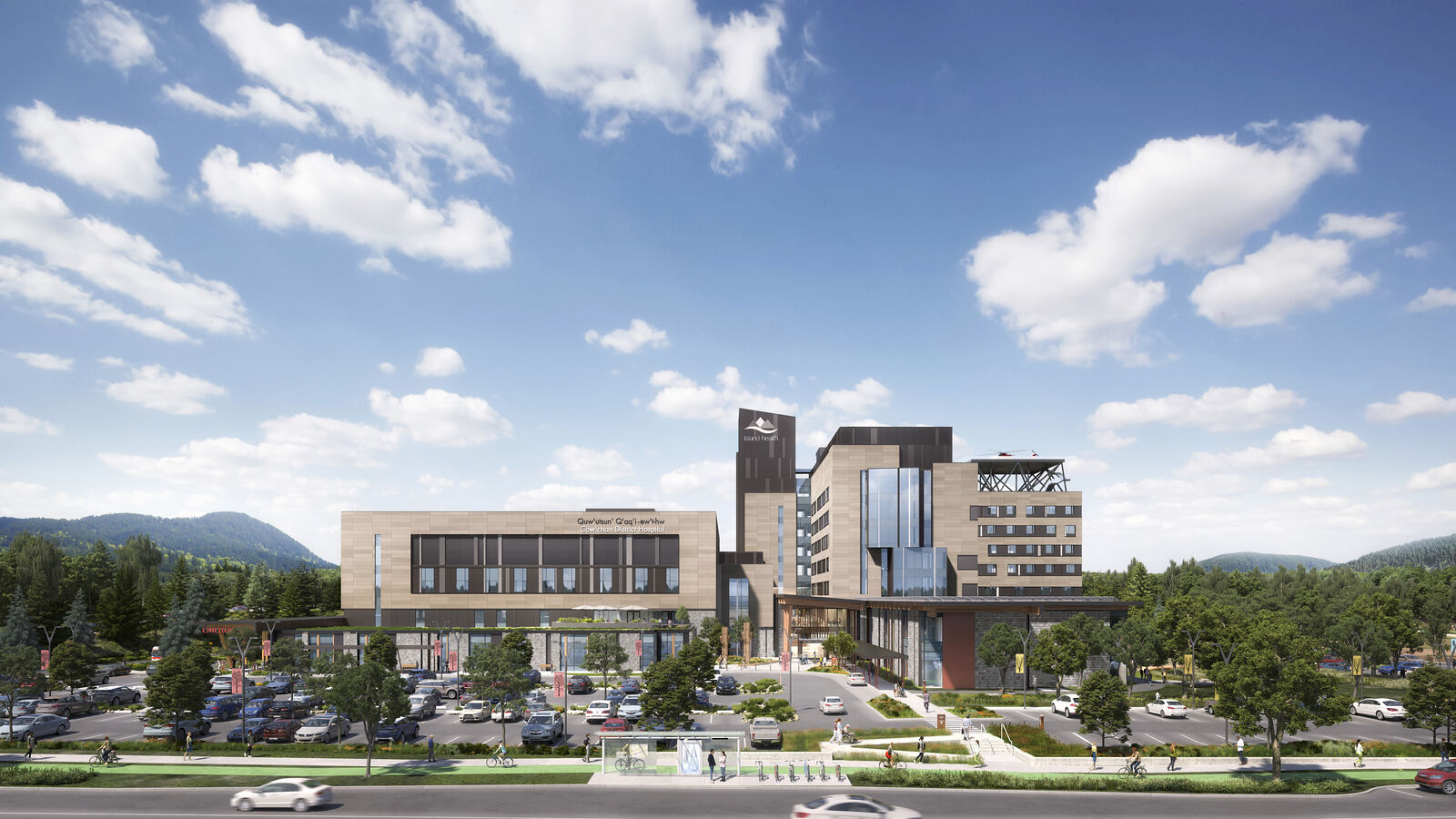
As the first fossil fuel-free hospital in BC, the future Cowichan District Hospital will incorporate energy saving measures to reduce operational greenhouse gas emissions by 75% compared to the existing facility, despite being three times larger.
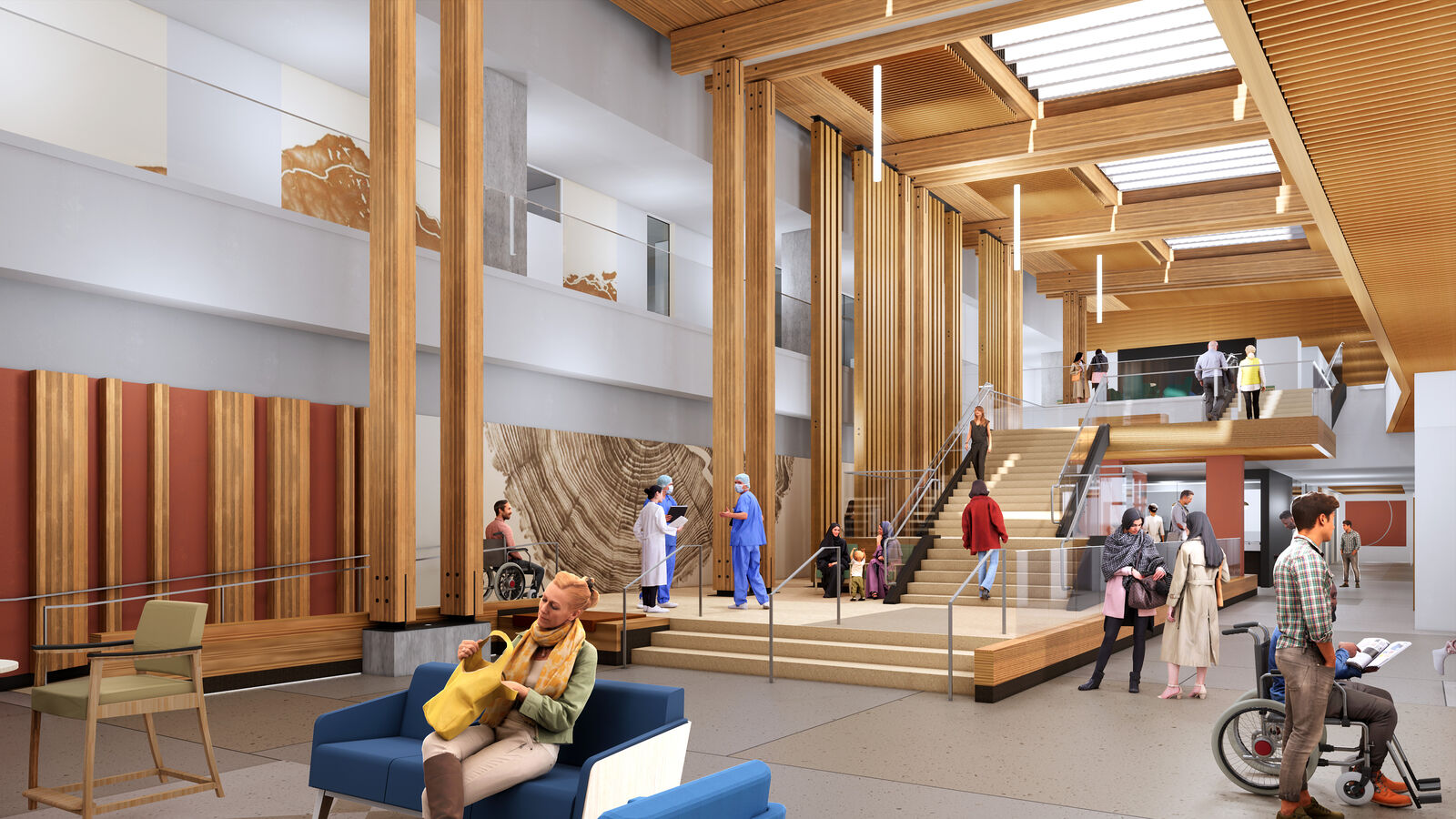
The project also targets a 24% reduction in embodied carbon emissions in part by using mass timber and low-carbon concrete in the construction.
Concrete: A Pragmatic Approach to Lowering Embodied Carbon
Concrete is typically the largest contributor to a building’s embodied carbon footprint. ZGF co-authored an interactive guide, “Concrete: A Pragmatic Approach to Lowering Embodied Carbon,” with Fast+Epp, EllisDon, and Lafarge to reduce concrete’s impact in Canada. The report outlines steps at every project phase to support the evaluation and implementation of low-carbon concrete solutions for owners, architects, engineers, contractors, concrete suppliers, and other stakeholders in the Lower Mainland of British Columbia. The team is currently updating the guide for cold climates at the request of Concrete Ontario. ZGF also created a demonstration video and presented the guidelines to industry groups to support education and implementation.
Taking Mass Timber to New Heights in BC
As demand for mass timber accelerates and recent North American code changes allow it in taller buildings (up to 18 storeys in BC), more developers are exploring mass timber solutions for high-rise residential projects. Mass timber’s low carbon footprint is well documented, but it can still be challenging to analyze the cost of a mass timber building in the BC market. ZGF, BTY Group, Axiom Builders, and WSP Canada, along with building code and acoustic experts, partnered on a demonstration study, “Making Mass Timber Work for High-Rise Residential in BC,” to compare cost, construction methods, and schedules of a typical concrete high-rise in Vancouver to a theoretical mass timber concept. The study utilizes the University of British Columbia (UBC) Georgia Point project, a 14-storey multifamily residential tower designed by ZGF, as the baseline.
The study paved the way for ZGF’s subsequent contribution to “Design Solutions to Prefab Mass Timber Construction,” a Simon Fraser University (SFU) Renewable Cities initiative which engaged a range of Canadian AEC-industry stakeholders. This guide addresses barriers and offers design guidance for mid-rise mass timber projects, following recent BC Building Code revisions allowing 7 to 12-storey buildings. A newly-released 2024 update includes considerations for projects up to 18 storeys, which are now acceptable by law as of April 2024.
Advancing Social & Environmental Equity at 981 Davie
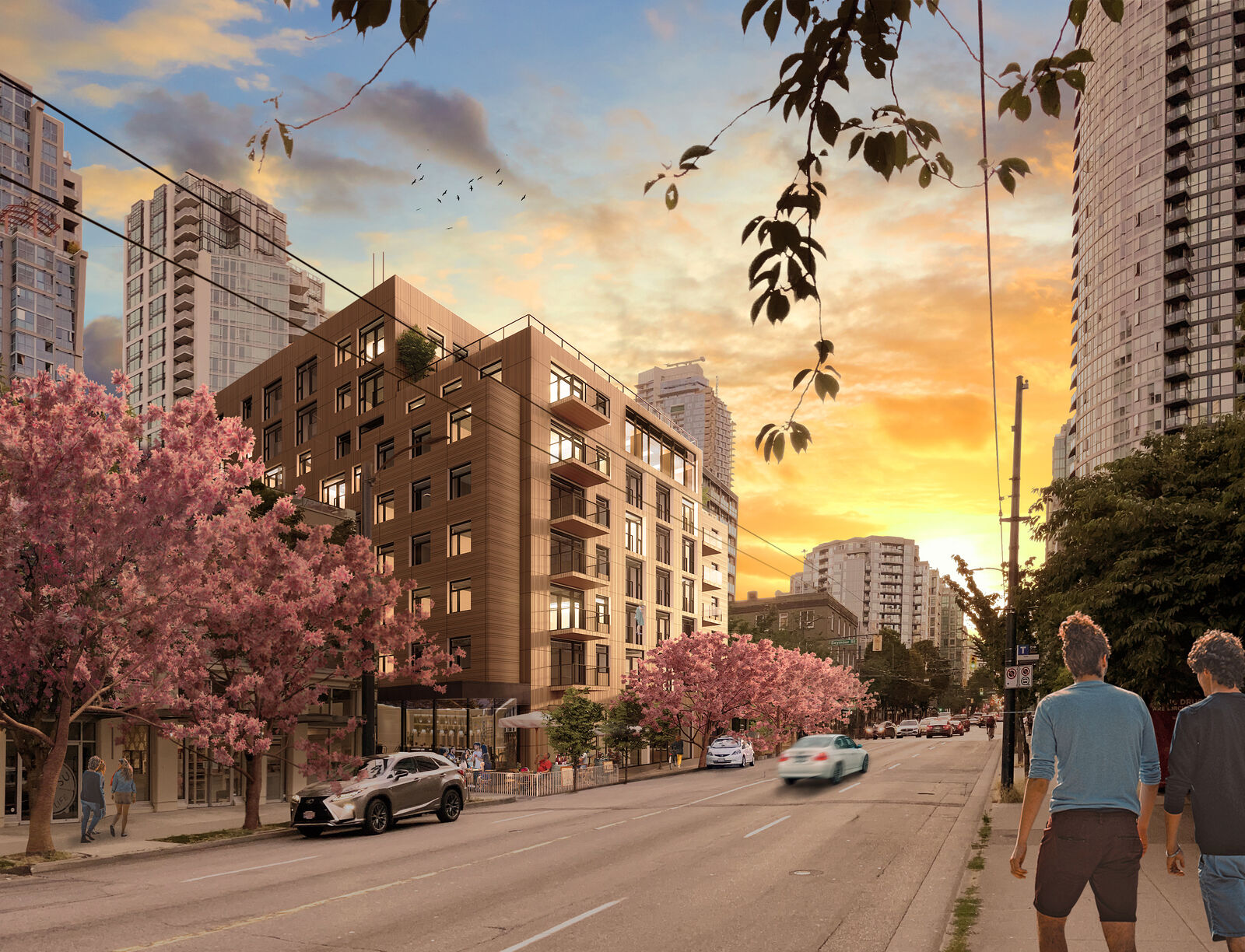
Soaring to a height of 52 meters, this fully electric, Passive House certification targeted development at 981 Davie Street stands out as one of a handful of tall mass timber projects to successfully make it through permitting and start construction in Vancouver. The 17-storey project employs hybrid mass timber construction to address the demand for affordable housing while reducing embodied carbon emissions. Located at the prominent Vancouver? intersection of Burrard and Davie Streets, the mixed-use building will provide social housing for people living with HIV/AIDS, community and social services, a new home for a 2SLGBTQIA+ community center, and ground-level commercial spaces. The project explores constructability of a complex, high-performance structure and fabrication of componentized CLT floor panels and steel stud envelope panels. Offsite prefabrication further reduces embodied carbon emissions, with preliminary wbLCA results expected this spring.
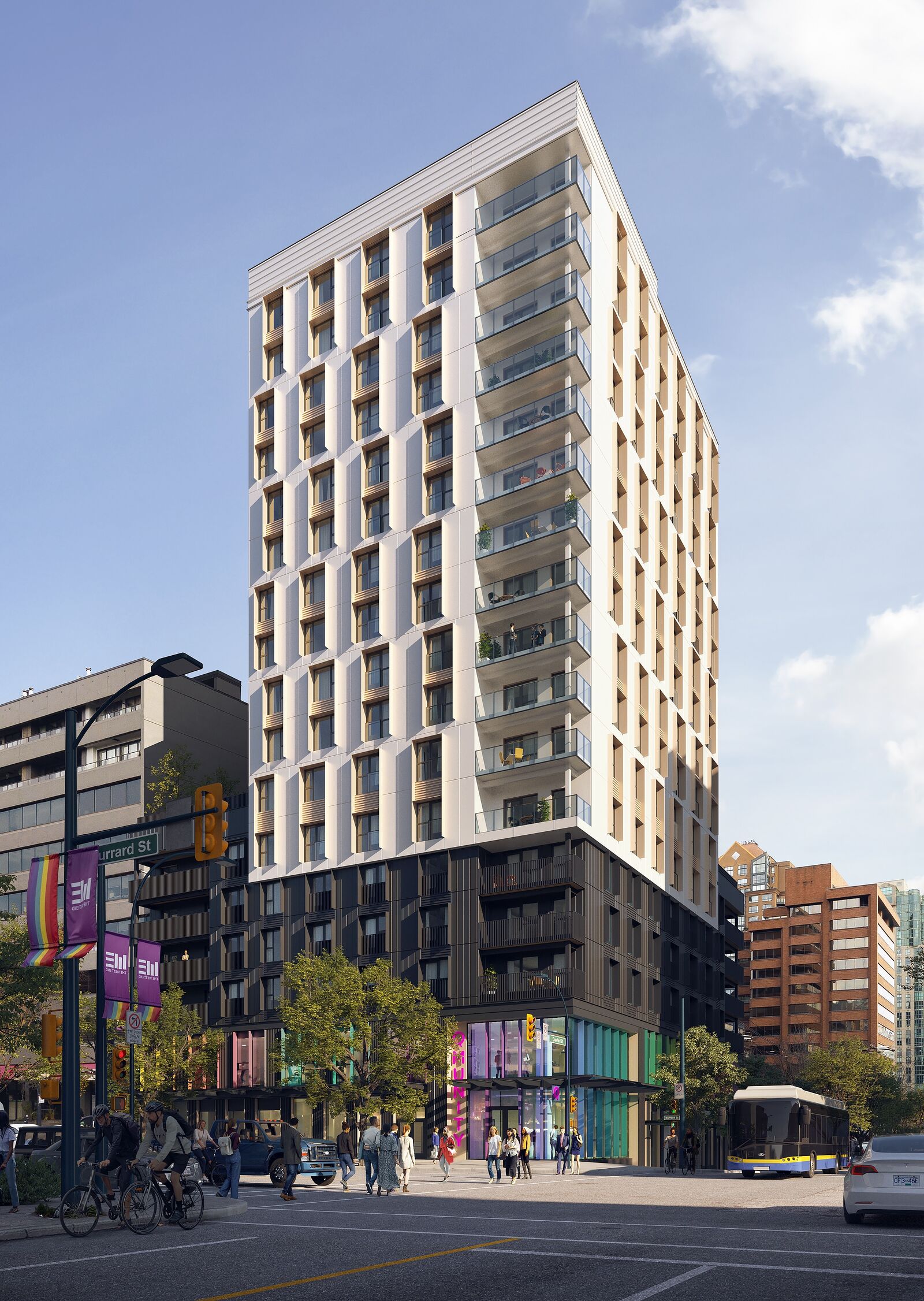
More broadly, 981 Davie demonstrates the suitability of hybrid mass timber construction for multifamily/mixed-use developments, directly impacting our ability to deliver high-performance, efficient unit plans.
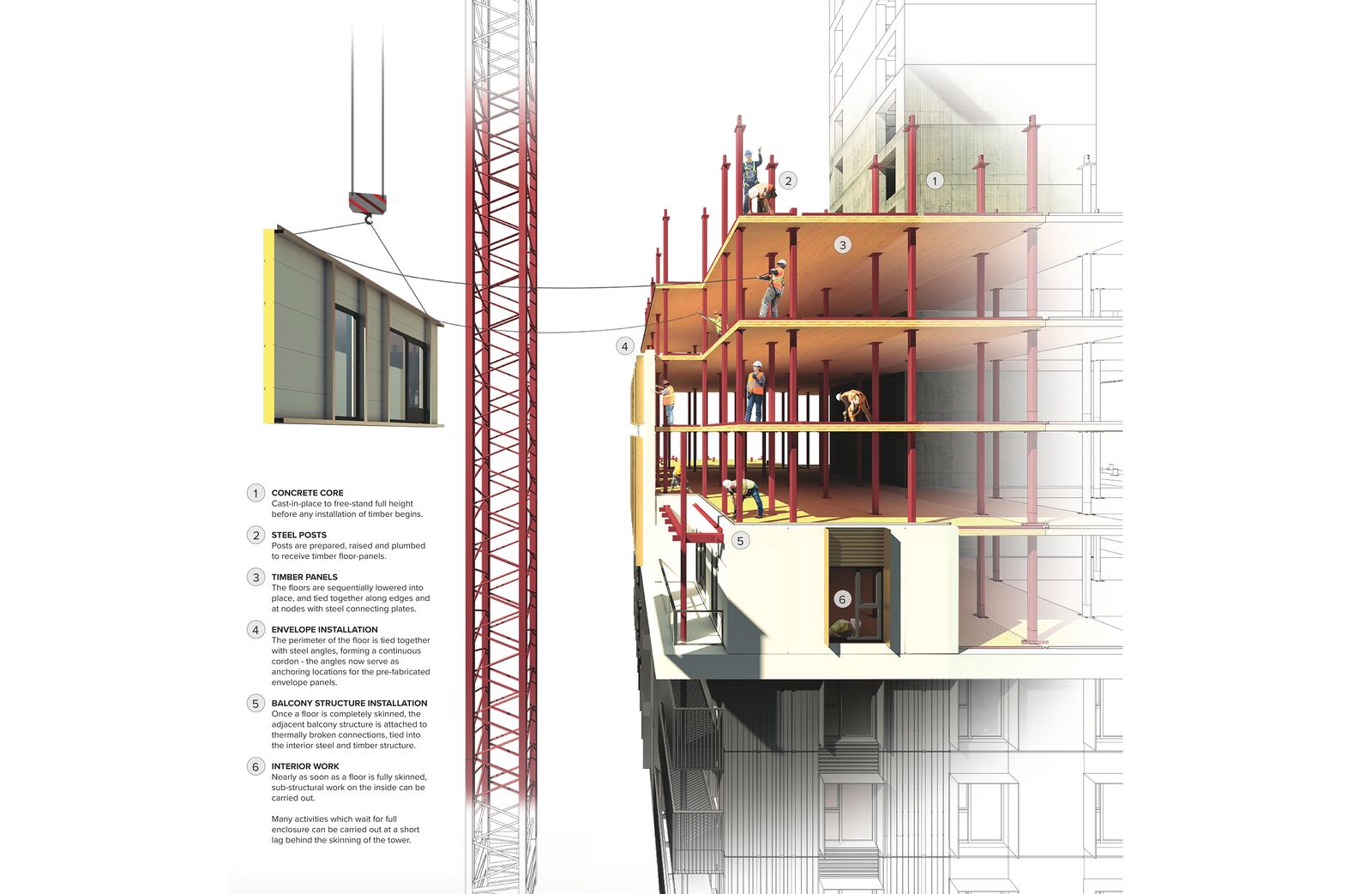
The project navigates offsite prefabrication of a complex structure, componentized CLT floor panels, and steel stud envelope panels. The proposed benefits are currently being considered through a third party wbLCA.
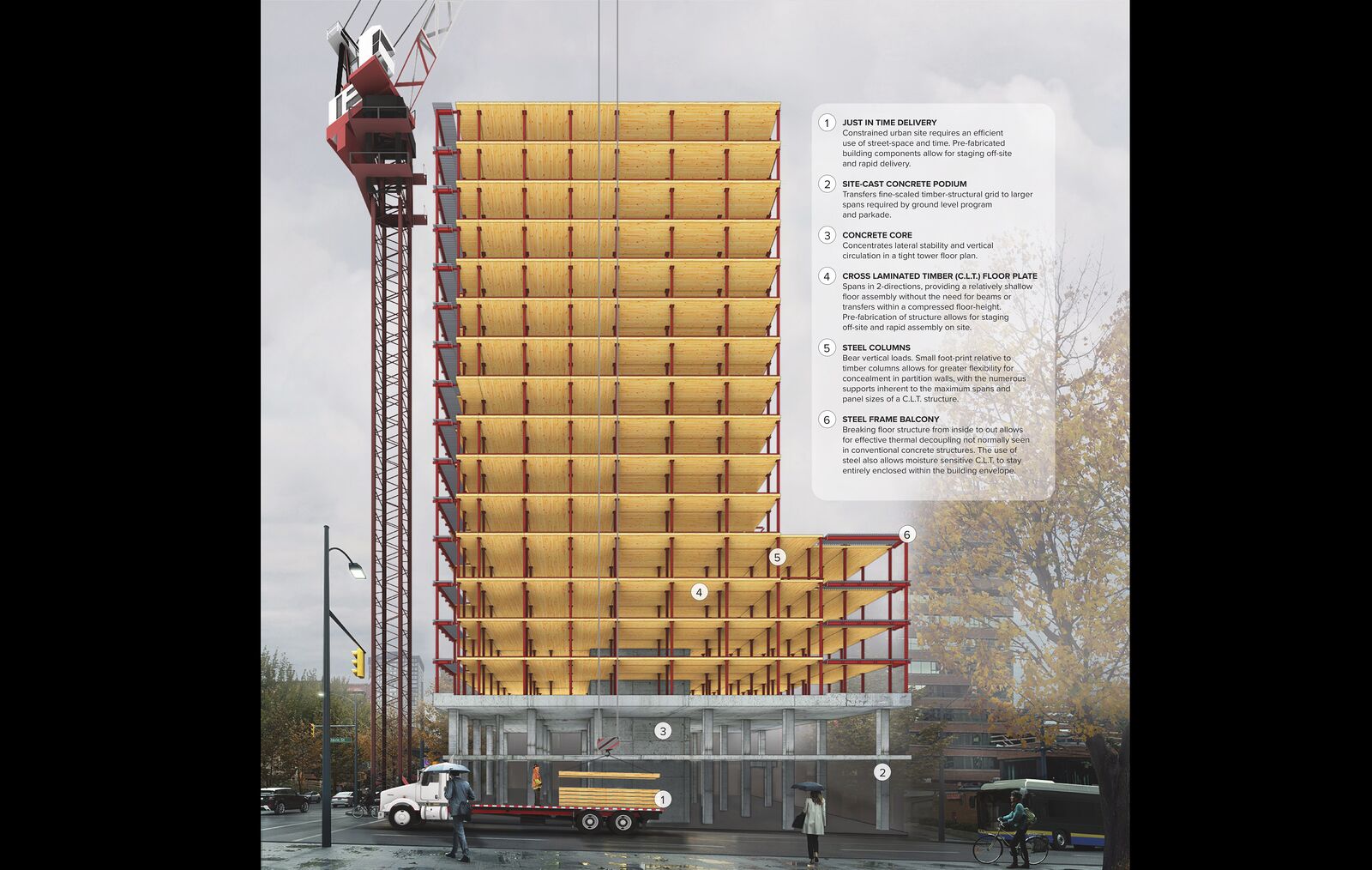
We reduced the volume of concrete using hybrid CLT floors with steel columns. ZGF is also reviewing concrete mix designs against low embodied concrete mix design specifications.
City of Vancouver Embodied Carbon Case Study – Seymour Street Affordable Housing
ZGF recently worked with the City of Vancouver to evaluate the development of its Embodied Carbon Guidelines and understand how to achieve the targeted reductions for this midrise residential project at 1210 Seymour Street. We utilized two different software solutions, Tally and OneClick, to compare results and both exceeded the City’s requirement of 10% embodied carbon reduction from the baseline. We implemented four carbon-cutting changes at no additional cost:
- Concrete volume reduction:
- Parkade reductions through implementation of TDM measures
- Optimized unit layout/stacking to minimize need for transfer slabs
- Optimized material selection:
- Selection of low embodied concrete mix designs, lowering GWP targets
- Implementation of low-GWP insulation targets
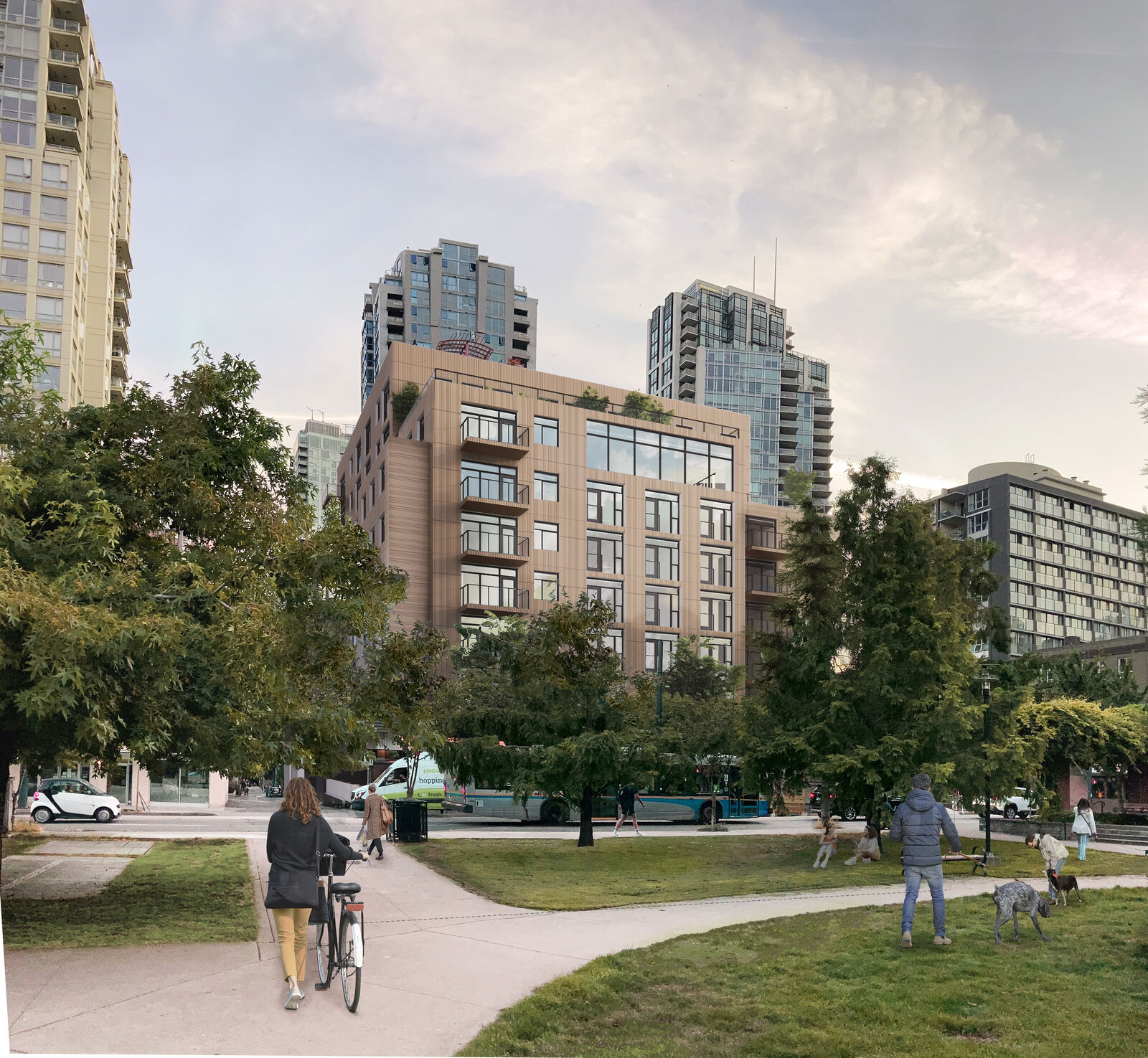
Through the Seymour case study, ZGF demonstrated how to meet the 2025 Vancouver Building By-law (VBBL) Embodied Carbon Requirements on a live project, at no additional cost to the client, following the City of Vancouver Embodied Carbon Guidelines.
Measuring Up
We’re integrating lessons learned from these projects into baseline material specifications and targets to address embodied carbon across ZGF’s portfolio. At a minimum, we’re conducting directional embodied carbon analyses on concrete, achieving approximately 10% savings over the BC regional baseline at no cost premium. Alongside wbLCAs, we’re developing quick and efficient tools to streamline coordination and collaboration with contractors and consultants, enabling easy uploading and tracking of quantity data. After all, we can’t improve what we don’t measure.

How to Drive Rapid Decarbonization With a Few Easy Tools
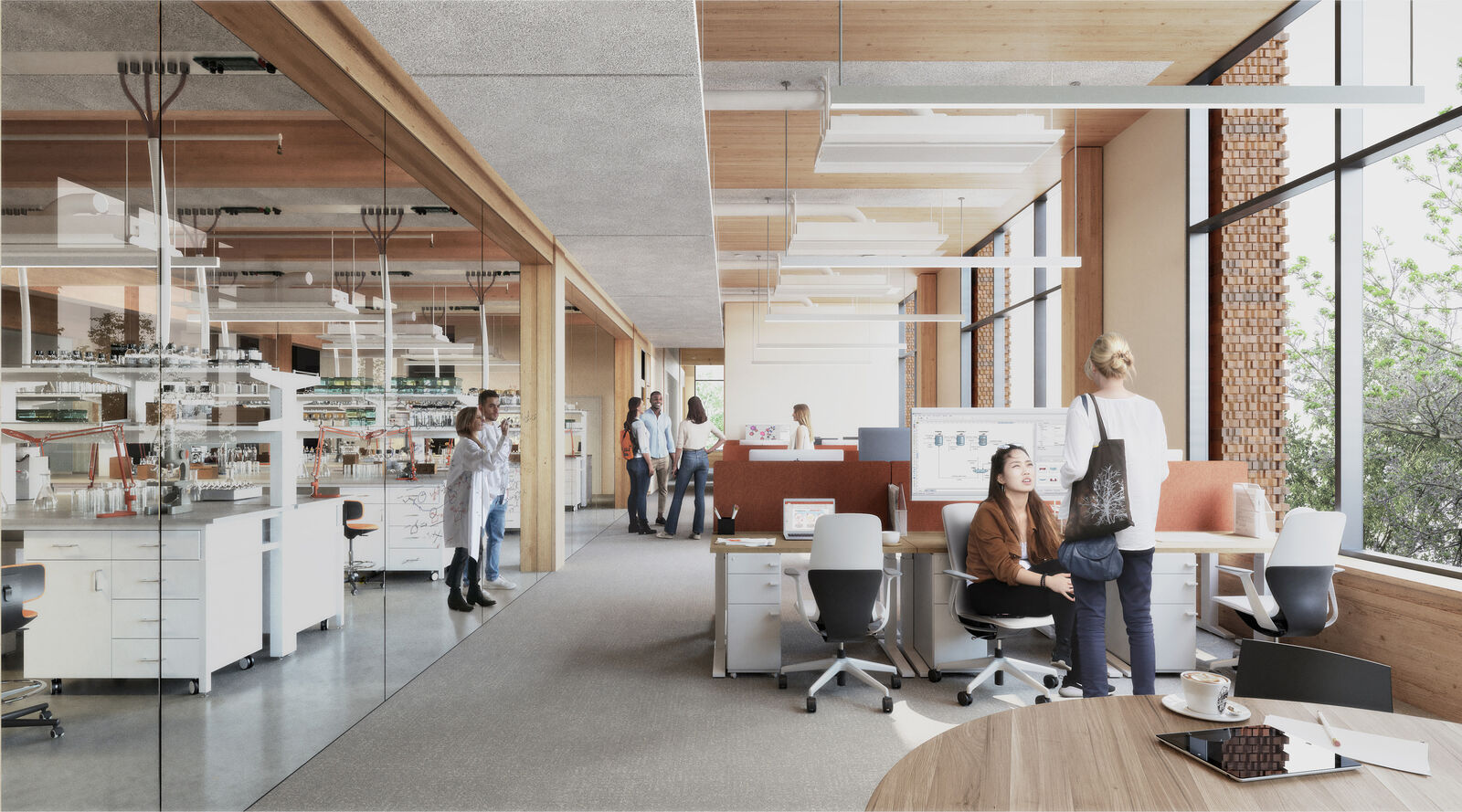
The Future of Labs is Mass Timber
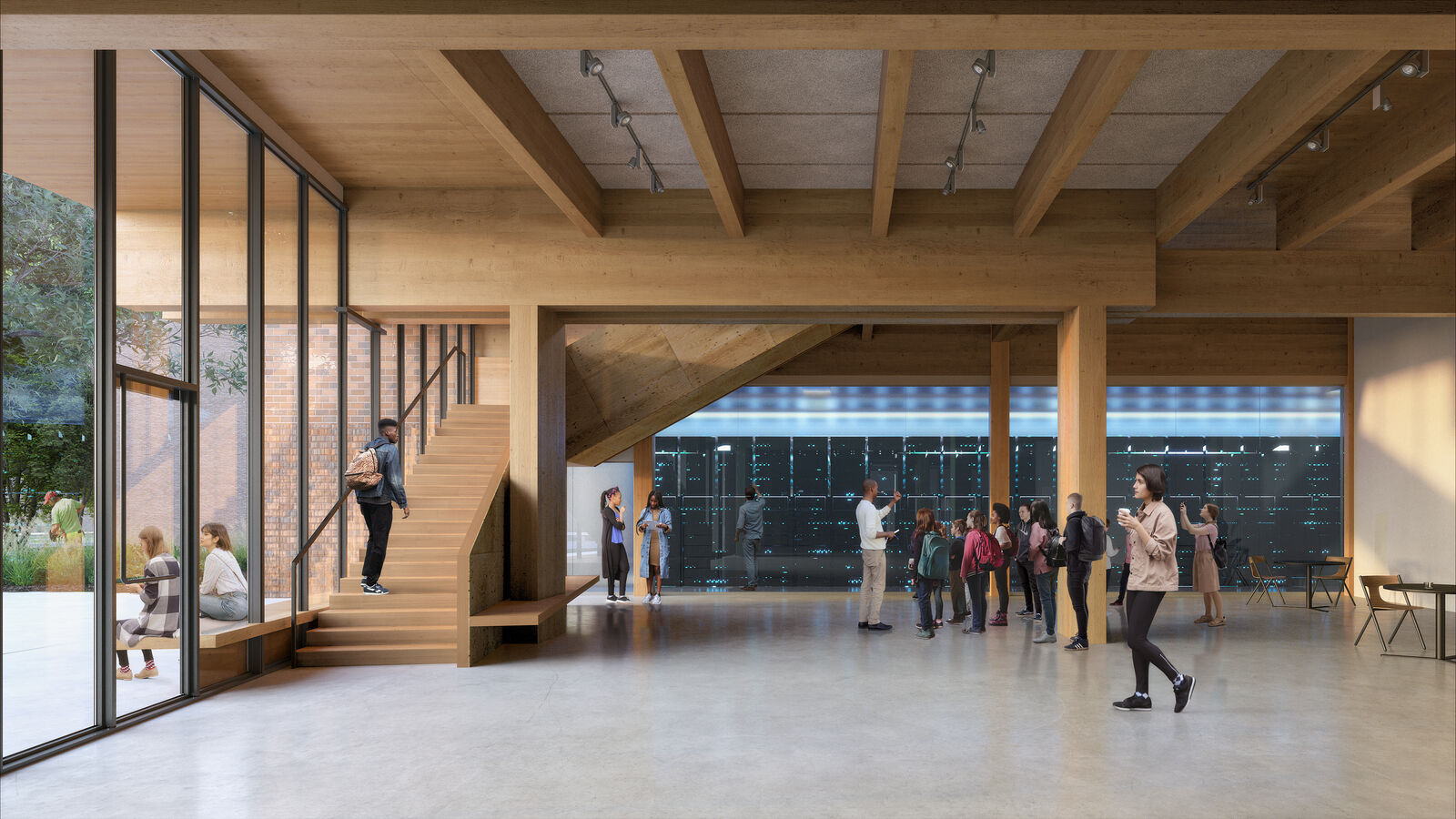
Updated Design Solutions to Prefab Mass Timber Construction in Canada
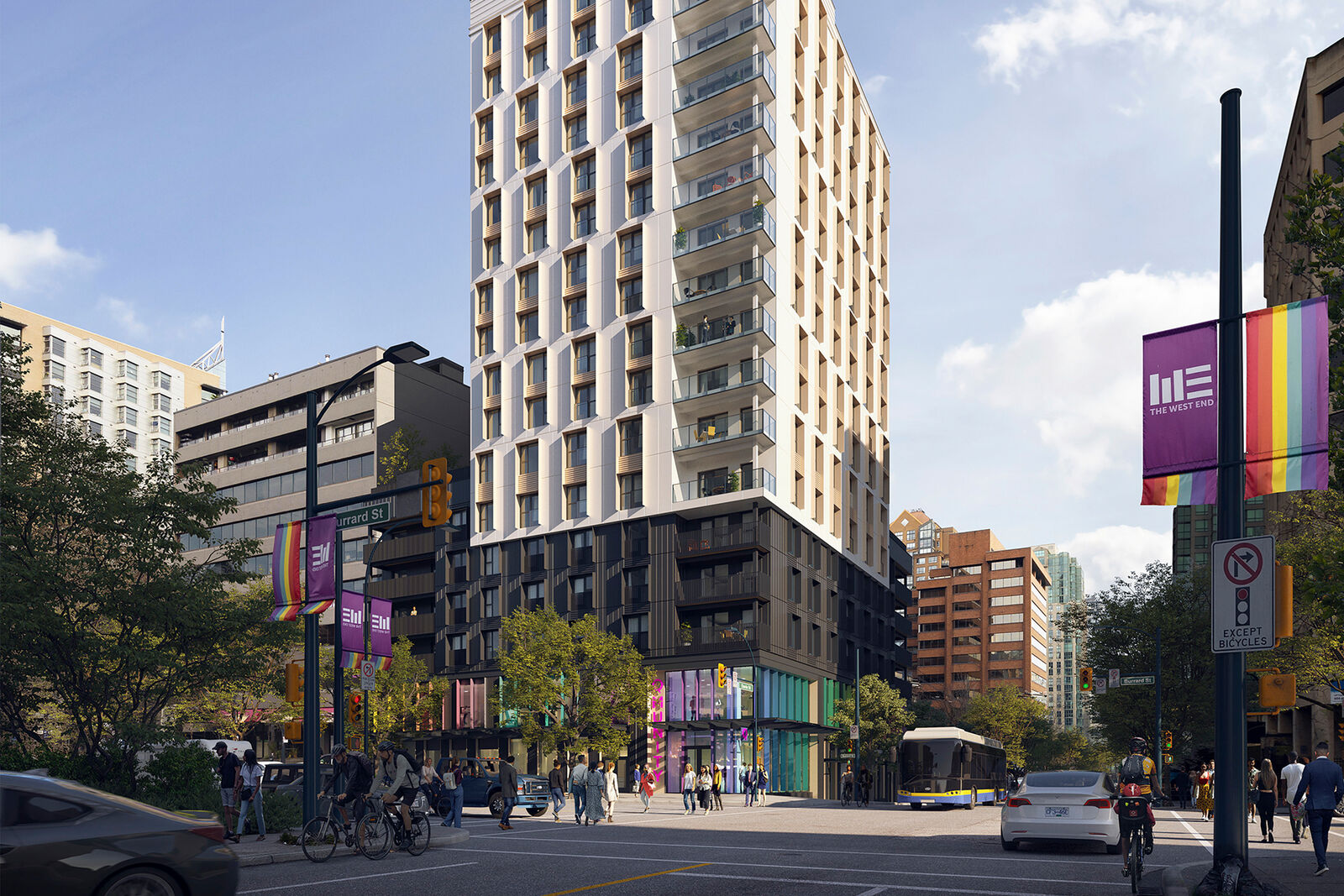
Community Land Trust Foundation of BC, 981 Davie St.