Growing an Amazon Delivery Station
Amazon, DII5 Delivery Station
Workplace
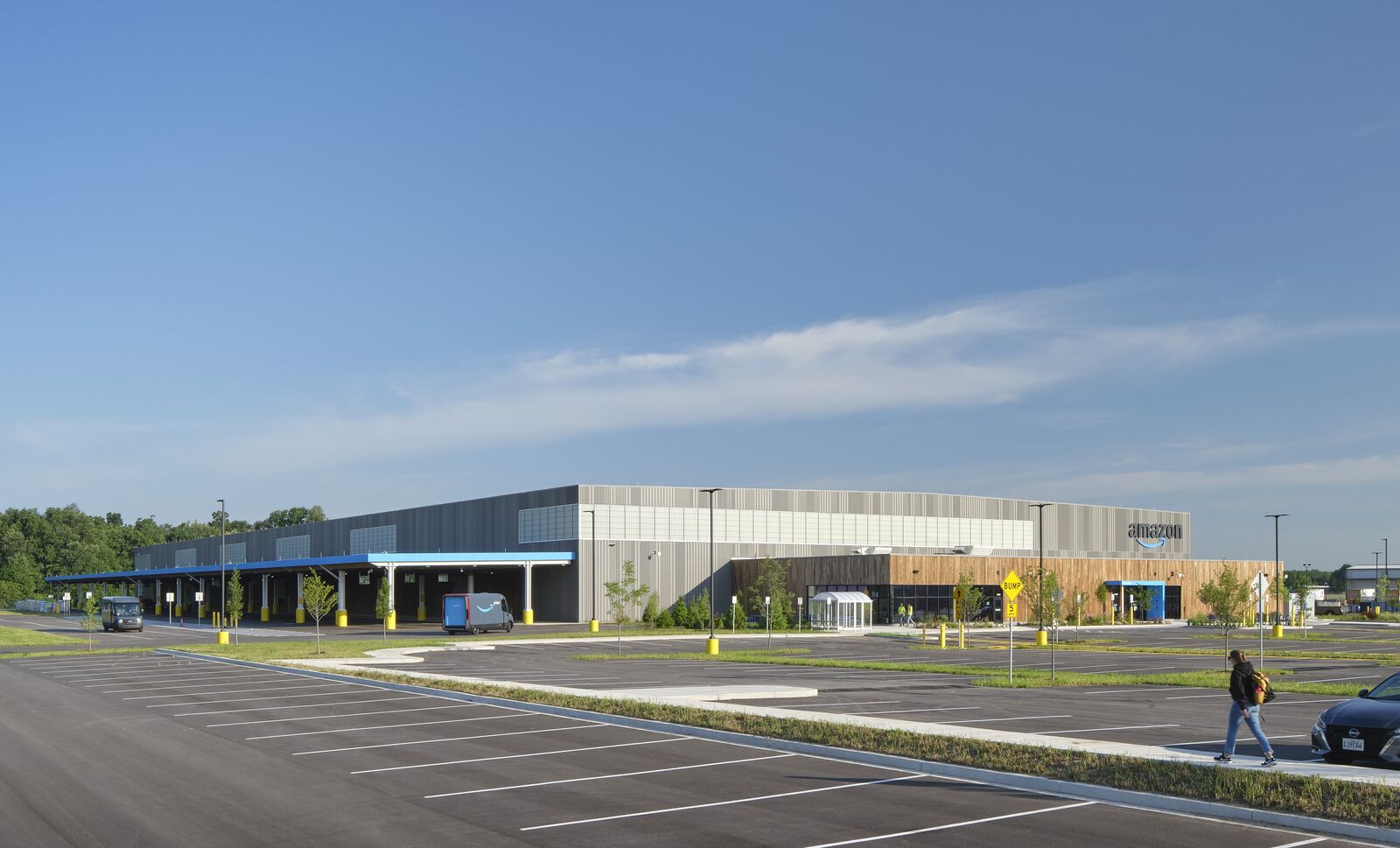
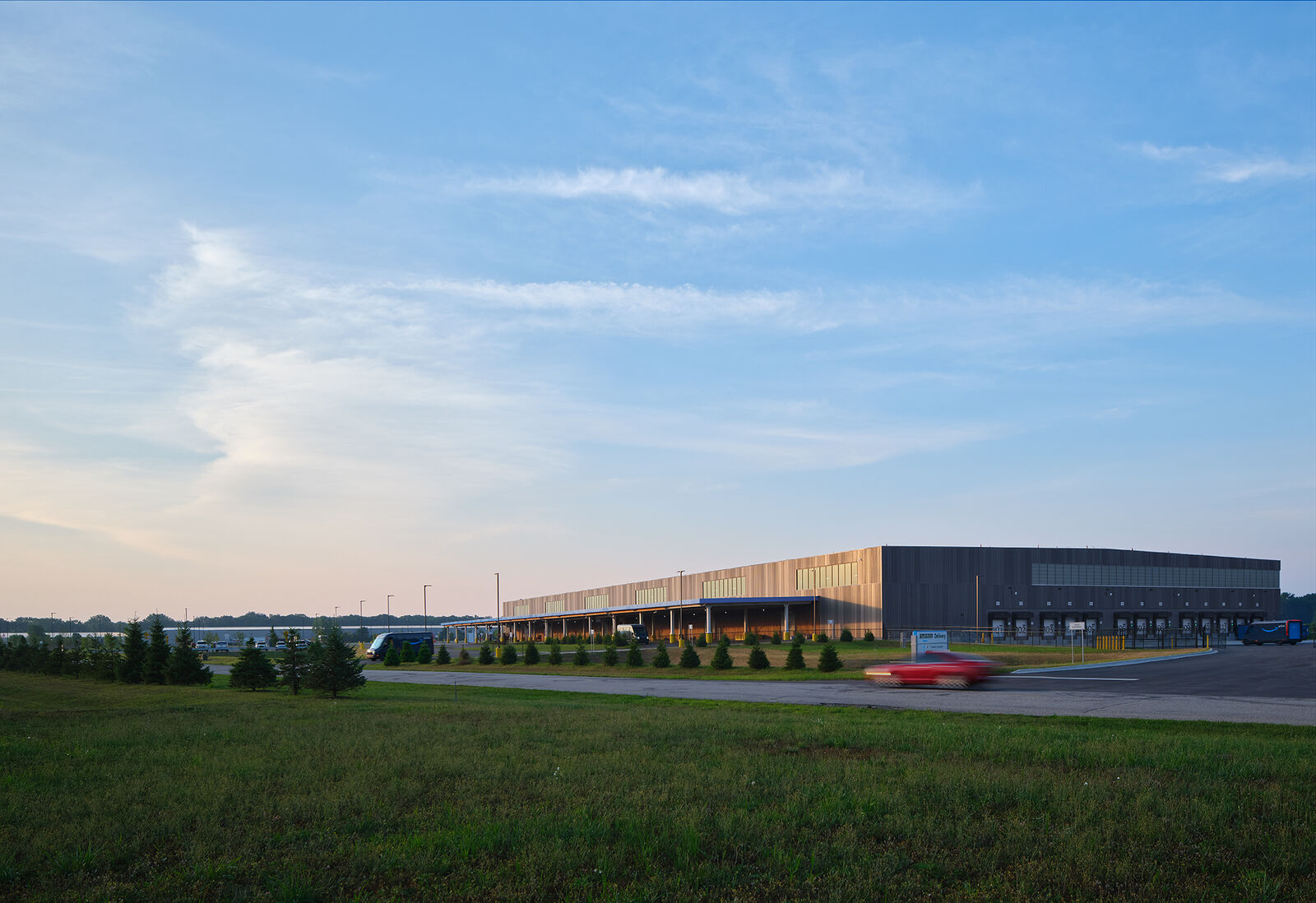
Amazon’s DII5 Delivery Station redefines the industrial building typology and proves that a logistics facility can be beautifully designed with people and the planet in mind. The project demonstrates an emerging use case for mass timber and provides a model for future designs for Amazon Logistics. Integrating lower embodied carbon materials, high-performance energy systems, and holistic biophilia and biodiversity strategies, this proof-of-concept aims to contribute to Amazon’s decarbonization goals while creating a supportive workplace for its associates and third-party Deliver Service Partners (DSPs).
Location
Elkhart, IN
Square Feet
171,341
Completion date
2025
Project Component
Design architect
Sustainability lead
Certifications
Pursuing ILFI Zero Carbon certification
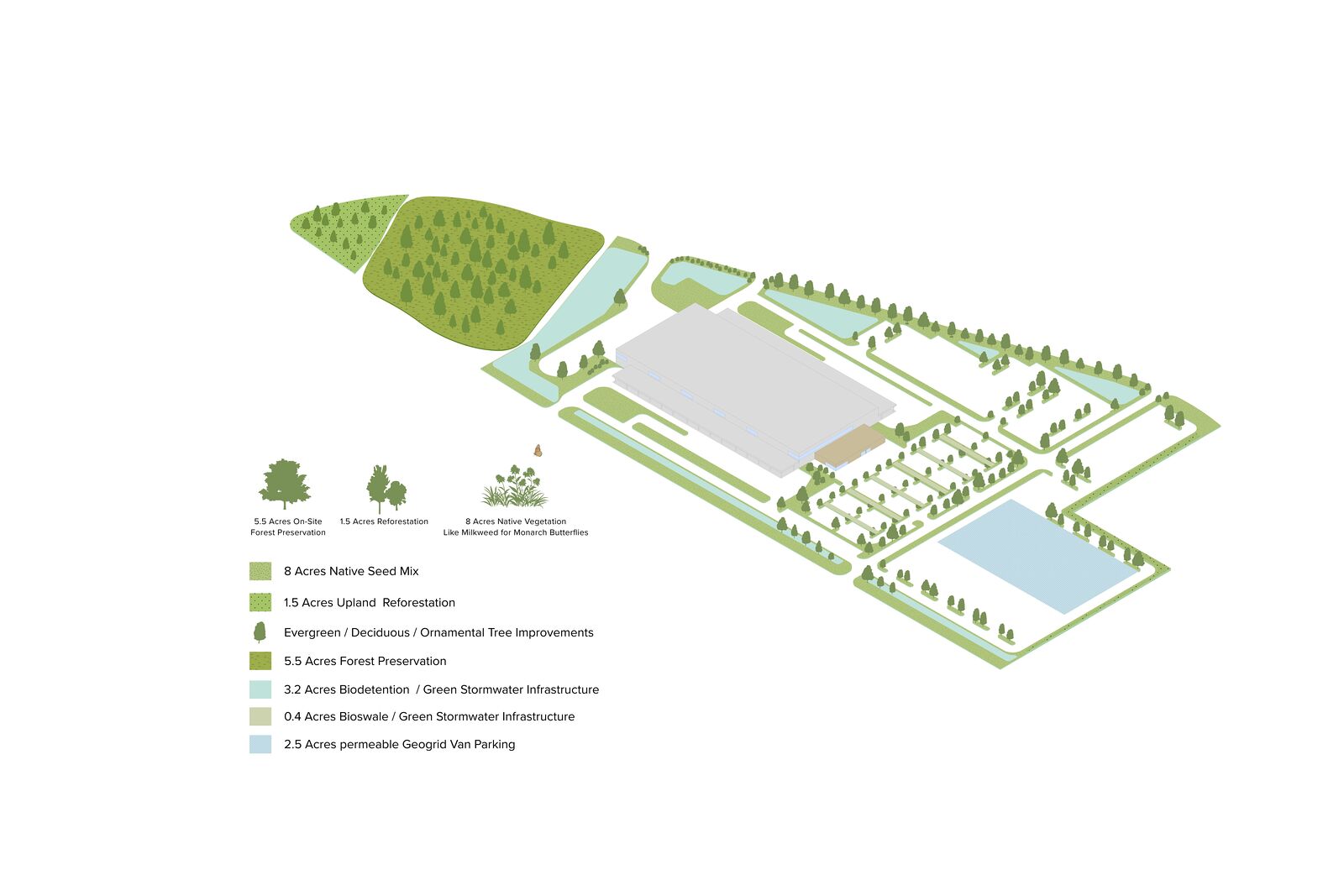
The 39-acre site was designed with biodiversity, habitat, stormwater management, urban heat island reduction, and carbon sequestration in mind. For example, the project preserved 5.5 acres of existing forest, reforested 1.5 acres with 2,900 native tree saplings, and seeded over 90 native prairie plant species across 8 acres.
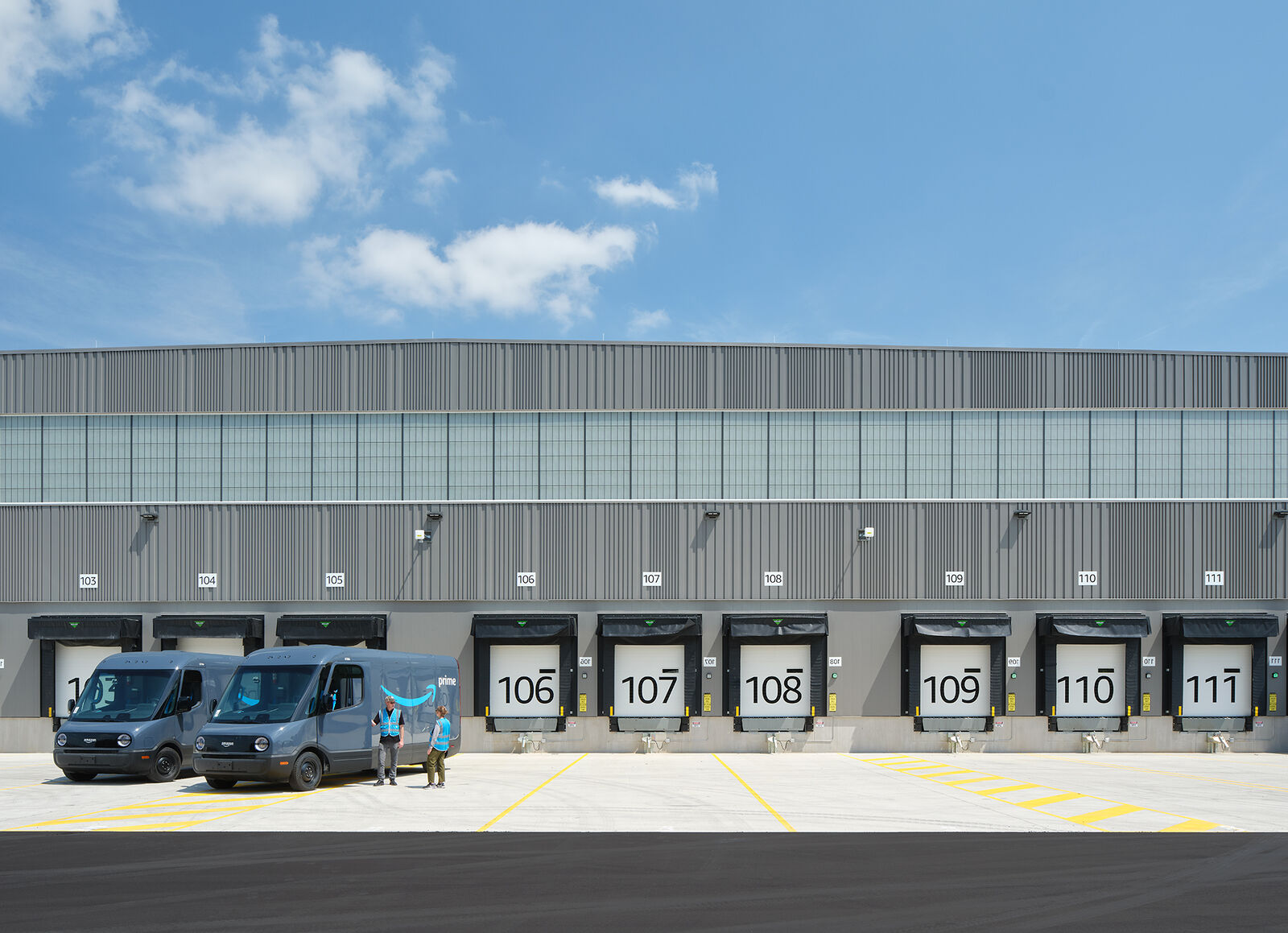
The delivery station fulfills the last-mile connection from Amazon’s fulfillment centers to customers’ front doors. Nighttime deliveries arrive through the loading dock, are processed in the delivery station, and picked up by local third-party Delivery Service Partners.
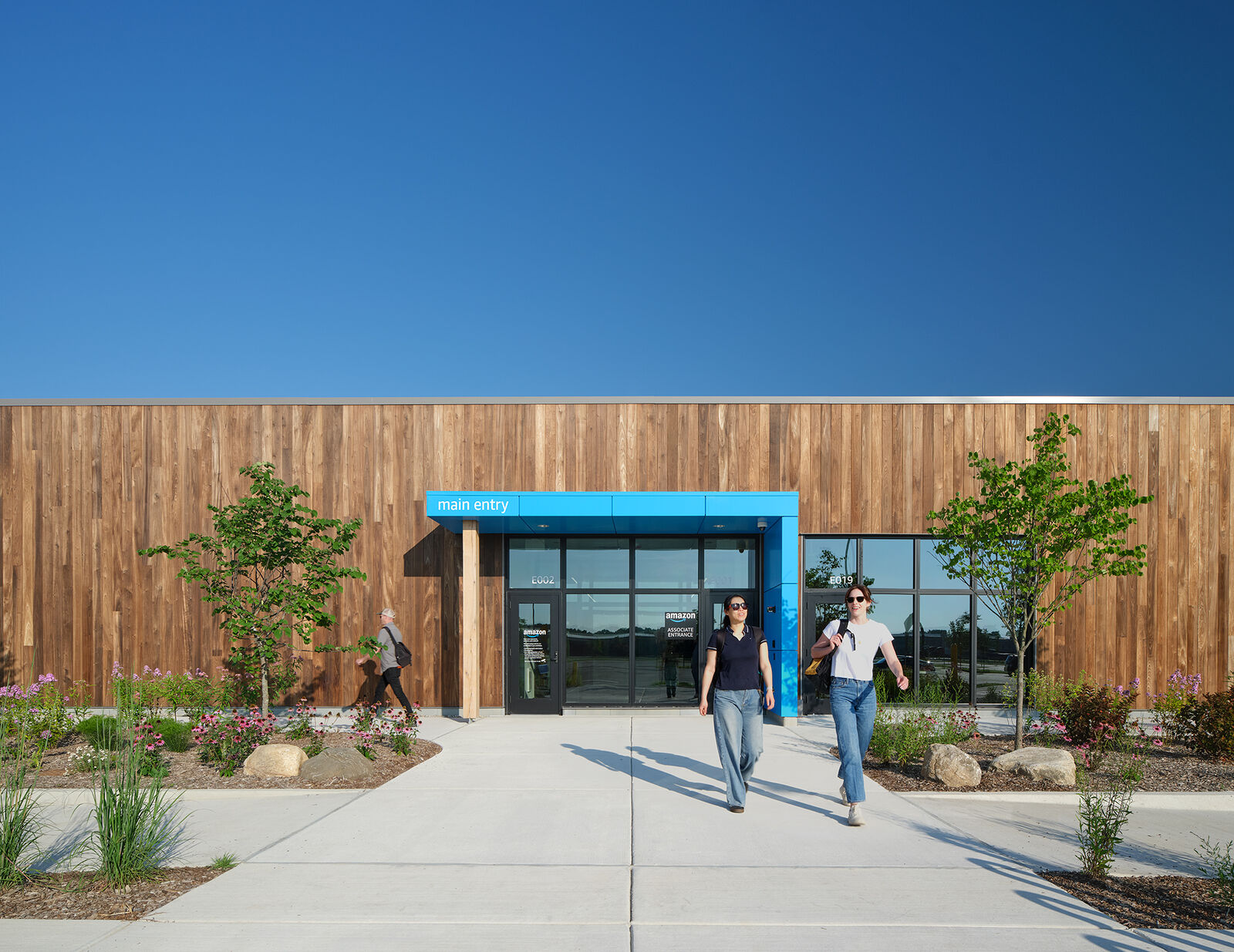
Wood’s inherent beauty and biophilic properties create a warmer, more welcoming workplace for Amazon associates.
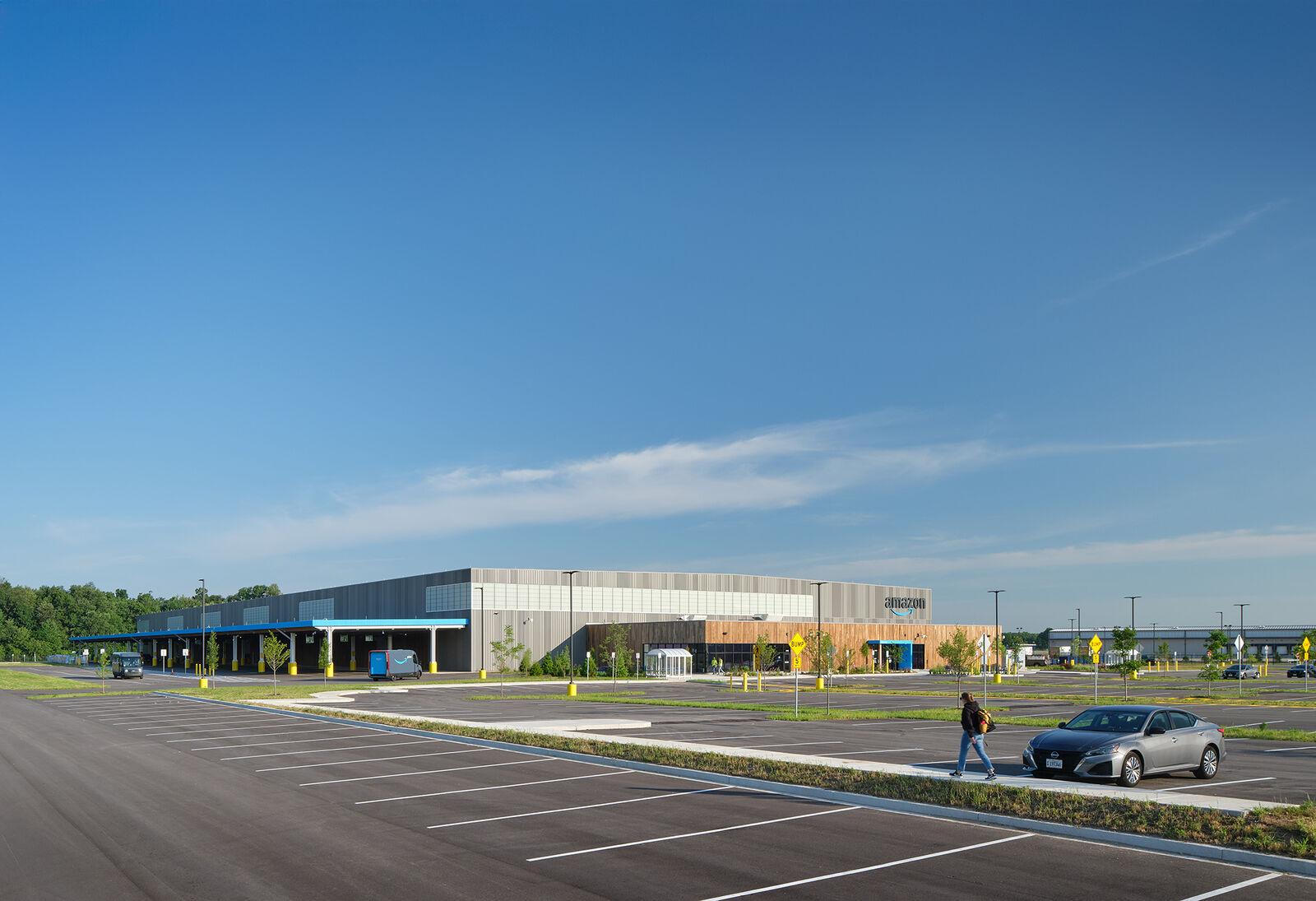
DII5 represents an important step toward achieving Amazon’s Climate Pledge goal to meet net-zero carbon by 2040.
“Together, we’re working to create a space that delivers for our customers, empowers our team, and advances Amazon's work toward becoming a more sustainable company.”
– Laura Harris, DII5 Delivery Station Manager
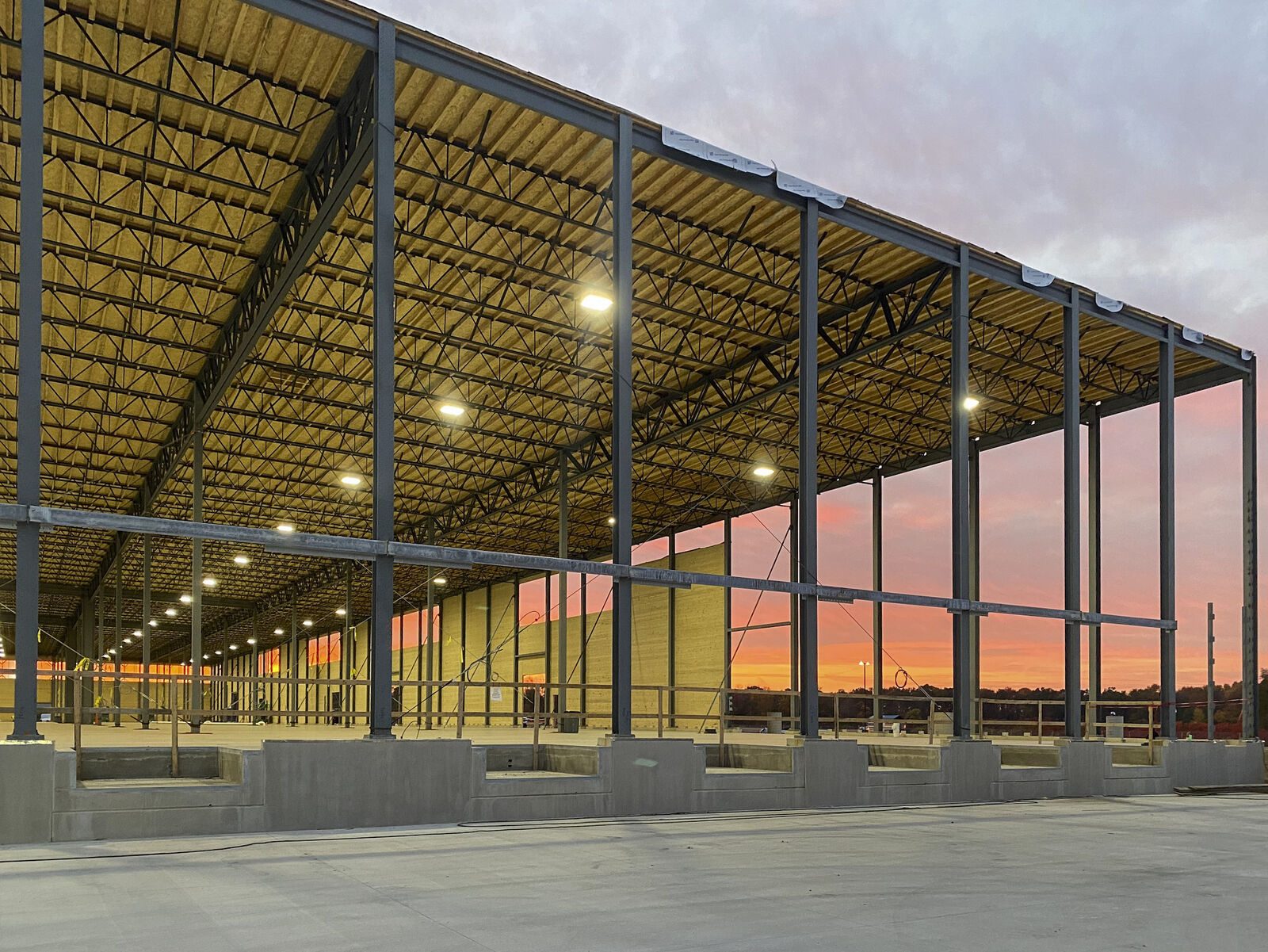
The project’s large cross-laminated timber (CLT) wall panels took just four weeks to install. (Photo courtesy of KPFF)
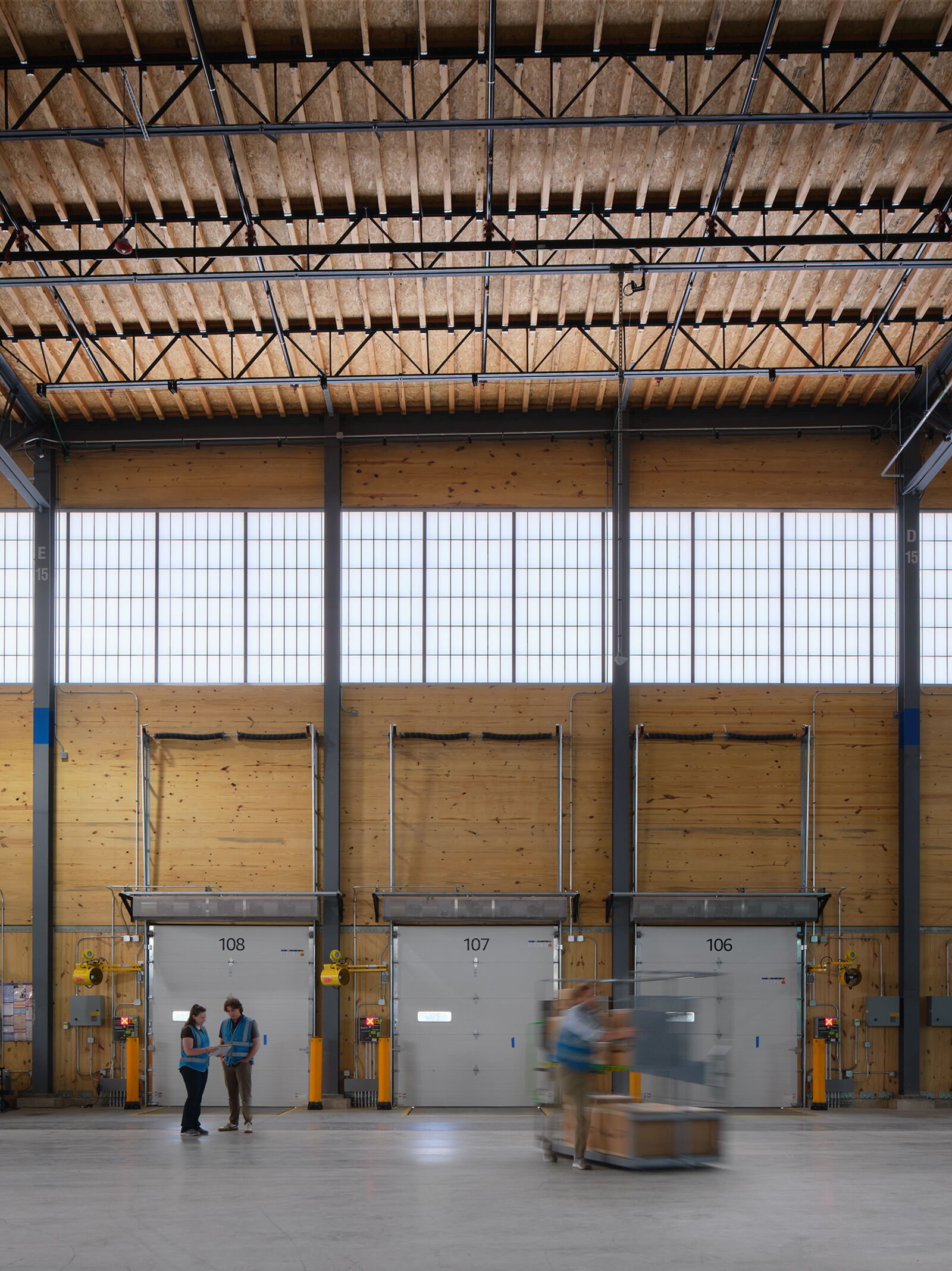
The loading dock opens up to a grand volume within the delivery station, featuring wraparound clerestory windows that allow daylight to filter inside.
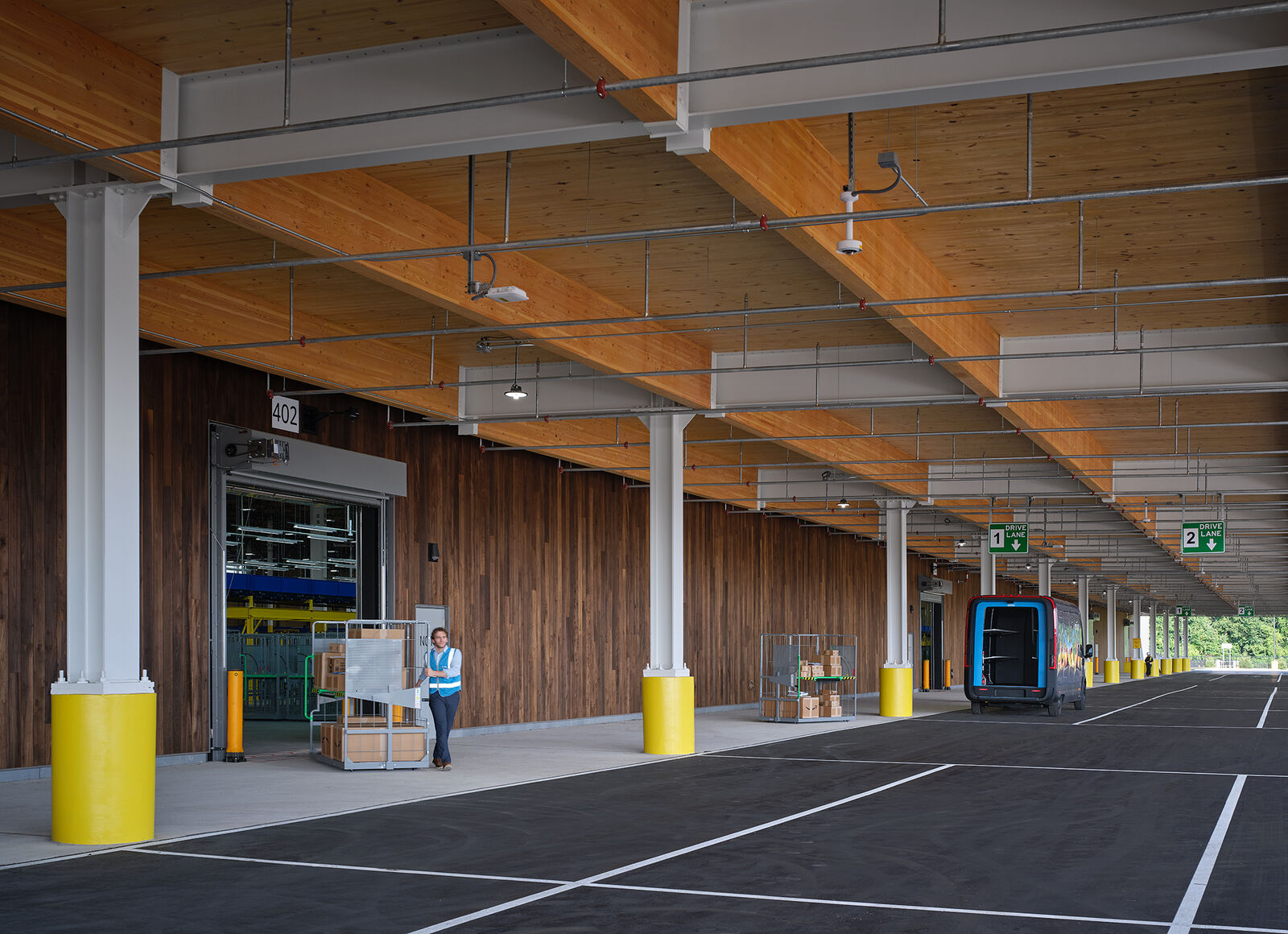
On the north and south sides of the delivery station, a 550-foot-long mass timber canopy shelters users from the elements.
Growing a Demonstration Project
ZGF served as design architect and sustainability lead alongside architect of record Atlantic AE to design a delivery station including the warehouse, office block, and site that would serve as a test-and-learn facility for scaling sustainability strategies in future designs. Sustainability goals for the delivery station included embodied and operational carbon reduction, energy performance, water conservation, employee wellbeing, and biodiversity.
Carbon Reduction
Amazon organized the project around a series of initiatives aiming to reduce embodied and operational carbon emissions, prioritizing practical solutions that can scale across its operations. Over 40 carbon reduction initiatives have been deployed on DII5, with over half targeting the embodied carbon in materials, especially the hotspots concentrated in site hardscapes, structural concrete and steel, and roof and wall insulation. For example, the largest embodied carbon reductions can be realized by utilizing lower carbon structural systems and specifying low Global Warming Potential (GWP) thresholds for materials both inside and outside.
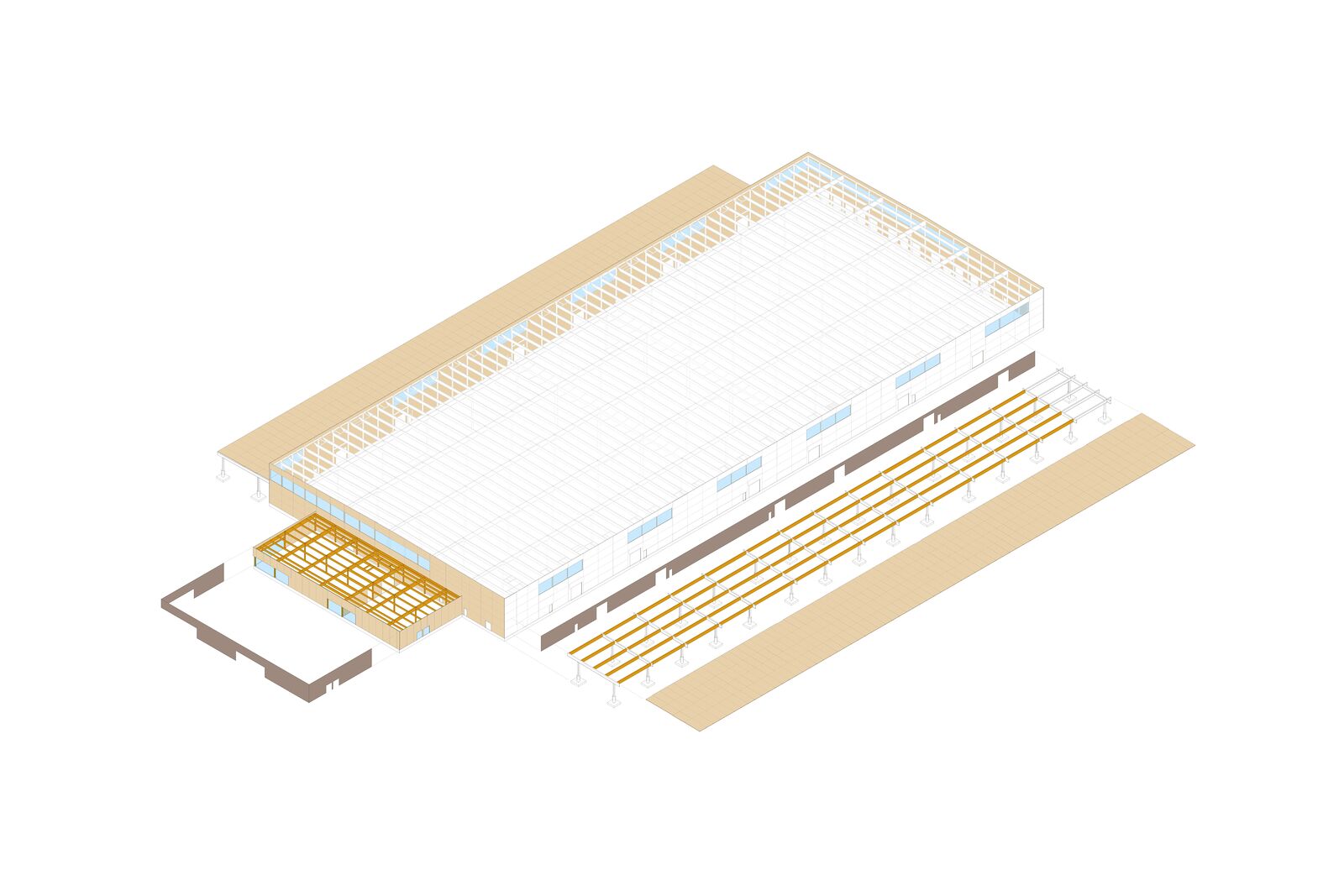
Glulam beams, CLT walls, and thermally modified cladding showcase different wood species from across the U.S. coming together in one building.
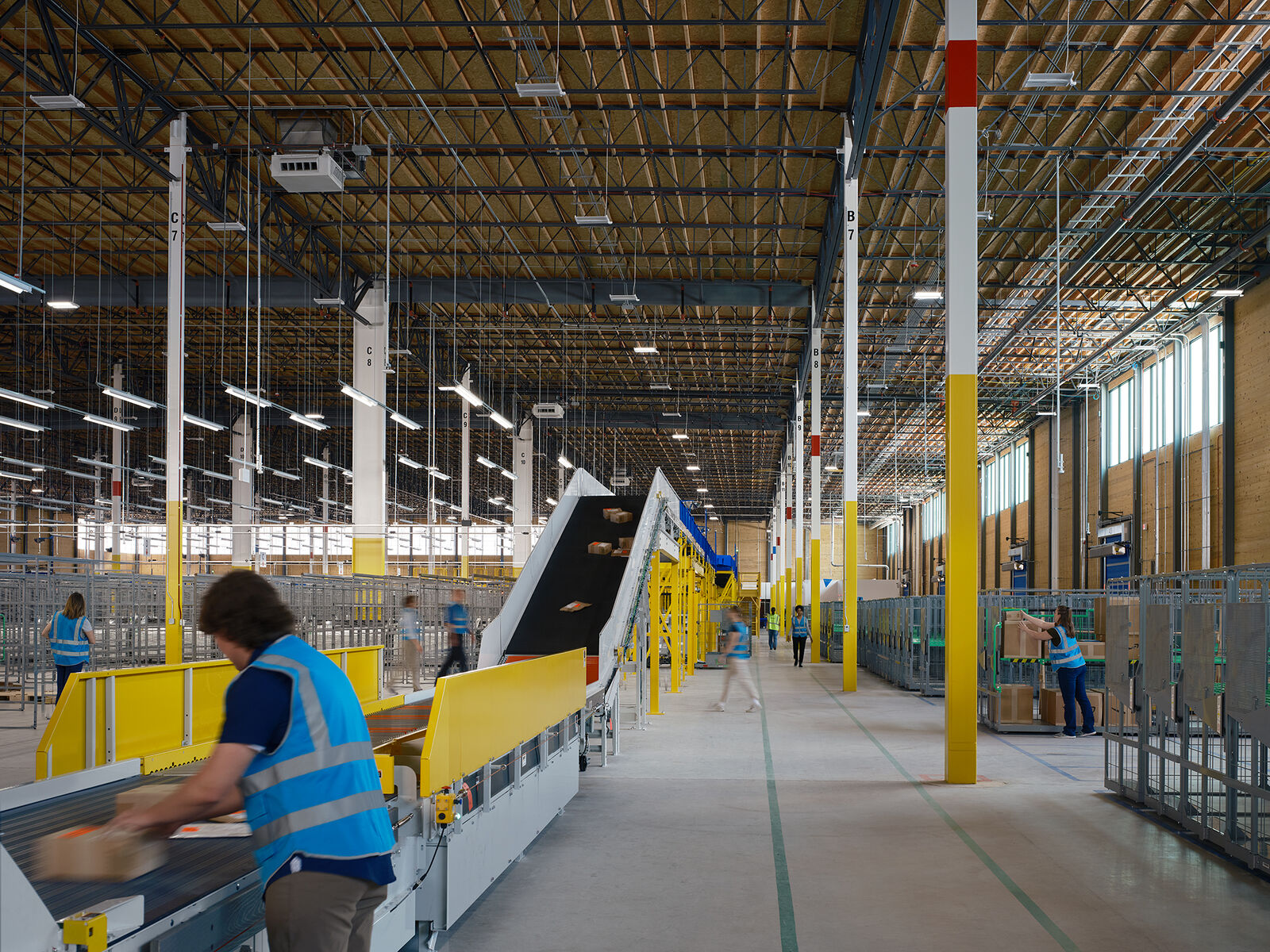
Building on ZGF’s approach from Amazon’s HQ2, the project worked with Ozinga to optimize lower-carbon concrete for civil and structural applications. The building foundations and slab on grade utilizes type 1L cement, slag as cement replacement, and CarbonCure. A propriety fiber additive in the concrete increases its strength and requires less rebar. The mix also enables a very flat concrete floor, ideal for machinery and sensitive equipment.
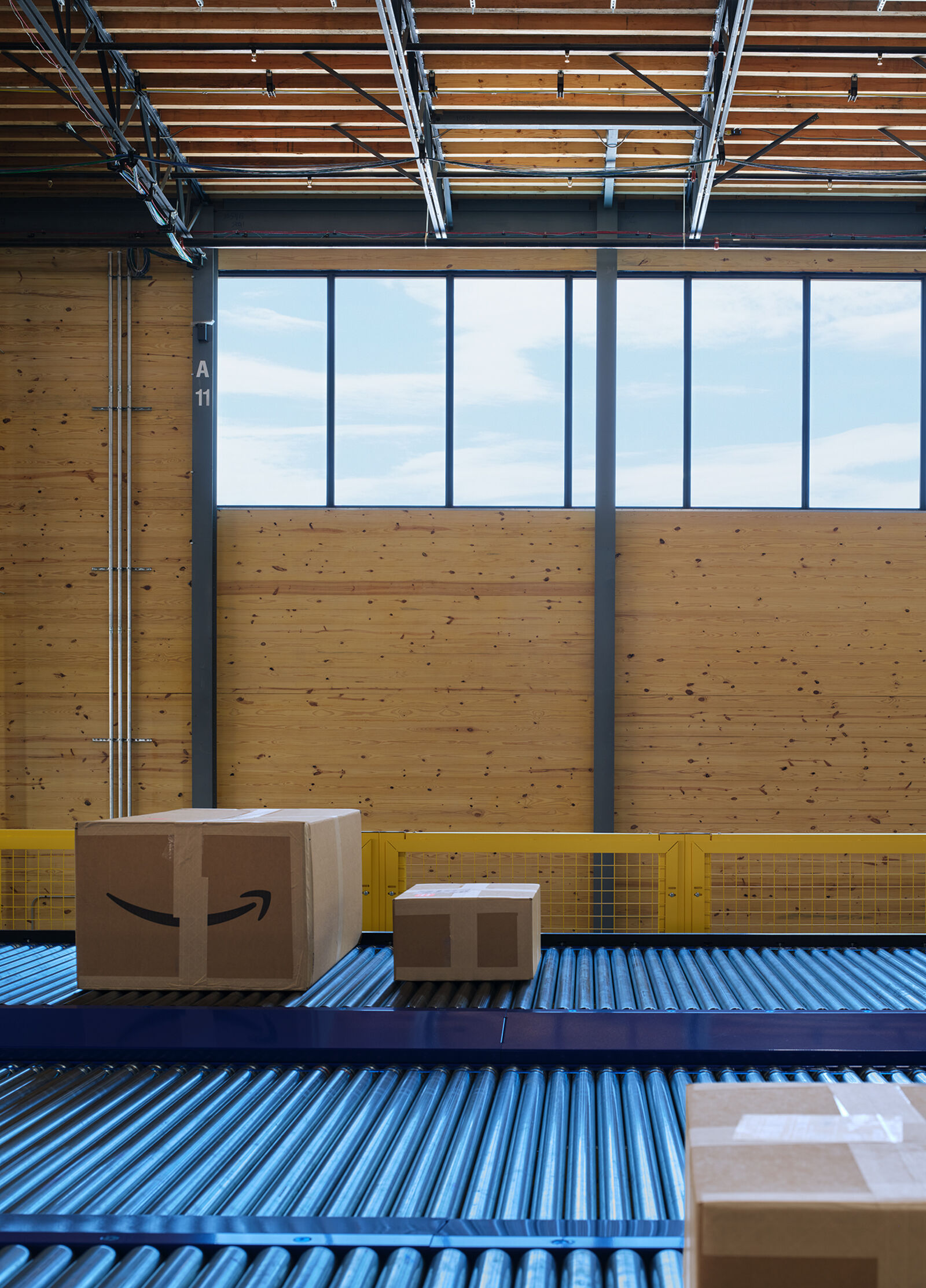
The delivery station is one of the first projects in the U.S. to use wood fiber insulation from Timber HP—a lower-carbon, 100% post-consumer product that has long been used in Europe for its renewable, carbon storing, and sound dampening properties.
All-Electric
The all-electric delivery station is designed to significantly reduce energy demand compared to a traditional delivery station and compared to the Living Future Zero Carbon baseline. Efficient temperature control is achieved using air curtains that reduce heat loss and boost thermal comfort. All-electric heat pumps for air-conditioning and hot water eliminate the need for fossil fuels onsite. High-performance storefront glazing and clerestory windows maximize daylight and help reduce electricity use.
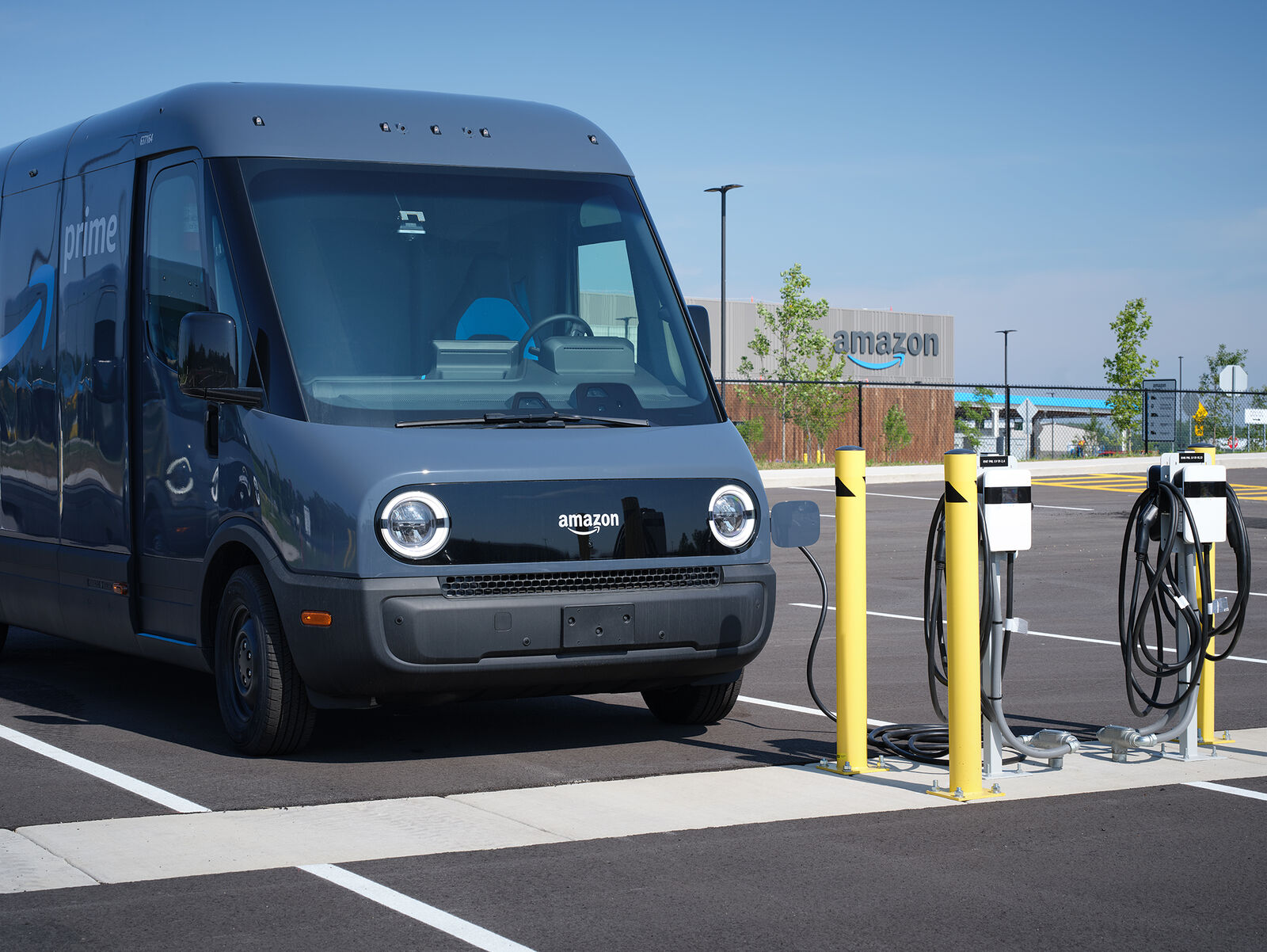
A network of more than 170 EV charging stations powers Amazon’s fleet of electric delivery vans at this site.
Wood Sourcing
Using wood from 12 states and 7 tree species, including SFI-certified mass timber, DII5 showcases how innovative wood supply chains and local craftsmanship can deliver a beautiful building.
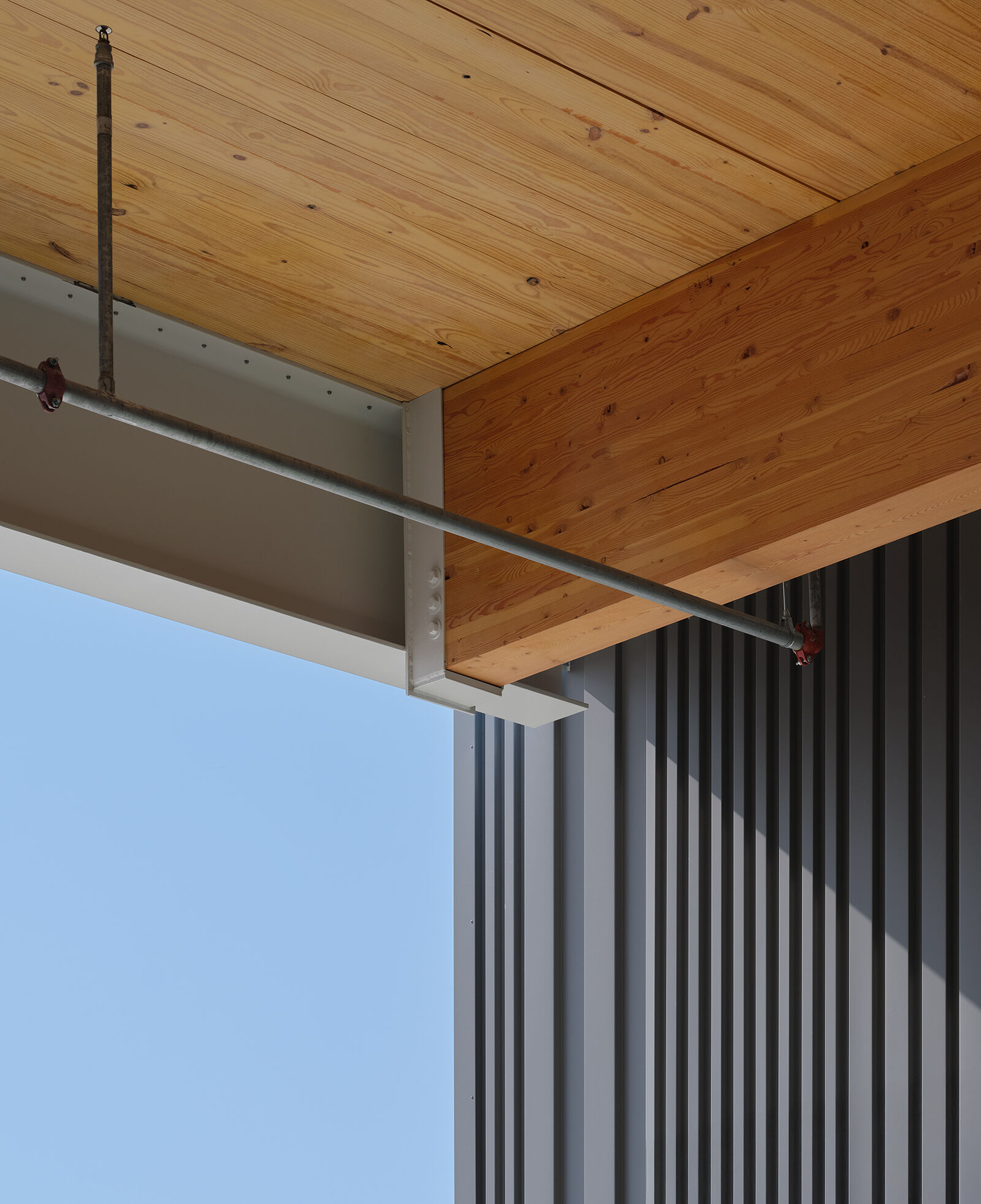
Careful consideration was given to the building’s materiality. Patterns are thoughtfully layered, left raw and exposed to highlight their simplicity and durability.
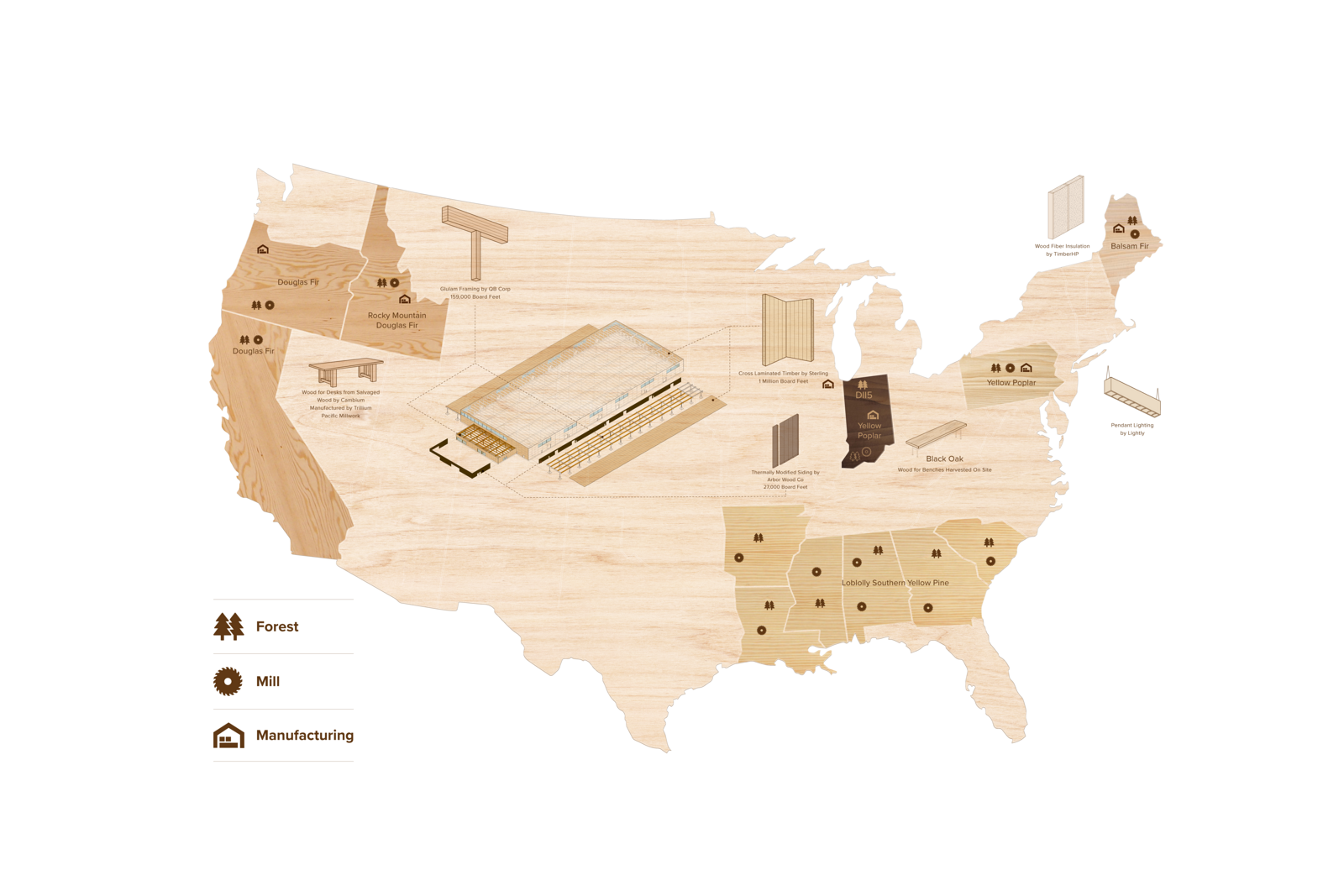
DII5 is constructed from wood labeled as SFI Certified Sourcing, grown throughout the United States. Half a million board feet of 3-ply CLT panels are used in the walls and canopy roof alone.
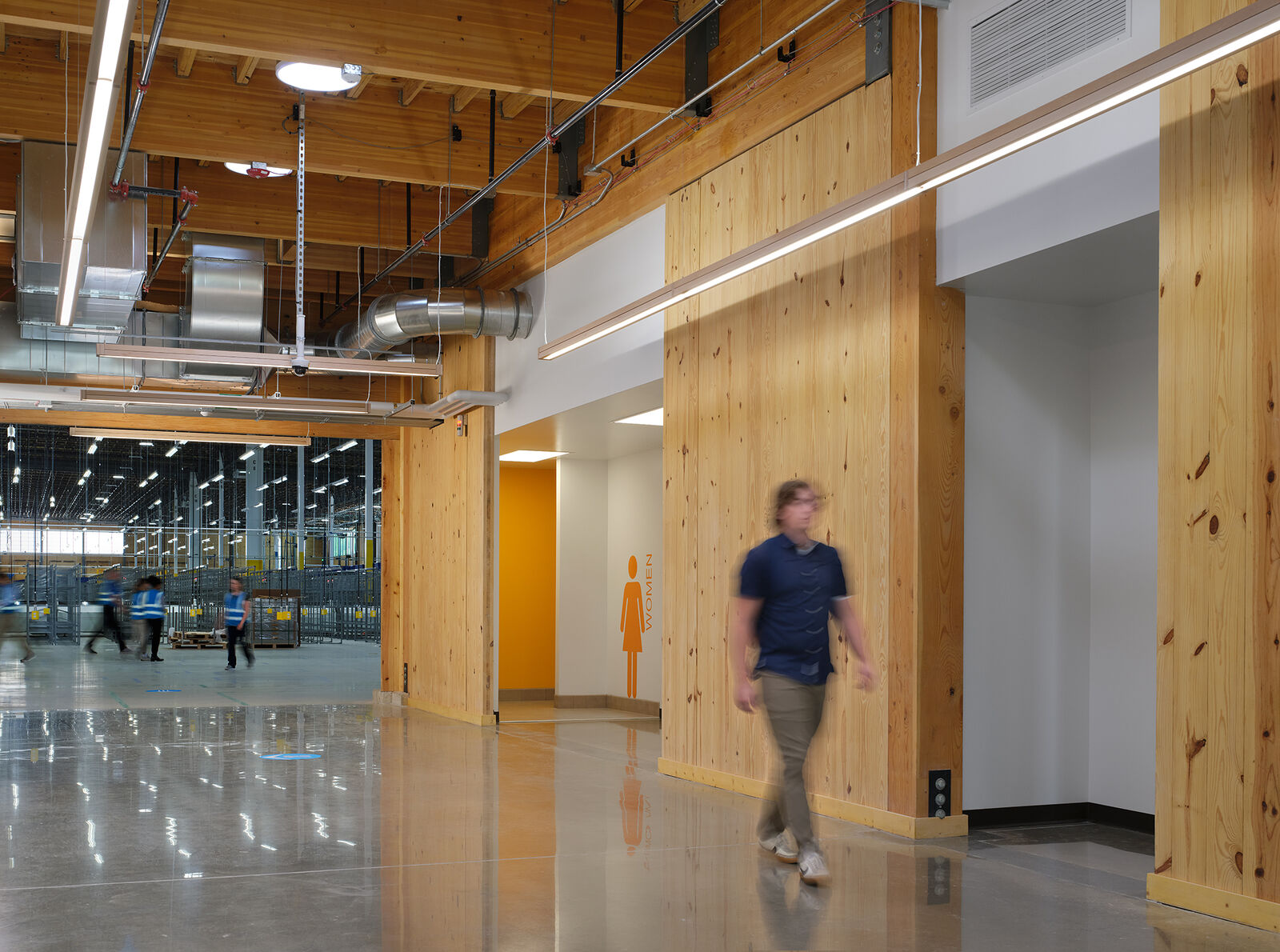
The main entry leads straight into the warehouse, with the breakroom to the left and training room and restrooms to the right.
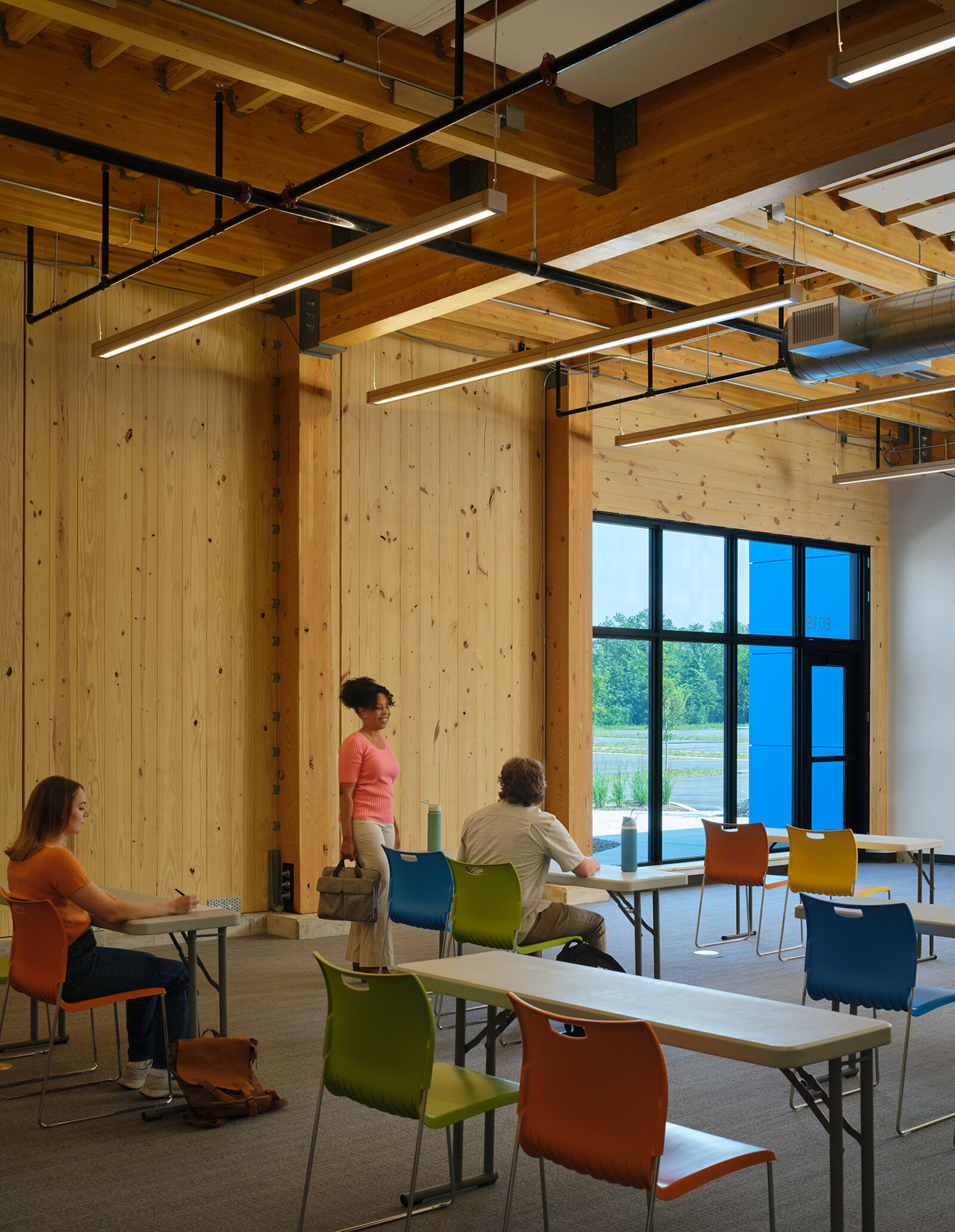
A flexible training room features high ceilings with acoustic ceiling tiles to support groups of varying sizes.
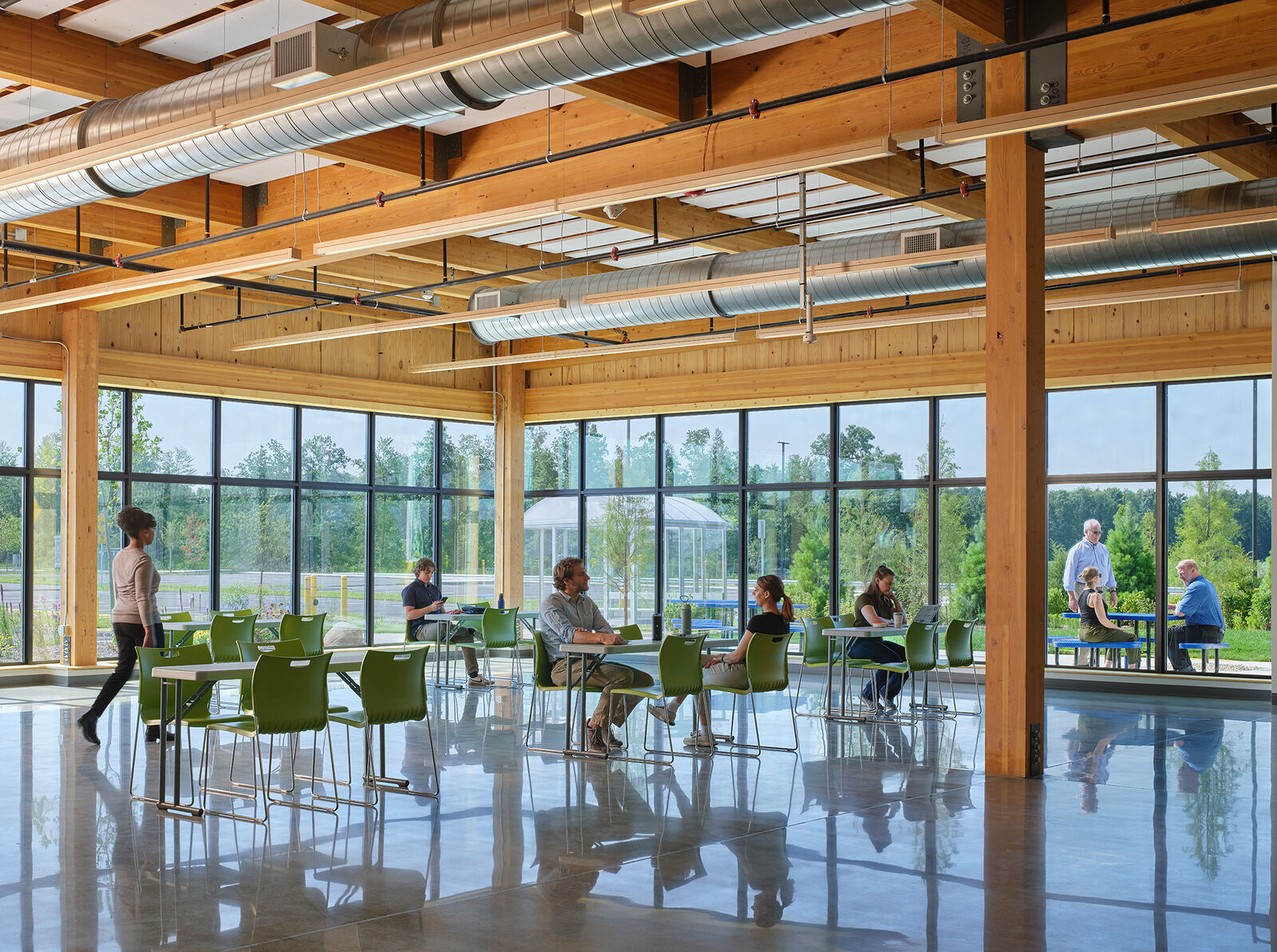
The break room celebrates the exposed mass timber structure with high ceilings and storefront glazing that frames views to the site and forest beyond.
Occupant Experience
Views of nature, daylighting, and exposed structure in the classroom and breakroom support associates working at this facility. It’s all part of a larger biophilic design strategy to connect occupants to their natural surroundings—from the biodiversity of the site, to the wood used in the building, to the indoor-outdoor connections that create a pleasant work environment.
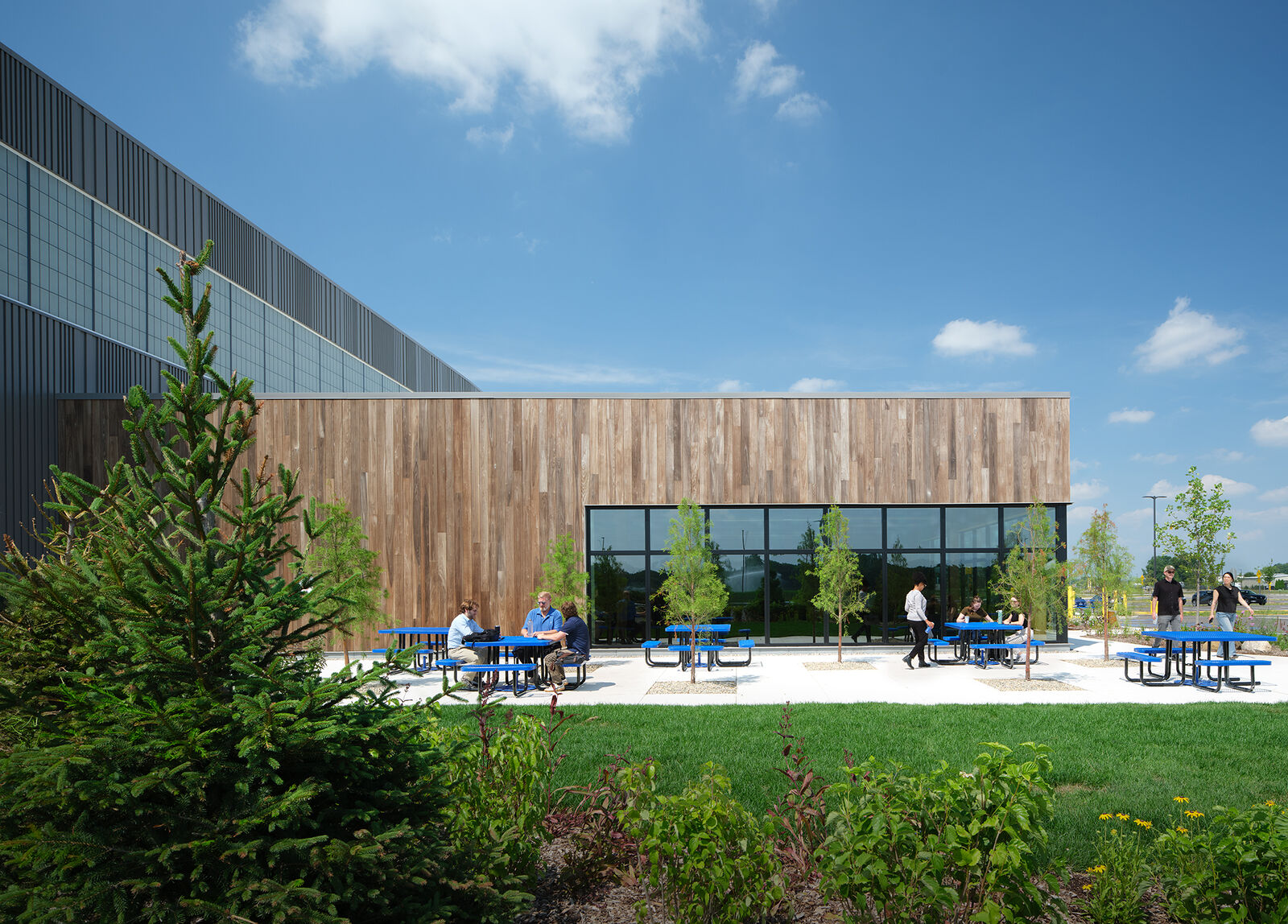
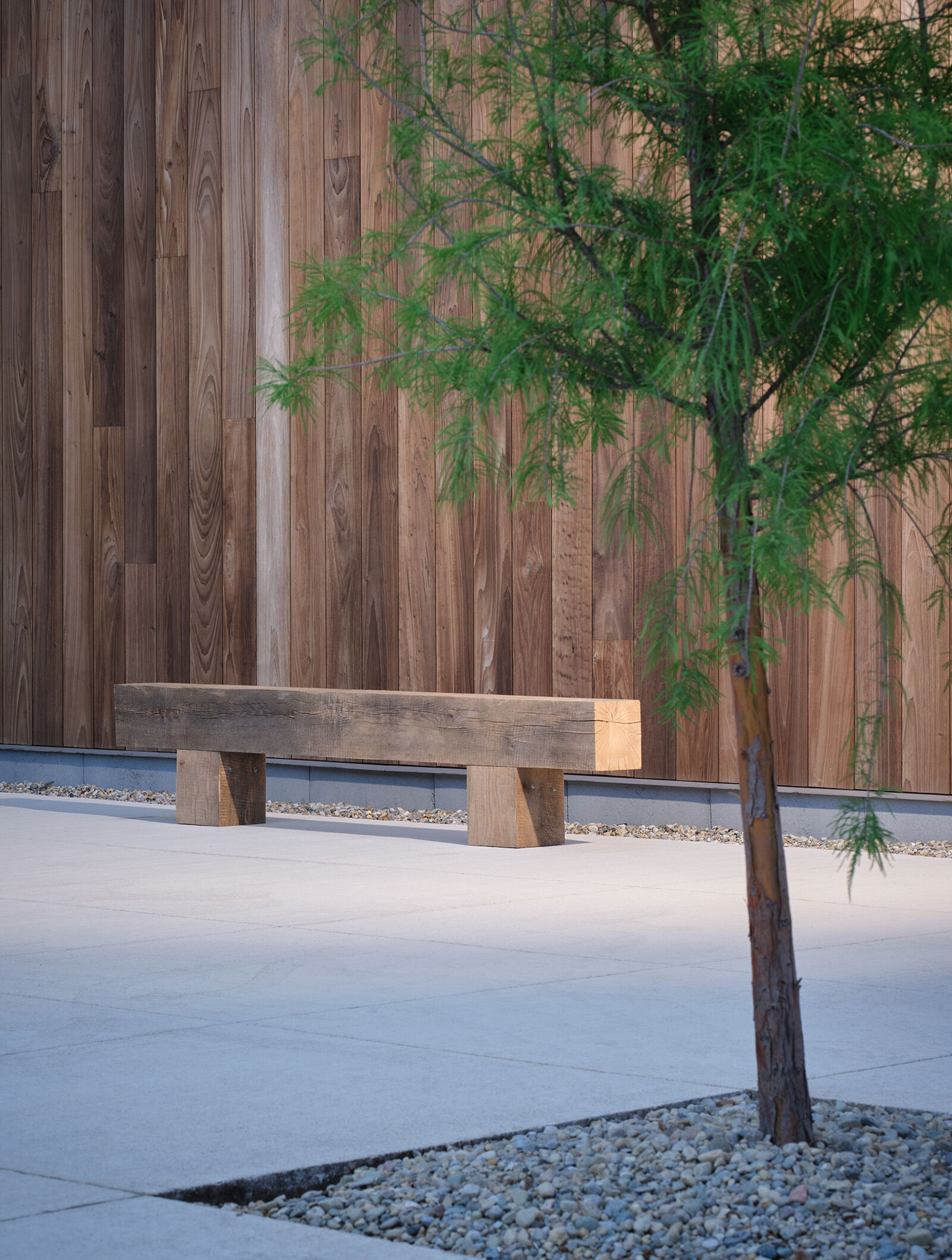
Thermally modified Poplar sourced from Indiana is used on the exterior siding. These trees were grown, harvested, milled, and thermally modified all within 100 miles of the project. Black oak trees salvaged onsite were used for furniture and the structural column at the building entry.
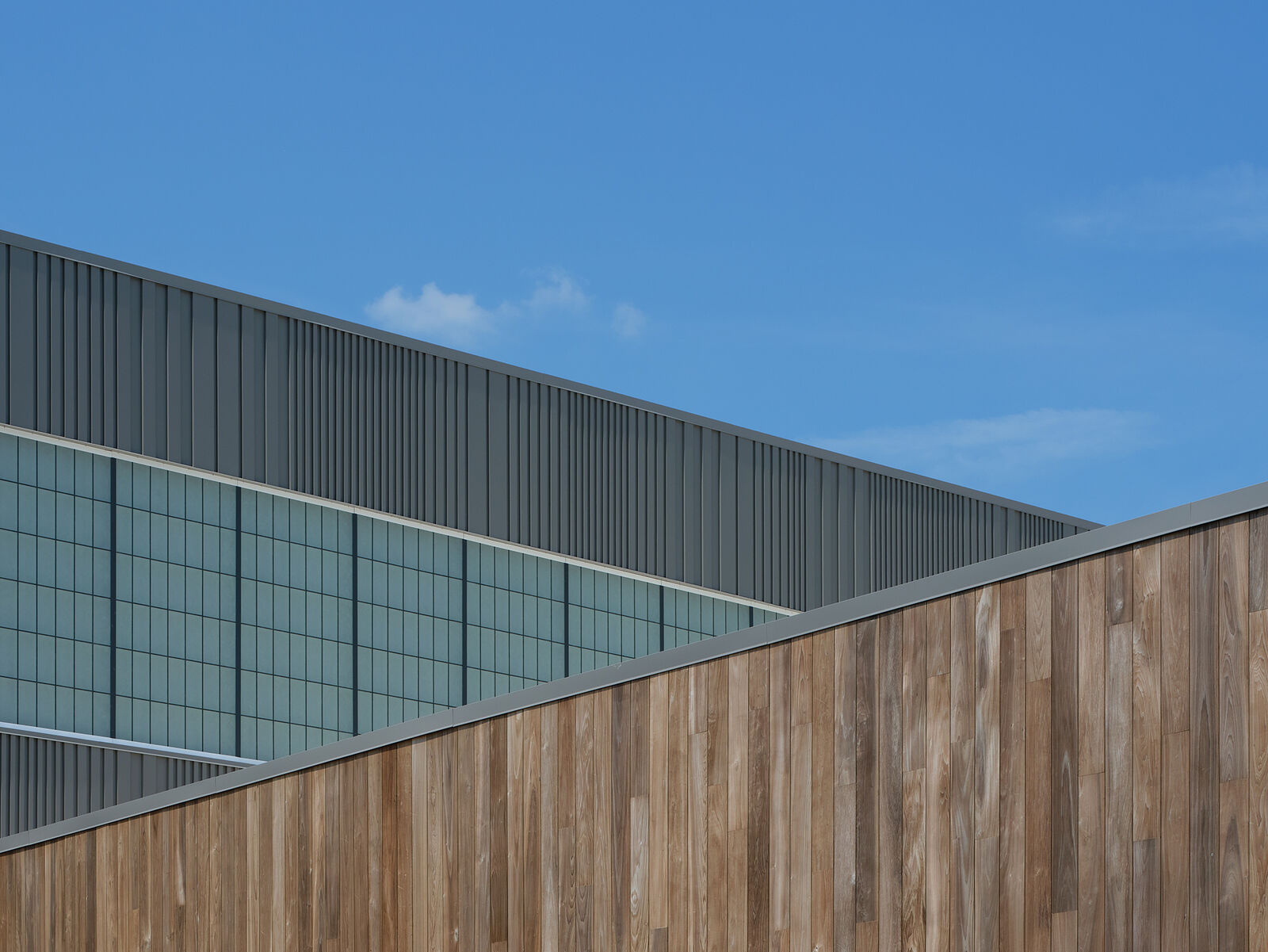
Dynamic exterior metal paneling changes color depending on the viewer’s perspective and time of day, adding visual interest to contrast the warmth of the wood.
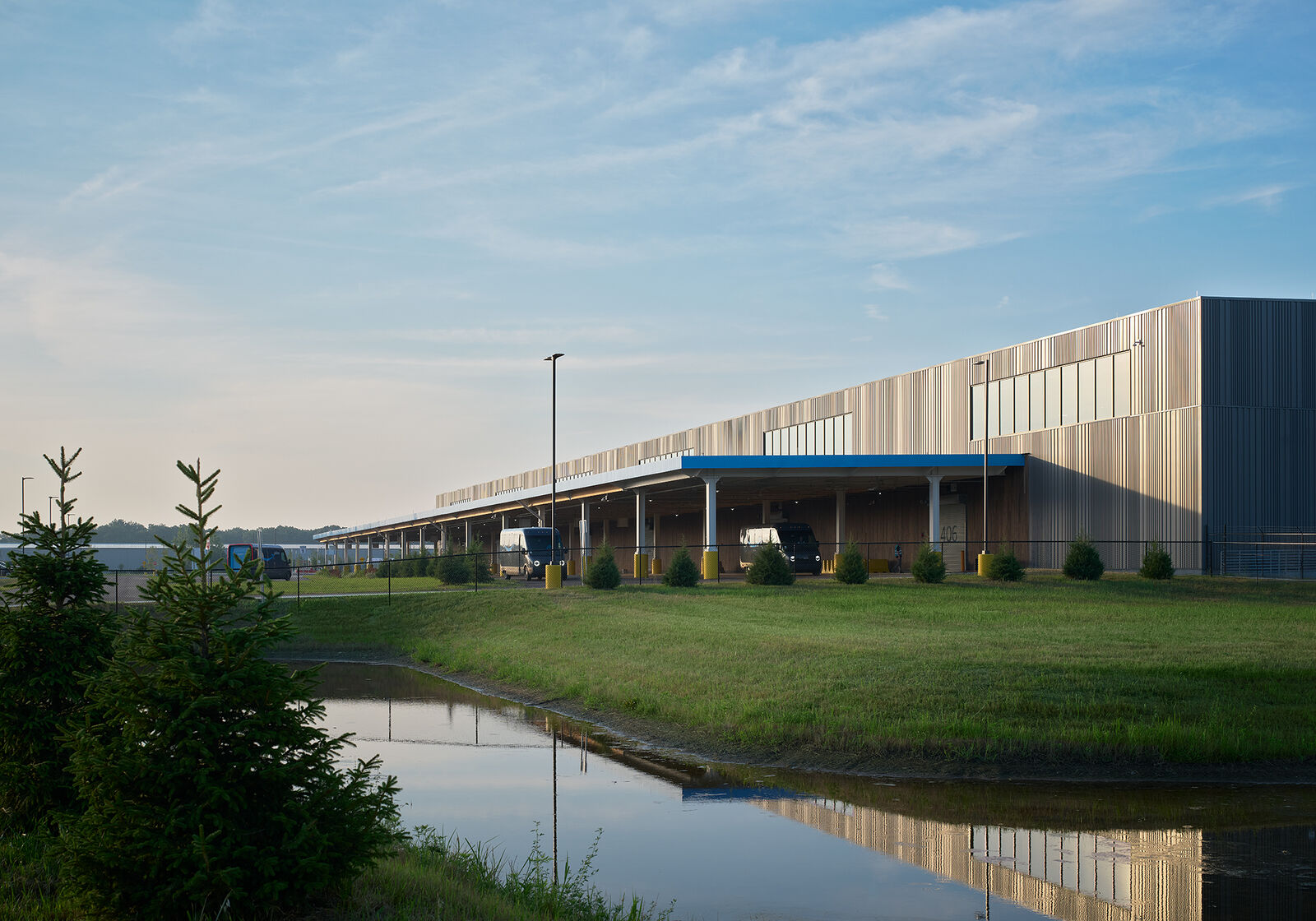
Bioretention ponds and permeable pavement help manage stormwater onsite, while a water reclamation system collects rainwater from the roof to supply toilets inside.
Site Ecology
The holistic approach to site design saved cost and carbon by preserving the western forest. The existing forest is expected to reduce urban heat island effect, improve the quality of stormwater runoff, provide habitat for native wildlife, and be a visual amenity to Amazon associates.
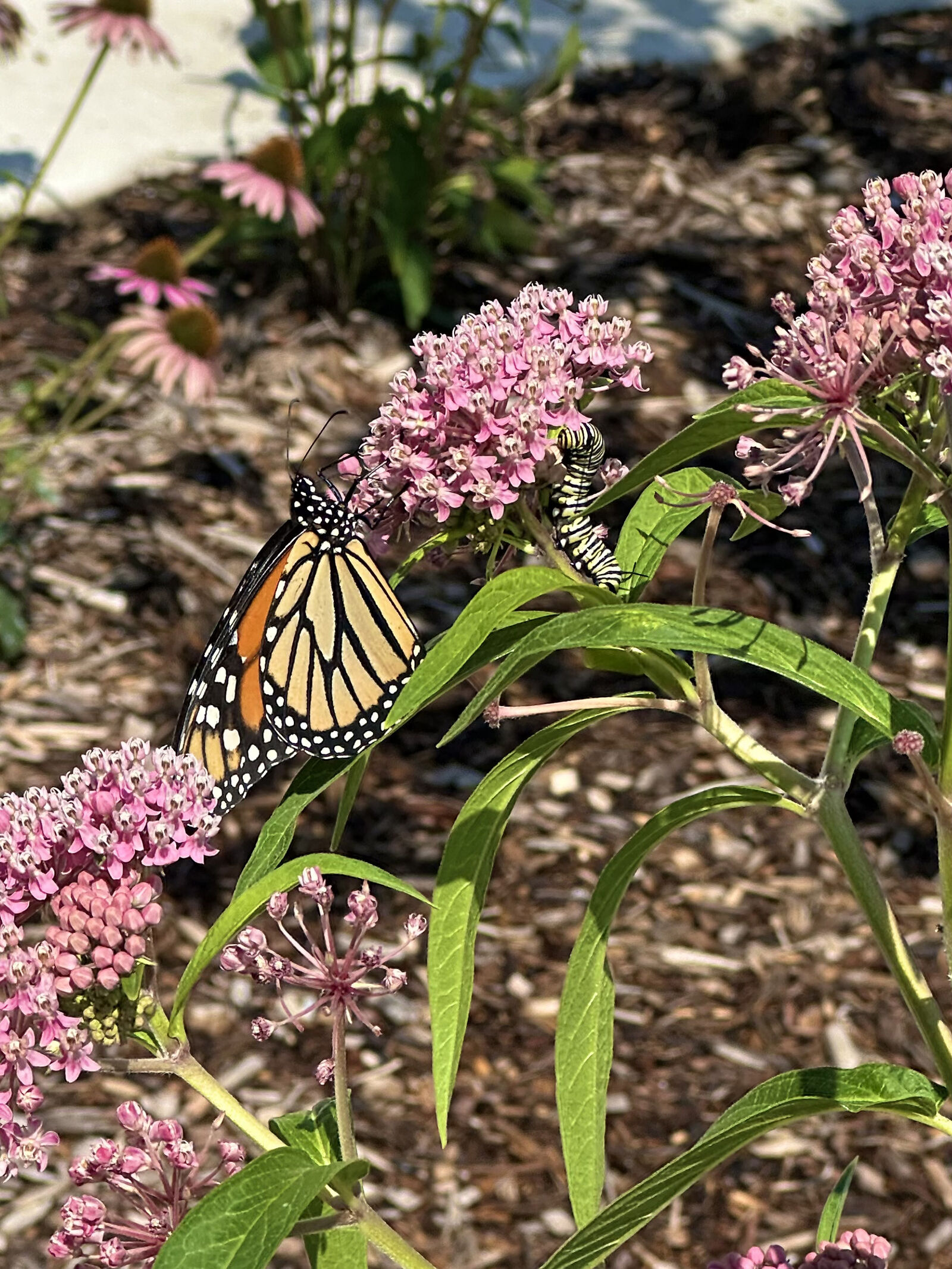
Among the creatures that inhabit the forest are Northern long-eared bats, who make their nests in the bark of oak trees and eat insects that can be pests for forests, farms, and people. Pollinators like monarch butterflies feast on the milkweed planted throughout the landscape on their migration across North America. Perennials, flowering plants, and seed mixes replace traditional turf seed lawn and can help to support onsite carbon sequestration and biodiversity.
Amazon / Seneca Group, Amazon Visitor Landing
Amazon / Seneca Group, Lord & Taylor Building Restoration
Powering AI Responsibly: A New Era for Data Center Design
City of Boulder, Western City Campus