How Can Design Address Healthcare Burnout and Staff Retention?
Clinician burnout is a multifaceted and complex problem, but we have a significant opportunity to advocate for healthcare professionals through the design of their spaces.
By Victoria Nichols, Solvei Neiger, and Kari Thorsen
Defined as the intersection of mental health, lifestyle and health behaviors, addiction, substance abuse, crisis situations and more, behavioral health is facing a crisis of its own. 23% of U.S. adults experienced a mental illness in the past year, according to Mental Health America’s 2024 State of Mental Health in America report. That’s equivalent to nearly 60 million Americans. More than 5% experienced a severe mental illness, including serious thoughts of suicide.
Kids and teens are also suffering: the CDC has reported that 29% of U.S. high school students experienced poor mental health. 20% seriously considered attempting suicide, and 9% actually attempted it. While race is not a major factor, gender is. The numbers are significantly higher for students who identify as female or LGBTQ+.
These numbers are jarring, yet many communities have little to no access to care. According to Pew Research Center, “rural Americans have higher rates of depression and suicide than people in urban areas, but are less likely to receive mental health services.” The National Alliance on Mental Illness calculates that 65% of rural counties across the U.S. lack a psychiatrist, and 47% lack a psychologist.
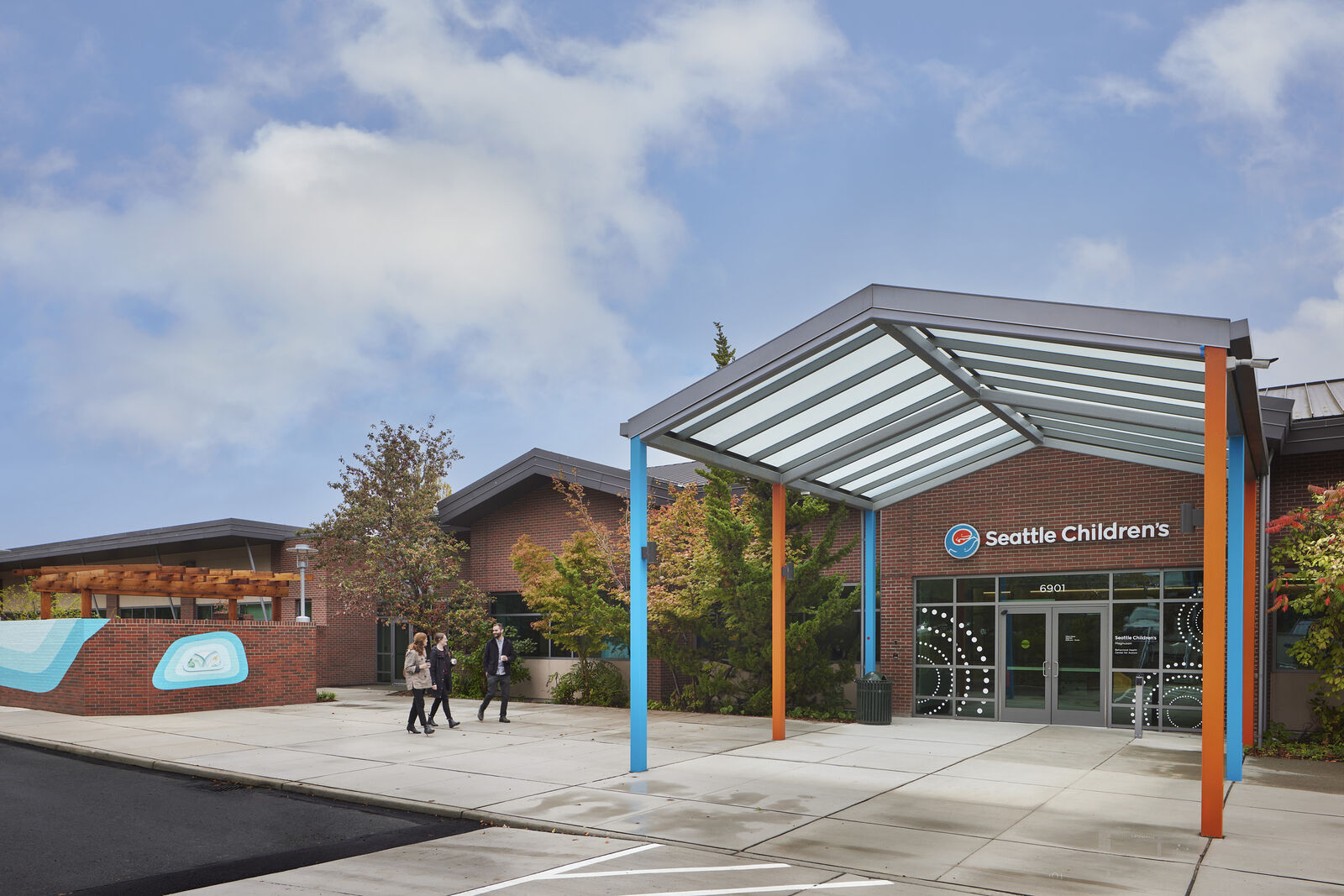
The Seattle Children’s new Autism & Behavioral Health Clinic unites Seattle Children’s Autism Center and main campus outpatient behavioral health services into a single location. This new "Center of Excellence" aims to better serve patients and families with improved accessibility.
Building a New System of Support
While some suggest that the system is broken, the reality is that in most places there isn’t—and never has been—a true behavioral health system in place. As a result, many people turn to hospital emergency departments for help in moments of mental crisis, which bogs down the over-stretched system even further. Crisis centers are important and necessary. But emergency departments are not the right setting for this kind of care. We need a new system that addresses the urgent mental health crisis now, and stabilizes healthcare for the long-term.
The good news is that the stigma around mental health is going down. We are talking about this crisis, and organizations are starting to address it in ways that are more human and holistic than the institutional approaches of past eras. Even as federal budgets are threatened, resources and funding are also available from multiple public and private organizations, including the Substance Abuse and Mental Health Services Administration, the National Council for Mental Wellbeing, The Robert Wood Johnson Foundation, MacArthur Foundation and more. Tools like the Crisis Resource Need Calculator are available as well, to help jurisdictions estimate capacity and potential costs of multiple crisis care scenarios.
In our own work, we can also help by ensuring that healthcare facilities are designed to meet both physical and behavioral health needs, now and in the long term. Well-designed places can further decrease the stigma of mental health challenges, and support individual patients and their caregivers, support healthcare practitioners and staff, and ultimately strengthen whole communities.
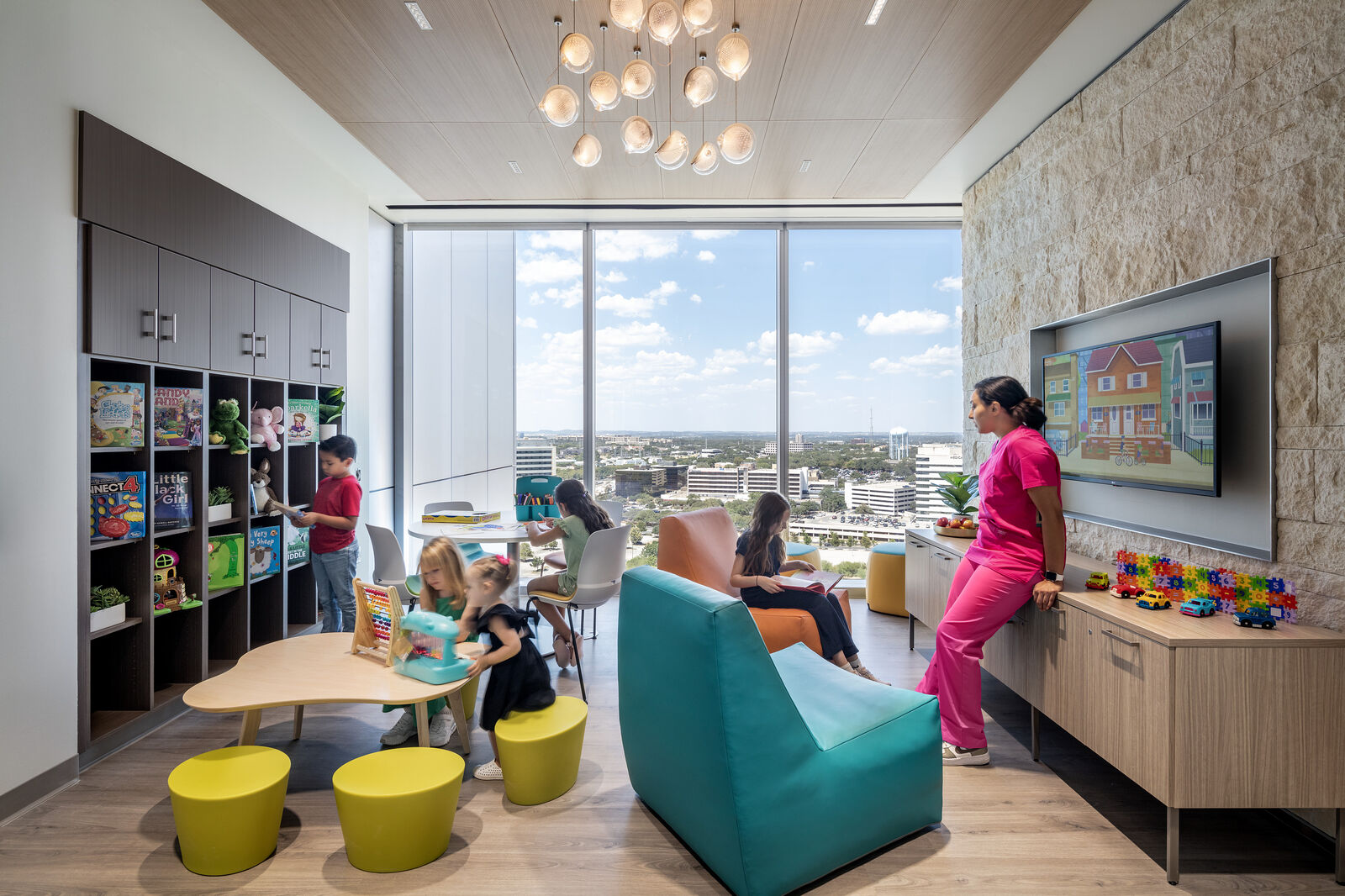
Activity spaces within University Health Women’s & Children’s Hospital offer a warm, living room-like atmosphere for families to socialize, share meals, and have moments of respite. With floor-to-ceiling windows and inviting furniture, the spaces take advantage of views and create a pop of color and bright natural light.
Designing for People
As needs evolve, so must our work. Simply meeting requirements such as the federal government’s Americans with Disabilities Act (ADA) or state health authority codes and regulations is no longer enough. There are many situations and conditions within the behavioral health spectrum, and each individual involved—on both the patient side and the practitioner side—has unique needs that deserve to be addressed. Through design, we can help each person feel supported and cared for, while also improving health outcomes.
Principles of autonomy and choice, connection and comfort, nature and nurture can all be amplified by thoughtful, people-centered, sustainable design. Here are examples of design solutions with lasting, positive impact.
Designing for Patients: Prioritizing Comfort and Acceptance
Healthcare environments must prioritize safety, security, durability, function, and cleanliness. However, this doesn't mean they have to be cold and institutional. By focusing on patient-centric design, we can create facilities that treat the whole person, not just their condition or symptoms, and that reduce stress rather than re-traumatize.
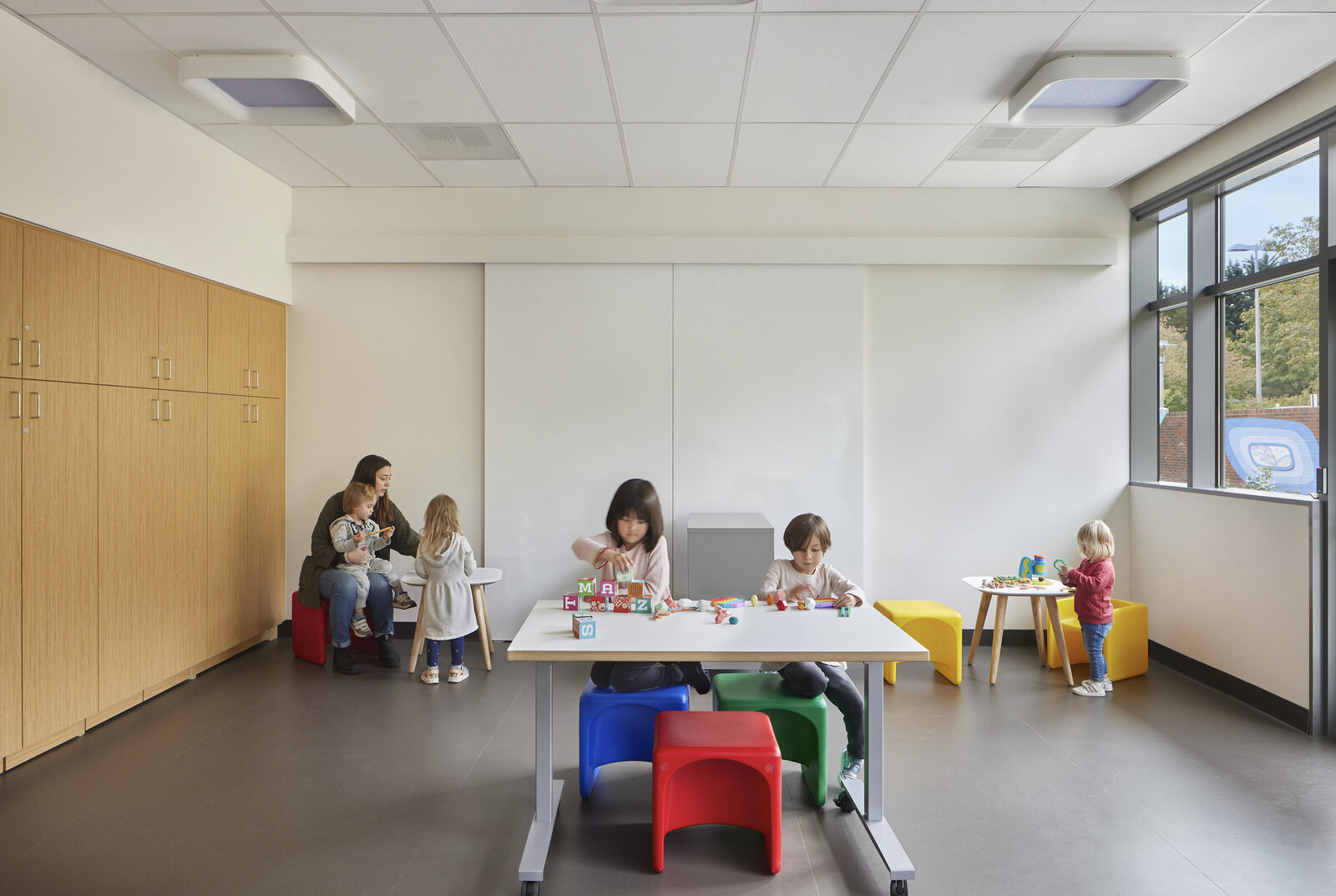
Family workshops for Seattle Children’s Autism & Behavioral Health Clinic revealed kids’ strong need for a safe, welcoming and supportive care environment where everyone can be themselves. The resulting design provides multiple entrances and distinct waiting rooms to give options for patients who need quiet and calm to de-escalate, and for those who prefer tactile elements or play to connect and build trust. We can achieve an approachable and inviting sense of openness without compromising security or privacy. This strategy helps patients feel human, normalizes their experience, and reduces stigma.
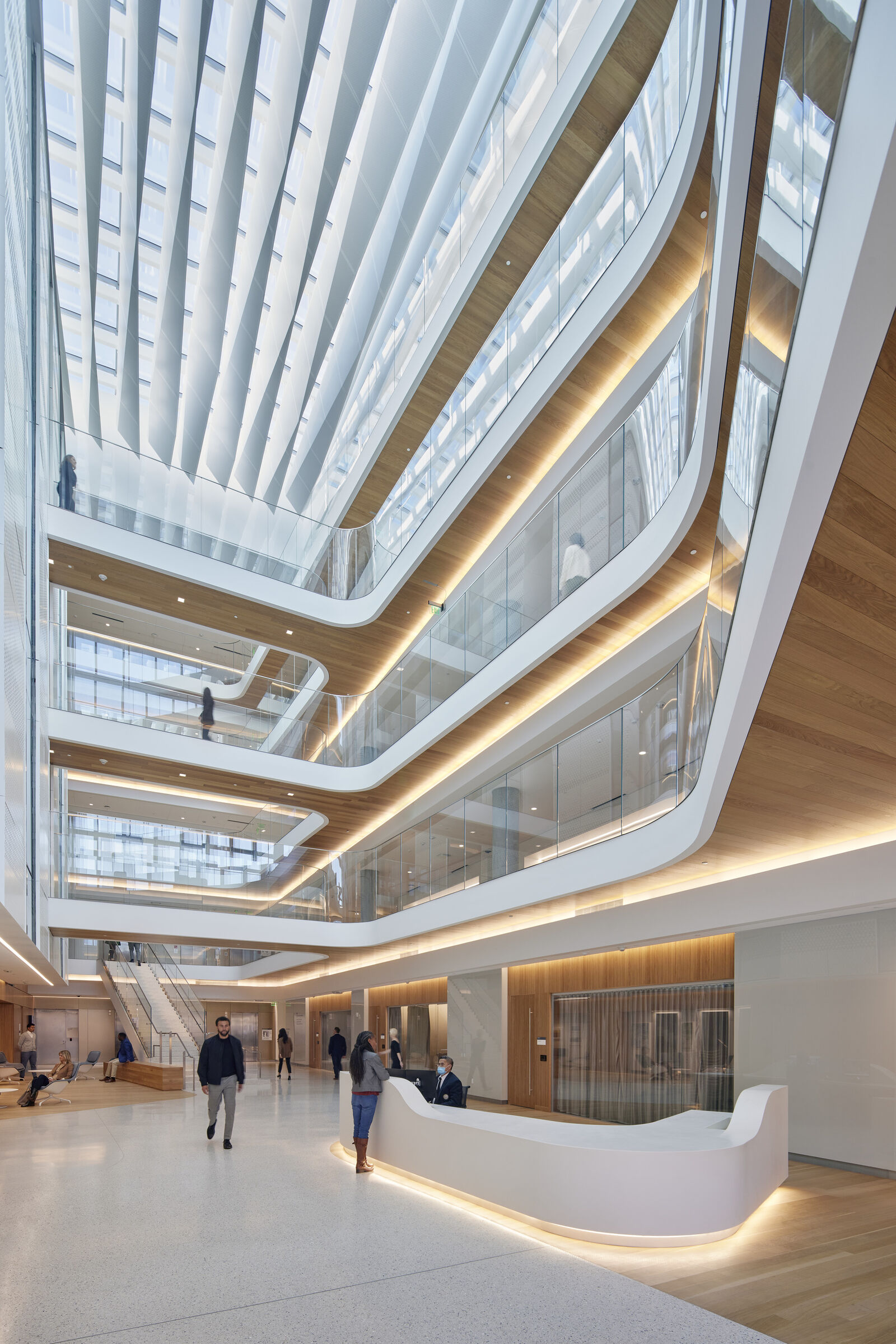
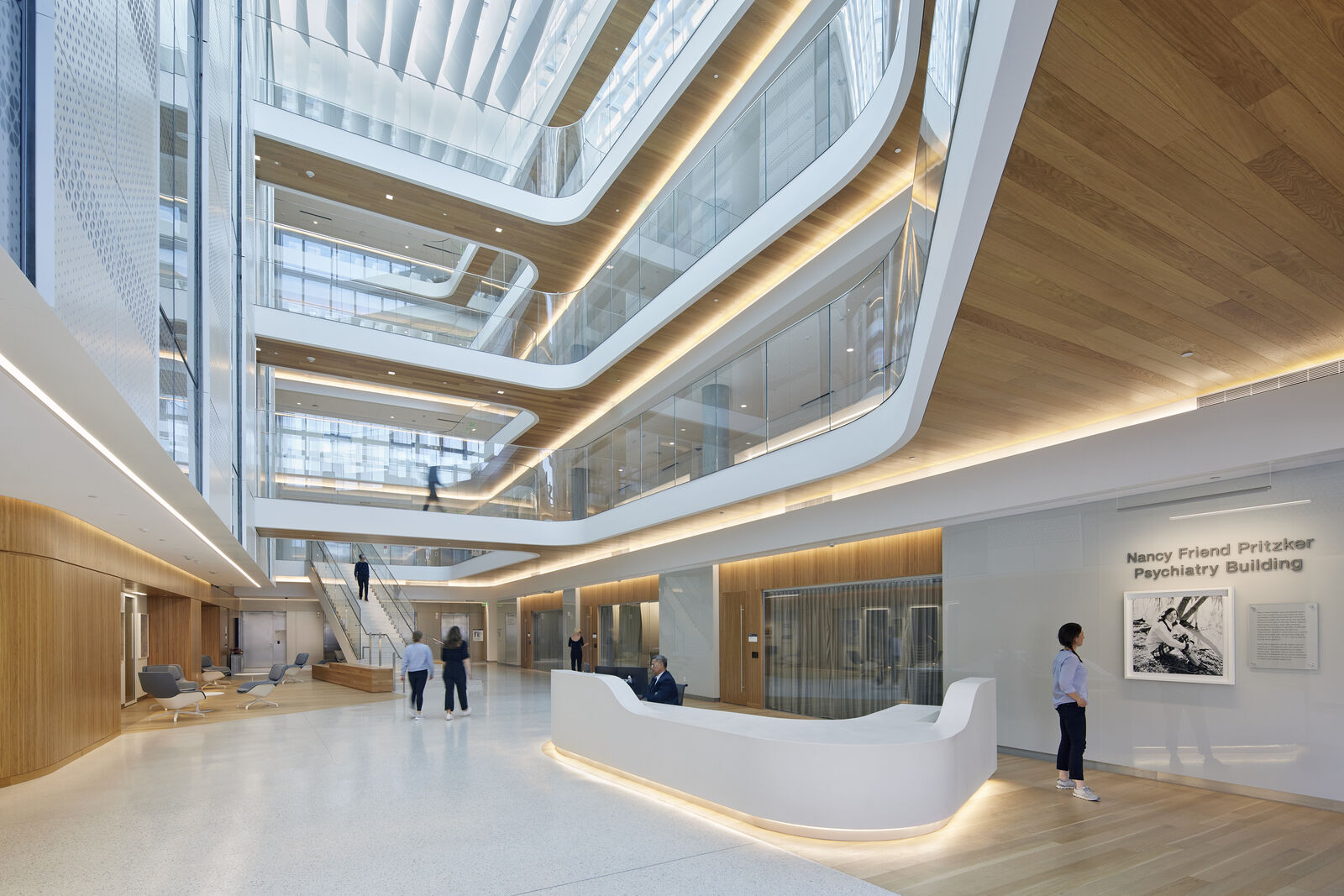
The use of extensive daylighting, integrated graphics, color, texture, and natural materials serve to normalize the behavioral healthcare environment at the UCSF Nancy Friend Pritzker Psychiatry Building.
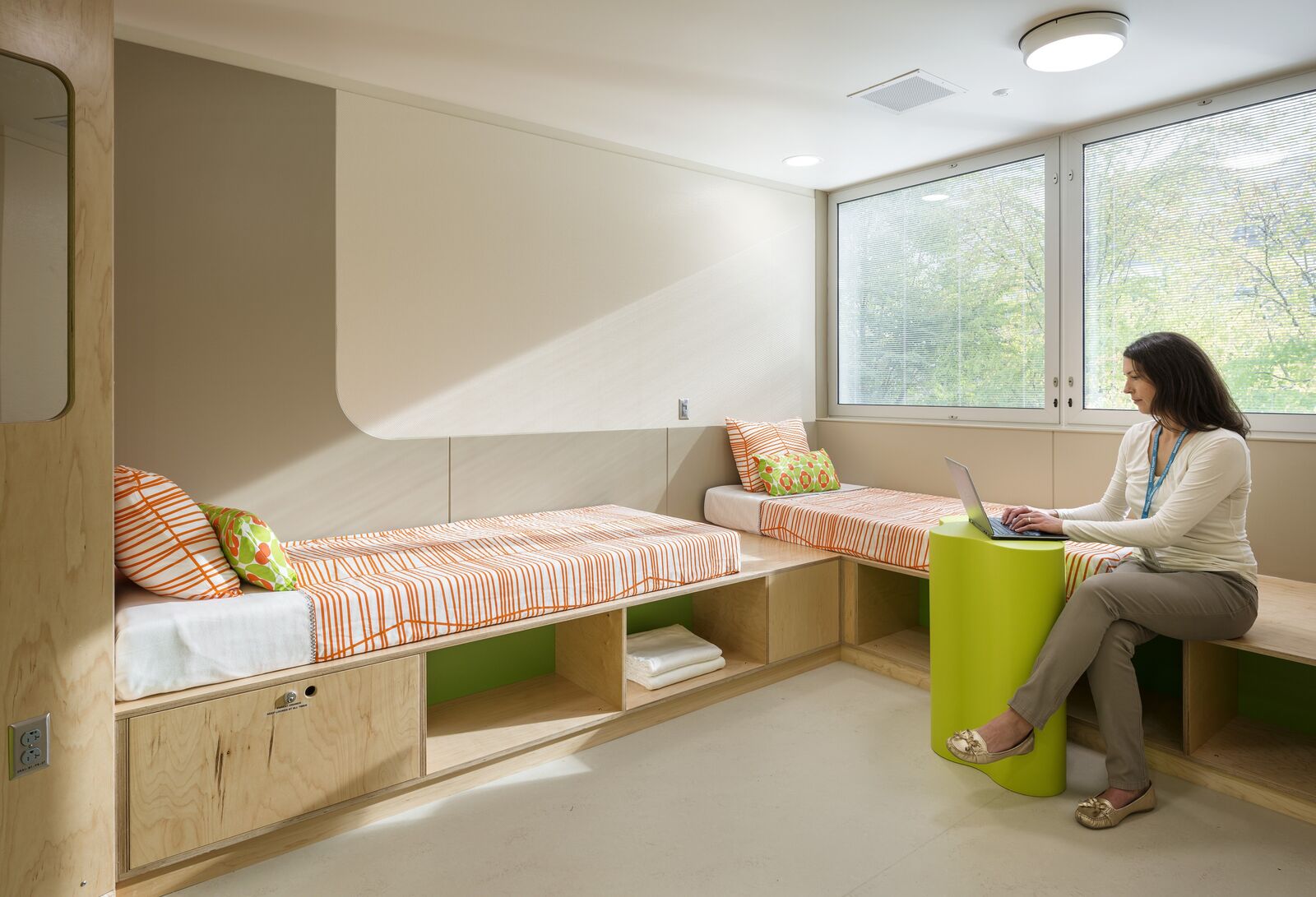
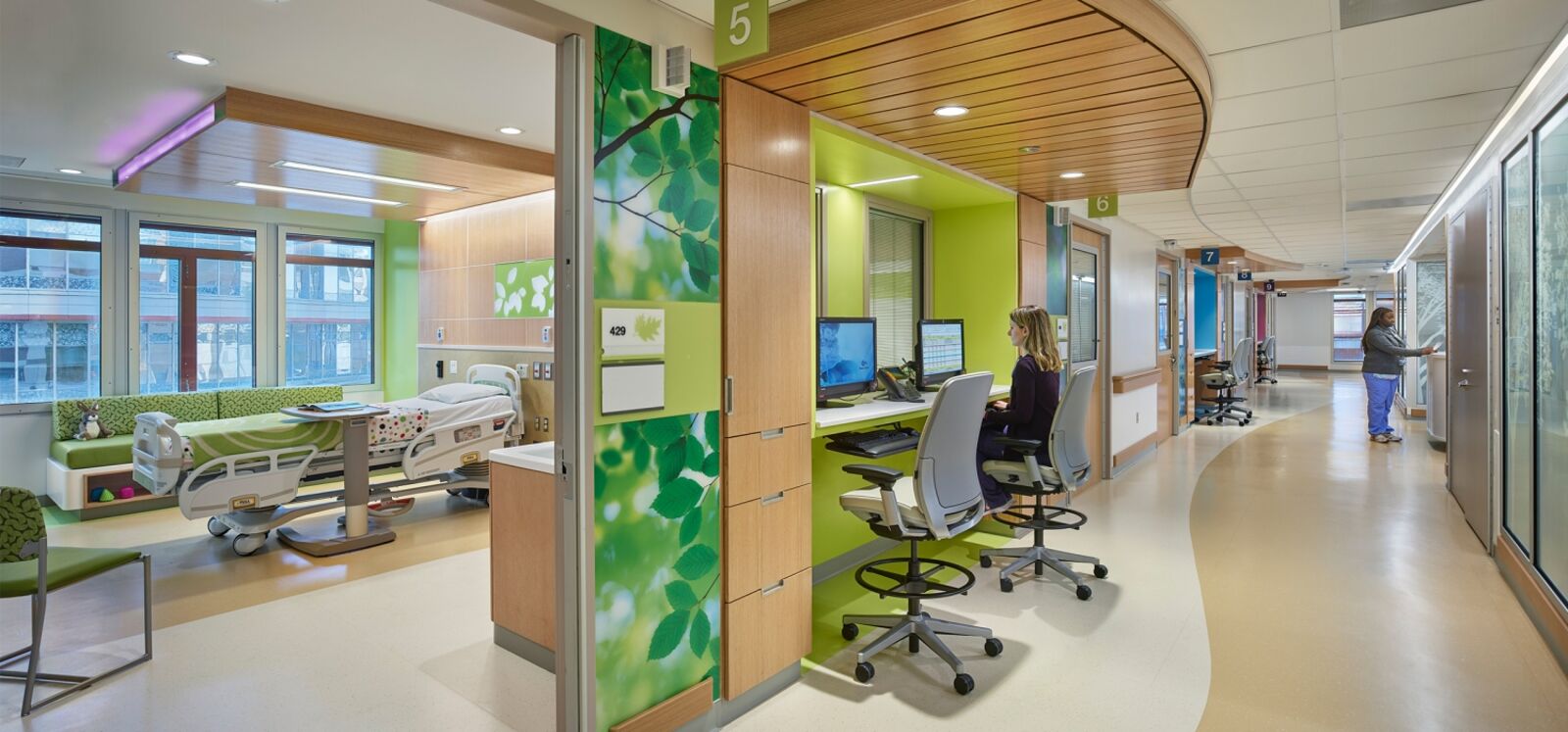
In Seattle Children’s Psychiatry and Behavioral Medicine Unit, patient rooms include flexible, durable furniture crafted of wood to create a sense of warmth and comfort of home. Large windows maximize daylight and connections to the outdoors.
Designing for Families + Caregivers: Prioritizing Access and Ease
Every patient and their circle of support has unique needs, and yet they also share common experiences with other patients and families. Design can help to balance this, by giving people the autonomy to choose spaces and furnishings that suit their personal needs moment-to-moment. Spaces like active waiting rooms, quiet zones, respite spaces, individual and group therapy rooms, family consultation spaces, and more, offer families and caregivers spaces to connect and support each other—or to retreat and decompress. Throughout each space, clear and intuitive wayfinding eases the journey.
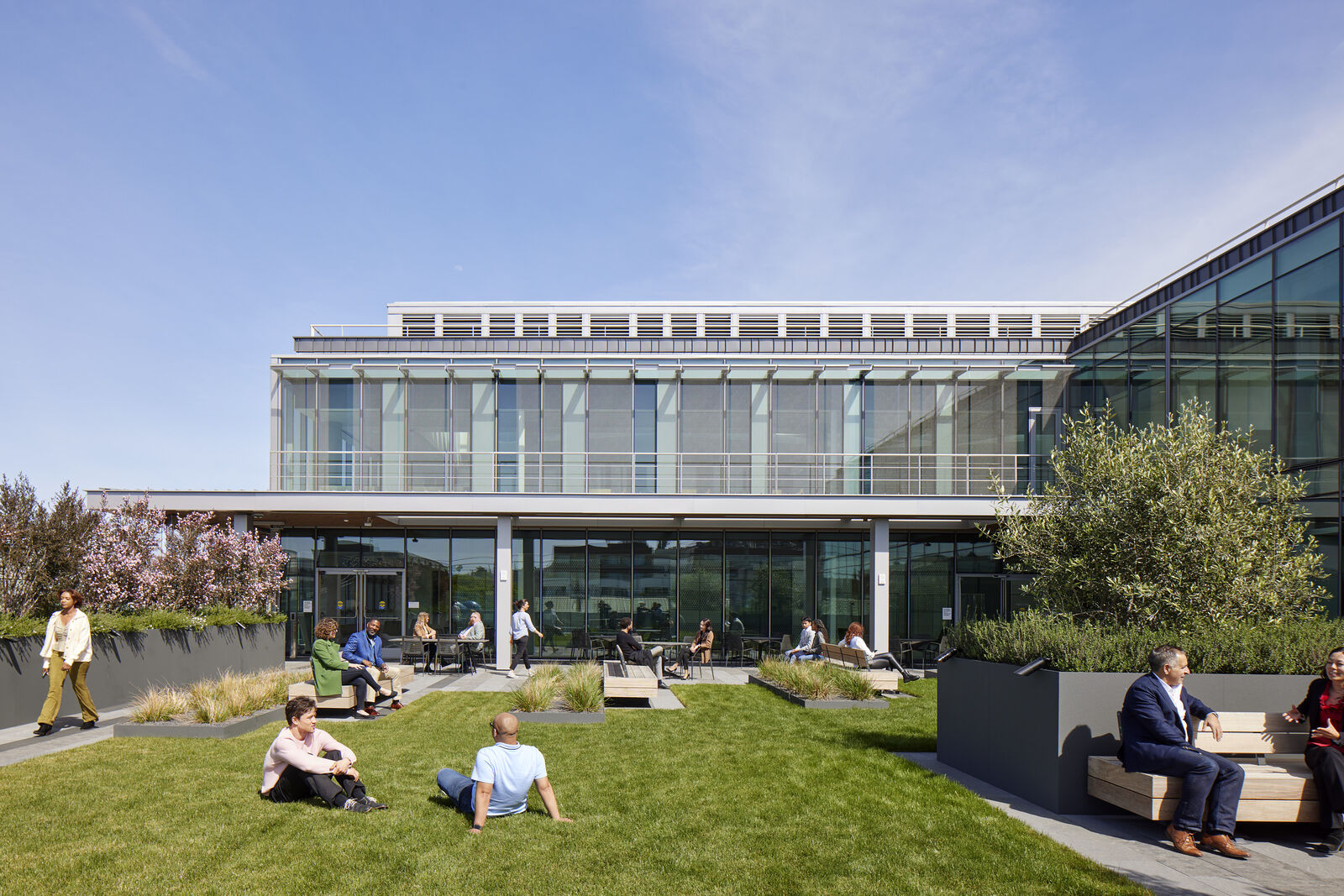
Top: At the UCSF Nancy Friend Pritzker Psychiatry Building, a lush rooftop garden offers staff access to fresh air and nature, as well as outdoor space for both work and respite.
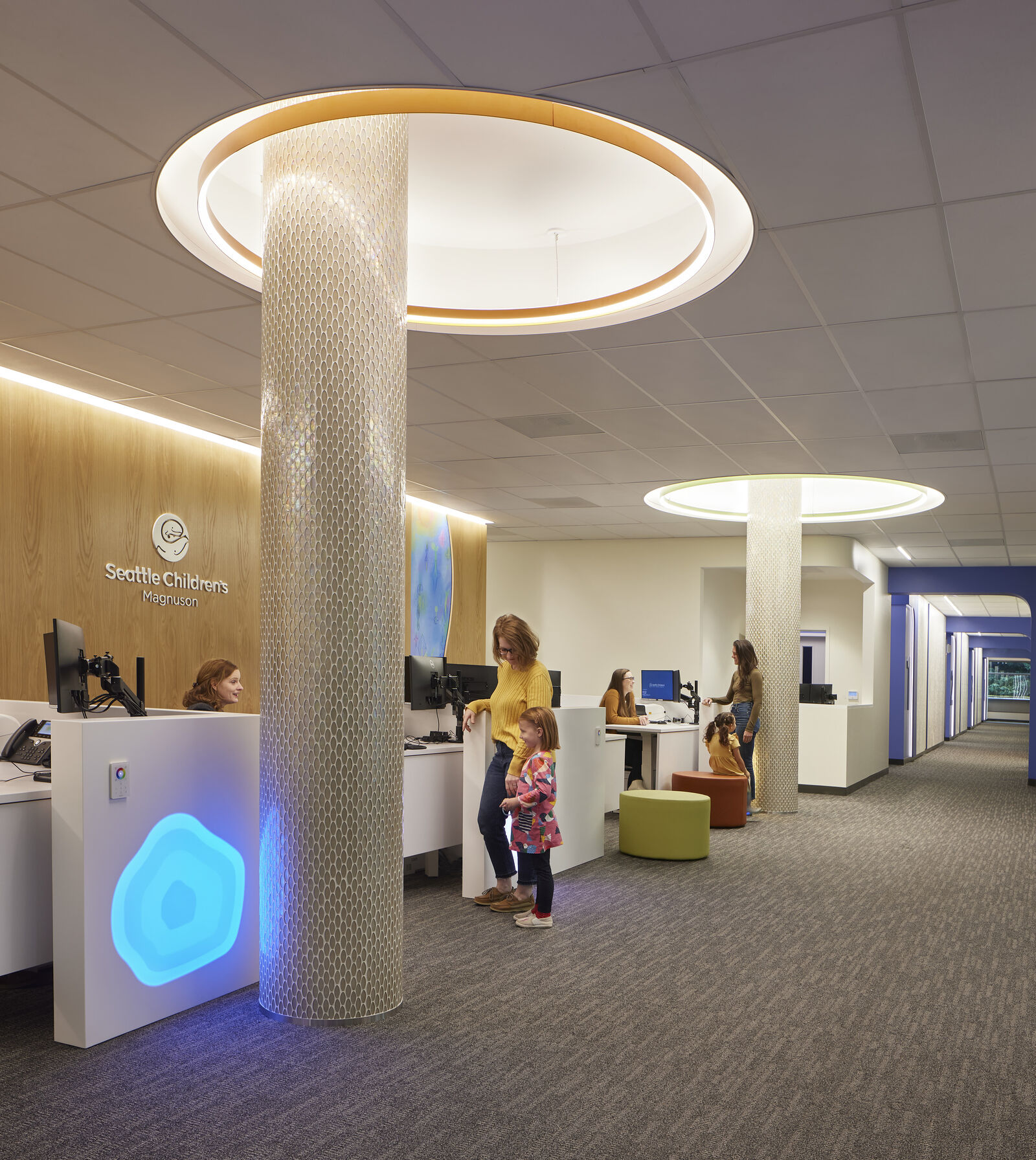
Lower Left: At Seattle Children’s Autism & Behavioral Health Clinic, patient spaces are oriented around a single corridor that offers clear sightlines for kids and families and ensures each destination is visible and within comfortable reach. Clear, simple wayfinding, colored arches and dappled lighting guide the way and ease transitions.
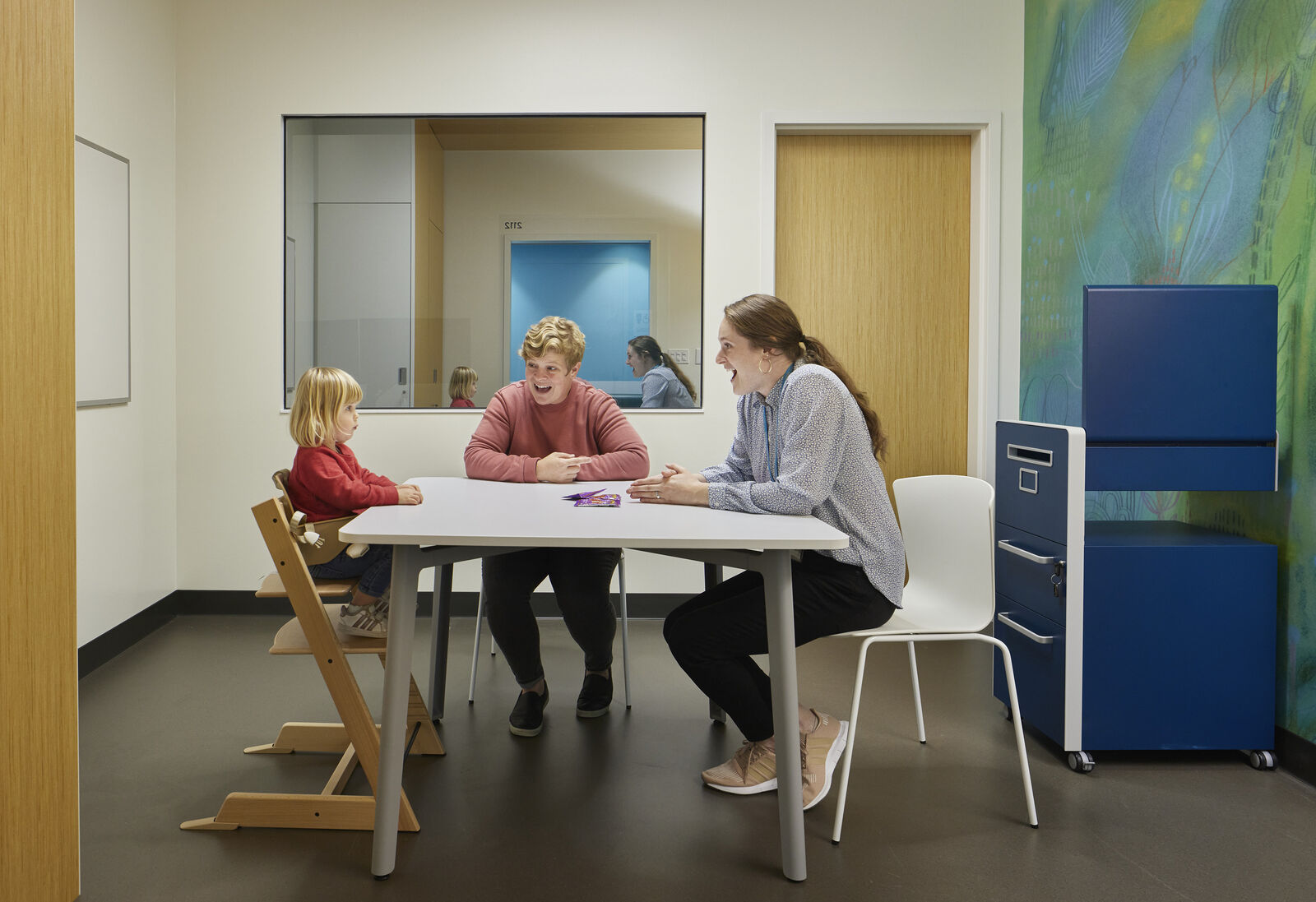
Lower Right: A feeding kitchen and three adjacent care rooms empower families to learn food preparation techniques as a group and then practice behavioral skills with their child in a private setting.
Designing for Practitioners + Staff: Prioritizing Safety and Support
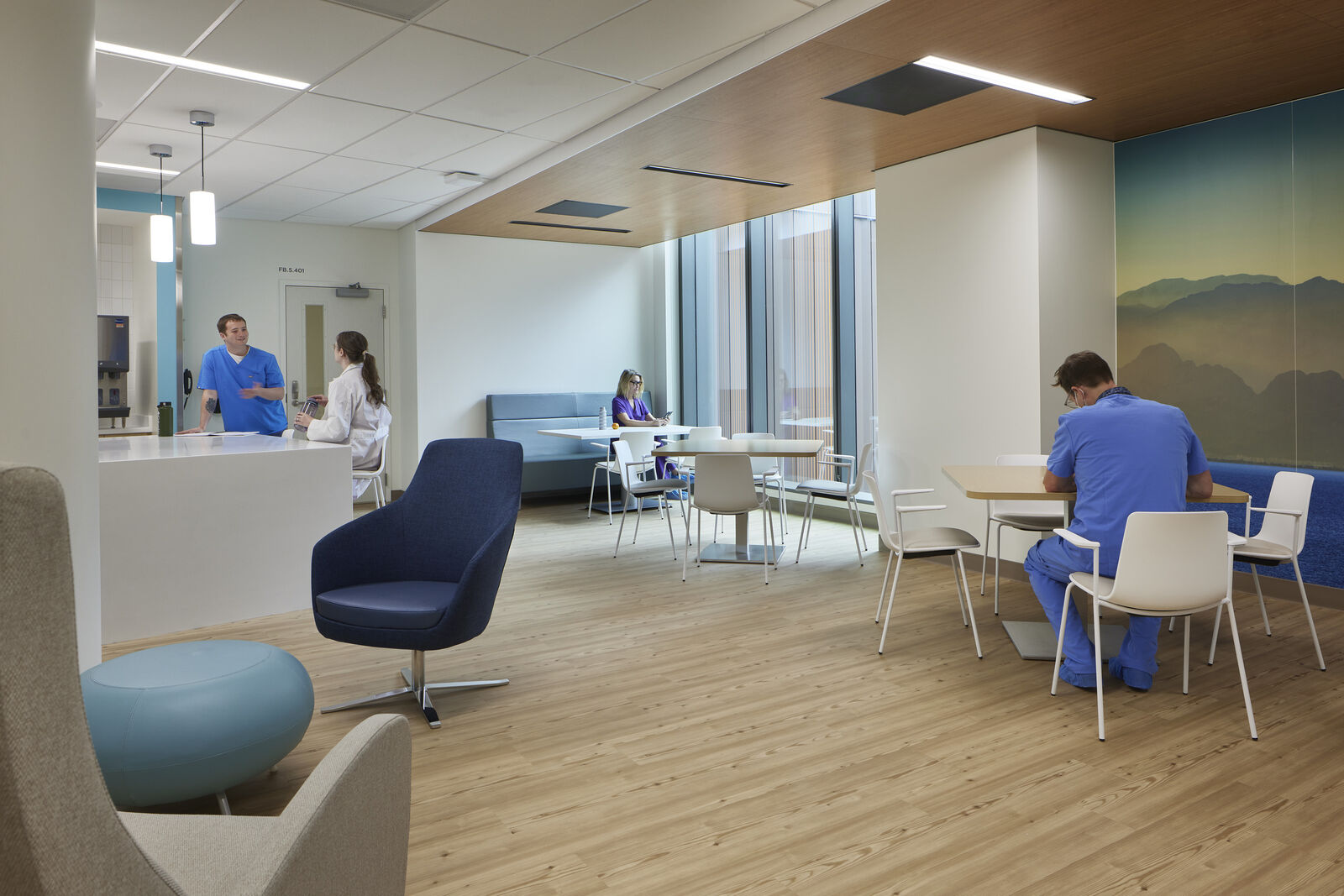
Design also facilitates the work, and the protection, of caregiving teams who are regularly challenged by scenarios ranging from patient distress to violence. By understanding the threats staff face, their workflows and needs, we can streamline operations, promote safety and mitigate stress, and demonstrate that staff safety is foundational, never an afterthought. Additionally, we can offer access to outdoor areas and other biophilic elements that lower tension and boost energy, such as natural light and air via operable windows.
At Seattle Children’s Autism & Behavioral Health Clinic, highly flexible, universal care rooms allow any provider to use them for a wide range of services and treatments, providing the right kind of space for the work at hand and improving overall space utilization and patient volume. While the staff “hub” at offers a variety of activity-based workspaces for collaboration between clinical, research and administrative functions.
Clinician burnout is a multifaceted and complex problem, but we have a significant opportunity to advocate for healthcare professionals through the design of their spaces.
Designing for Communities: Prioritizing Connection and Resilience
Health struggles can feel isolating, yet human connection has major healing powers. We can nurture this by creating communal spaces including lounges, dining areas, and other group rooms to help people come together and realize they’re not alone. This is especially important in rural areas with small, closeknit communities. We can shift the mentality from “how do we take care of this person” to “how do we take care of this community.”
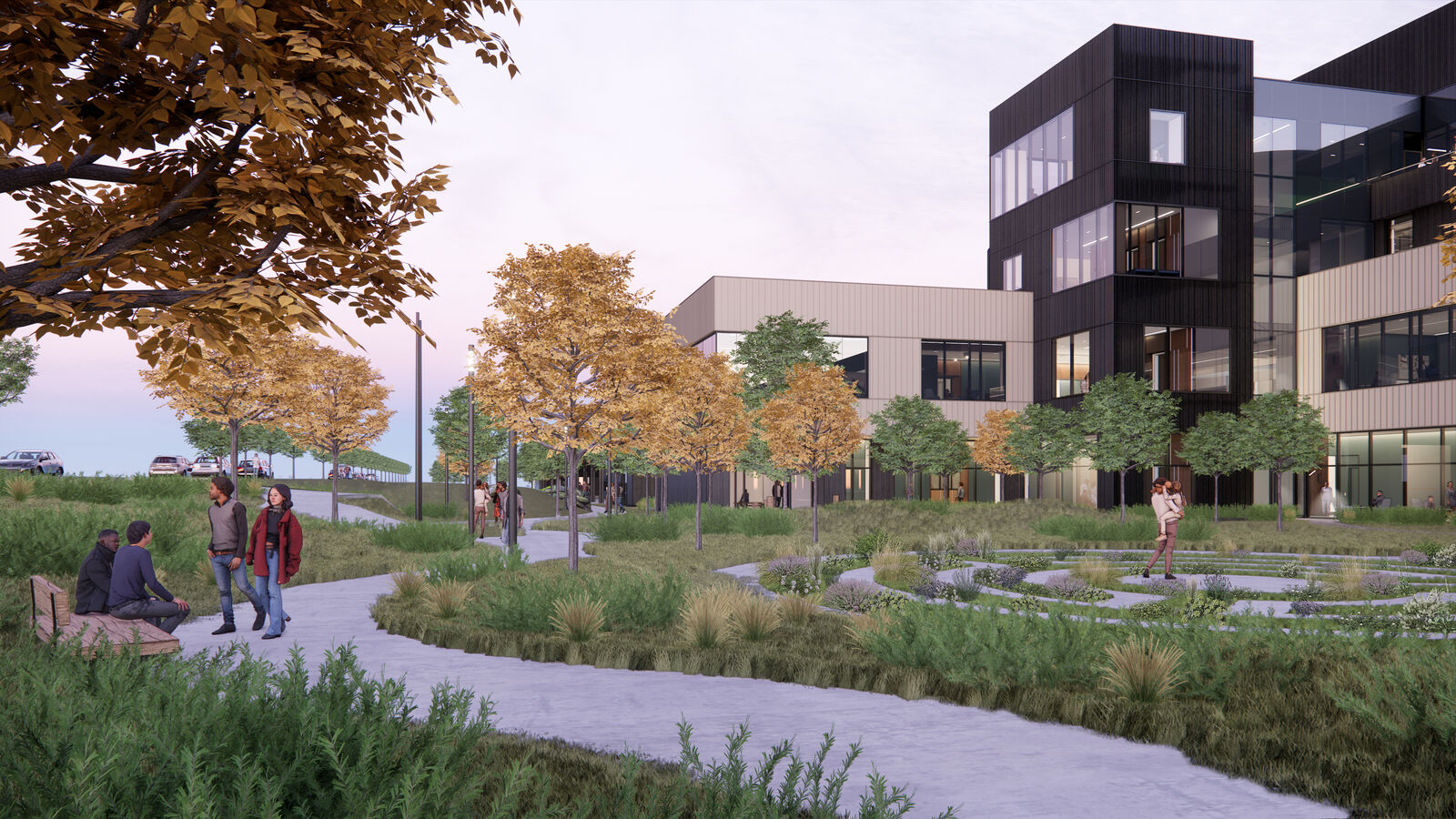
At Columbia Memorial Hospital, nearly 6,000 square feet is dedicated to the exclusive use of doctors, nurses and staff, including private lounges and outdoor terraces, locker rooms and lactation rooms, with a respite area included on every floor. Prominent indoor and outdoor dining options, and an expanded healing garden empower community connections.
Awareness of the critical need for more behavioral healthcare is at an all time high. So too is the imperative to design environments that address immediate needs and support a continuum of patient care. By treating beyond a single crisis, we can support individual patients and their caregivers, healthcare practitioners and staff, and ultimately strengthen whole communities.